

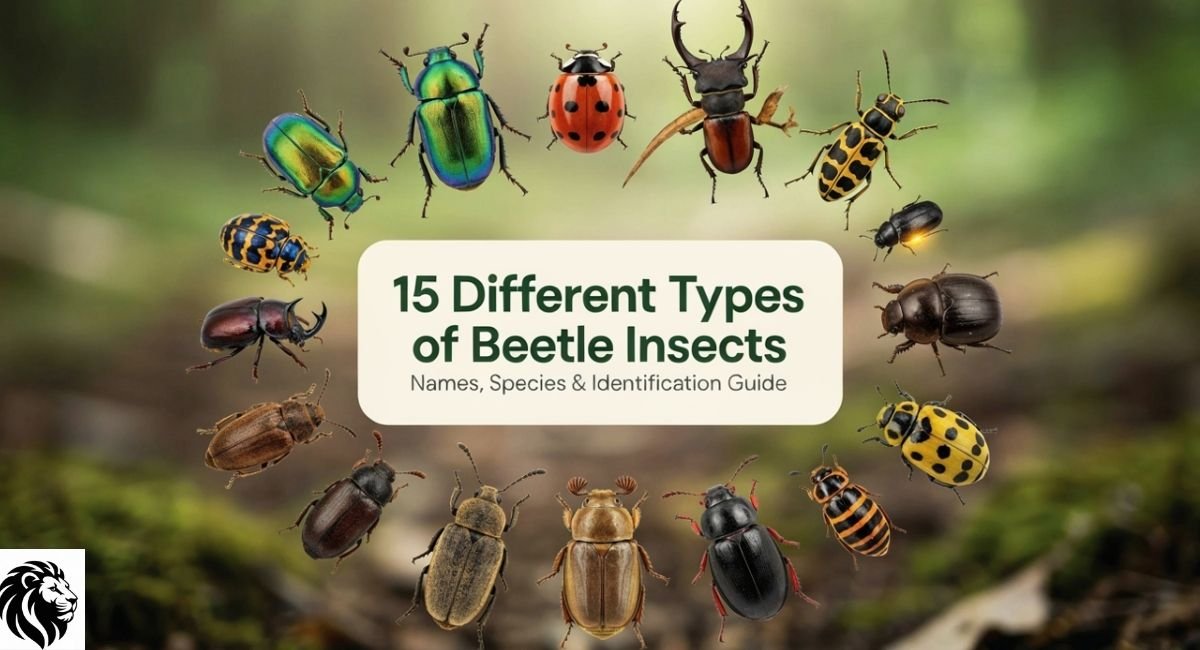
A beetle can look tiny, colorful, fierce, or almost strangely armored. Across the United States, you may spot one on a rose, under a log, inside a pantry, or beside a pond. Learning about types of beetle insects makes these everyday encounters much more interesting. Beetles belong to an enormous insect group, yet each species has its own appearance, behavior, habitat, and role in nature. Some help control garden pests, while others damage plants, stored food, or trees.
In this guide, you’ll discover 15 fascinating beetle species, learn their identifying features, and understand where they live. You’ll also find practical beetle identification tips that make mysterious backyard insects easier to recognize.
What Type of Insect Is a Beetle?
Beetles are insects in the order Coleoptera. Their defining feature is a pair of hardened forewings called elytra. These wing covers form a protective shell over the delicate flying wings underneath. Unlike spiders, beetles have six legs, three main body sections, and chewing mouthparts.
That armored appearance explains why beetles can seem unusually tough. However, their forms vary enormously. Some are round like tiny shields, while others are slender, flattened, or elongated. Their insect anatomy, feeding habits, and habitats also differ greatly between families and species.
What Makes a Beetle a Beetle?
The easiest clue is often the straight line where the two elytra meet down the back. Most beetles also have chewing mouthparts, six legs, antennae, a head, thorax, and abdomen. Their hindwings fold beneath the elytra when they’re resting, creating a compact protective package.
Beetle Life Cycle
Beetles undergo complete metamorphosis through four stages: egg, larva, pupa, and adult. The larva often looks nothing like its parent, which can surprise new observers. A grub-like youngster may spend months feeding underground or inside wood before becoming a winged adult.
Beetles vs. Other Similar Insects
Beetles often get confused with true bugs, cockroaches, and flies. True bugs have piercing mouthparts and overlapping wings, while flies have only one functional pair. Cockroaches have flatter bodies and softer wings, whereas beetles usually display firm, hardened wing covers.
How Many Types of Beetles Are There?
Beetles form one of the most diverse insect groups on Earth. Scientists describe them by species, genera, families, and larger taxonomic groups. Because many beetles look extremely similar, everyday names such as “ground beetle” can describe numerous related species rather than one exact insect.
Their diversity also stretches across nearly every habitat. You can find beetles in forests, deserts, wetlands, gardens, farms, homes, and freshwater environments. This enormous variety makes beetle diversity fascinating, although it can make precise identification challenging for beginners.
Why Beetle Identification Can Be Tricky
Identification becomes difficult when species share similar colors or body shapes. Males and females may differ noticeably, while seasonal changes, regional forms, camouflage, and life stages add more confusion. Experienced observers combine body shape, markings, antennae, habitat, geographic range, and behavior instead of relying on color alone.
15 Different Types of Beetle Insects
The following beetle species were chosen because they are recognizable, ecologically interesting, or especially relevant to readers across the United States. Each profile focuses on appearance, habitat, food, behavior, and practical clues you can use when examining a beetle.
Think of this section as a field guide rather than a rigid checklist. A beetle photographed on a flower tells a different story from one discovered inside flour. Location, season, host plant, and surrounding habitat can dramatically improve your identification.
1. Lady Beetle
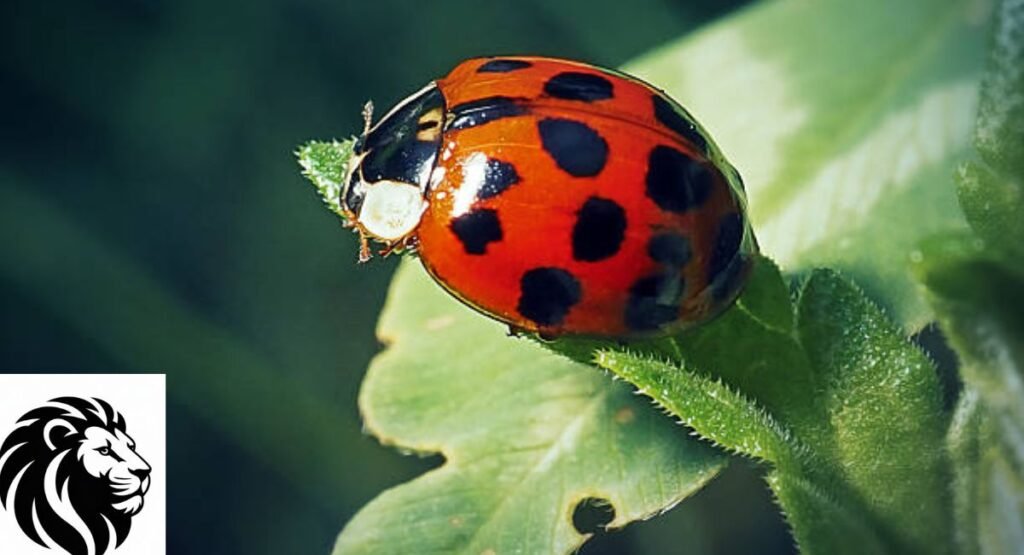
Lady beetles are among the most familiar beneficial beetles in American gardens. Many species have rounded bodies with bright red, orange, or yellow wing covers and dark spots. Adults and larvae often hunt aphids, making them valuable predators that naturally reduce some garden pest populations.
Their small size doesn’t diminish their ecological importance. The seven-spotted lady beetle, for example, has a distinctive red body marked with black spots. However, not every red beetle is a lady beetle, so examine the body shape, pronotum, and wing pattern carefully.
2. Asian Lady Beetle
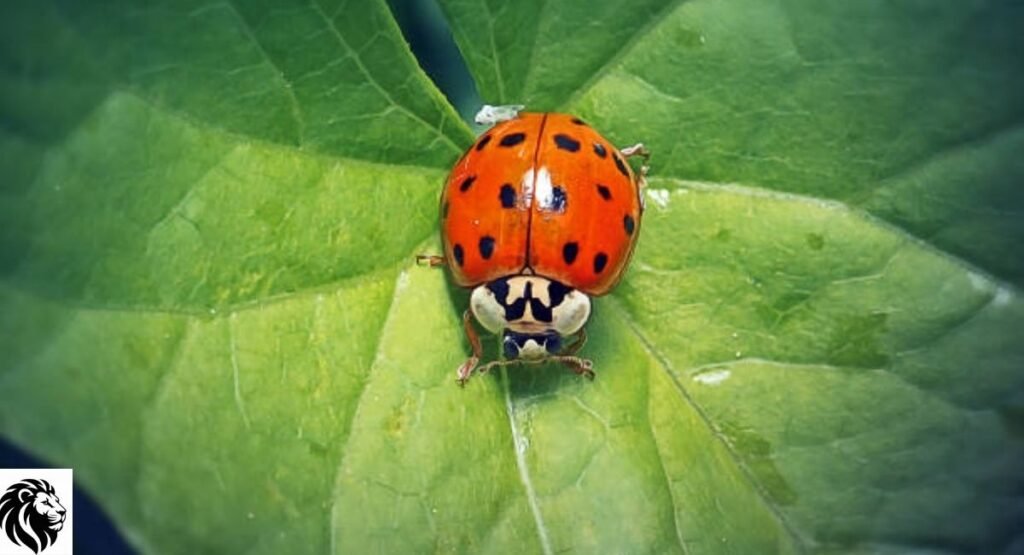
Asian lady beetles can range from pale yellow-orange to deep red, which makes them difficult to identify from color alone. A useful clue is the pale marking behind the head, often resembling an M or W shape. They eat aphids but can gather around buildings during autumn.
Unlike many native lady beetles, this species commonly enters homes while searching for sheltered wintering sites. Finding clusters around windows doesn’t necessarily mean an indoor infestation. Often, the beetles simply found a convenient entrance and are responding to seasonal temperature changes.
3. Japanese Beetle
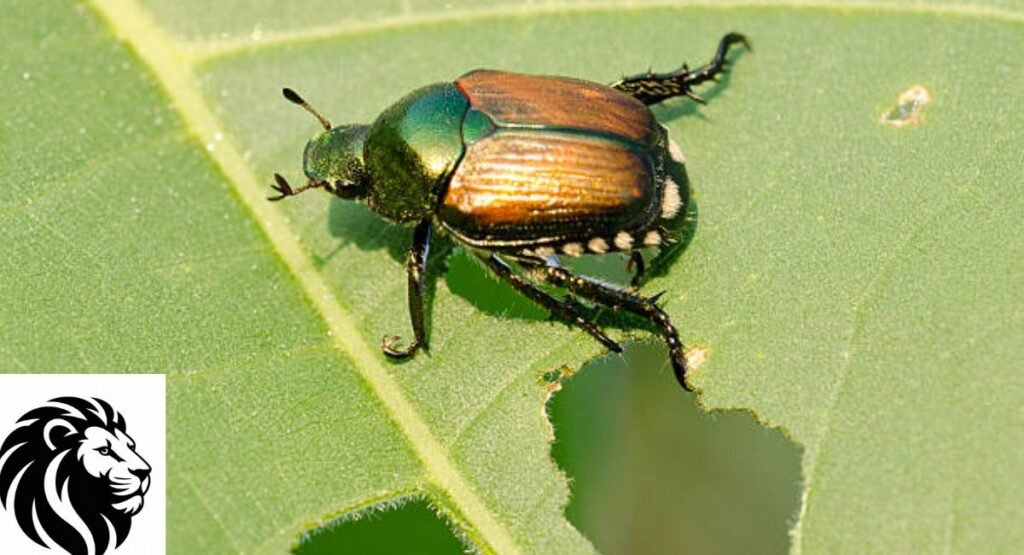
Japanese beetles are easy to notice because their metallic green body contrasts sharply with copper-brown wing covers. Small white hair tufts appear around the abdomen. Adults feed on hundreds of plant species, while their grubs develop underground and consume grass roots.
Their damage can look like lace because adults chew tissue between leaf veins. Roses, grapes, lindens, and other ornamental plants can suffer heavily. In the United States, this species has spread widely beyond its original introduction site in New Jersey during 1916.
4. Colorado Potato Beetle
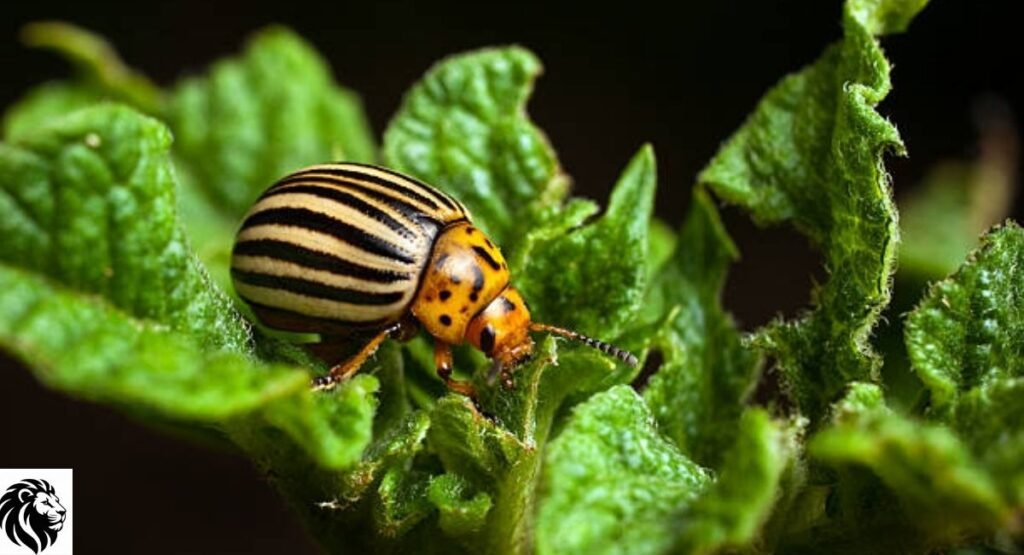
The Colorado potato beetle has a rounded yellow-orange body with bold black stripes running lengthwise across its elytra. Both adults and larvae feed on plants in the nightshade family. Potatoes are especially important, although tomatoes and related crops can also become targets.
Look for clusters of orange-yellow eggs beneath leaves during the growing season. Larvae develop through several stages before becoming adults. Heavy feeding can strip foliage quickly, leaving plants stressed and less able to produce healthy crops.
5. Stag Beetle
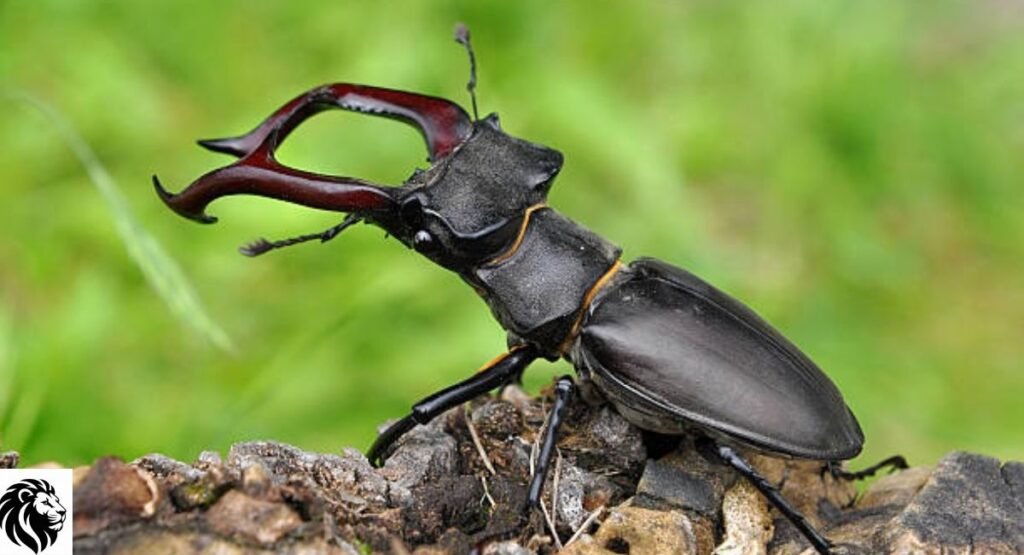
Stag beetles earn their name from the enormous mandibles carried by many males. Those impressive jaws resemble miniature antlers and help males compete with rivals. Despite their intimidating appearance, stag beetles generally aren’t interested in attacking people and spend much of their lives around decaying wood.
Their larvae depend on rotting timber, especially old hardwood. This makes dead logs more than woodland clutter. They provide essential habitat and food for developing larvae. Adult stag beetles may feed on tree sap, nectar, or other sugary resources.
6. Hercules Beetle
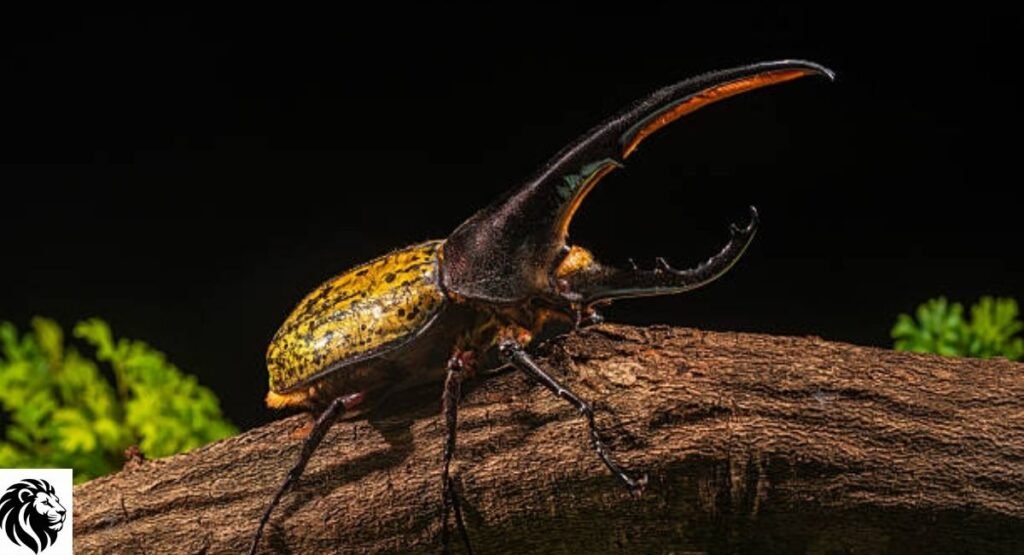
The Hercules beetle is one of the most spectacular members of the scarab group. Males may carry large horns that project from the head and thorax, giving them a prehistoric silhouette. Their colors can shift with humidity, making their appearance even more remarkable.
These beetles spend their immature stages around decaying plant material and forest debris. Adults usually feed on fruit, tree sap, or other plant-based foods. Their strong bodies demonstrate how beetles can evolve specialized structures for competition, feeding, and survival.
7. Rhinoceros Beetle
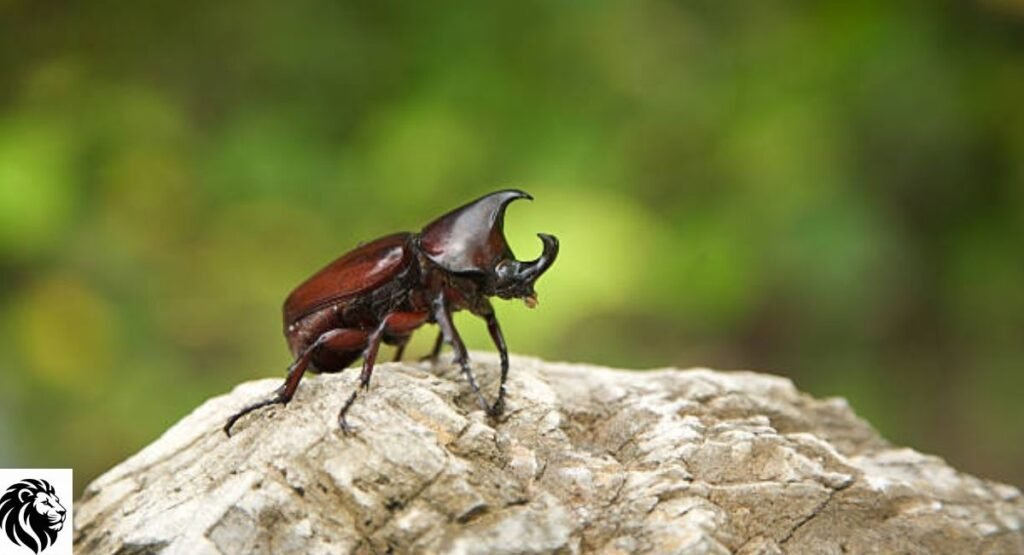
Rhinoceros beetles are sturdy scarab beetles recognized by horn-like projections on some males. Their heavy bodies and powerful appearance make them look formidable. Yet their dramatic appearance shouldn’t be mistaken for aggression toward people. Most are simply focused on feeding, mating, and finding suitable habitat.
Larvae commonly develop in decaying organic material. Depending on the species, adults may feed on plant juices or fruit. Their life cycle can take considerable time because the larval stage develops inside sheltered material before adulthood.
8. Ground Beetle
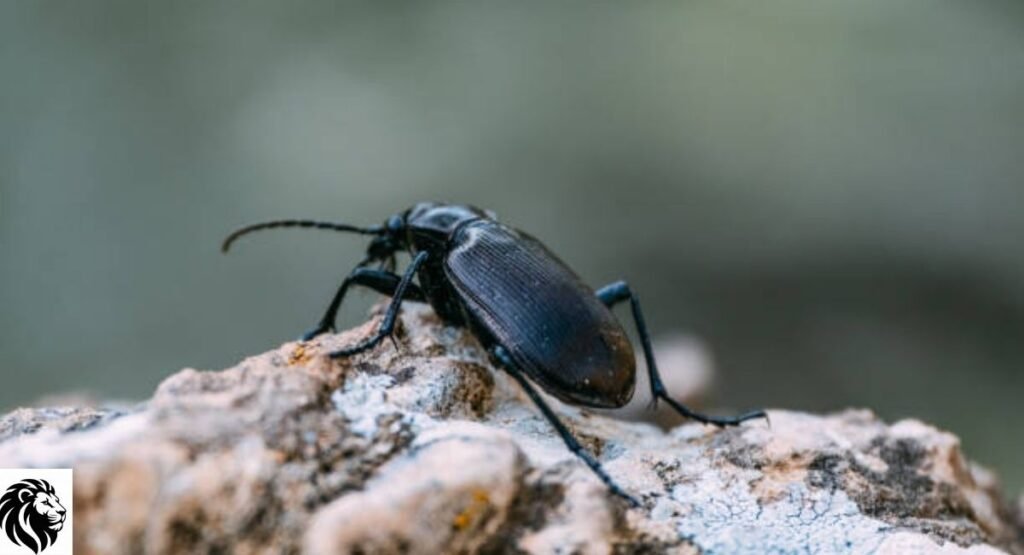
Ground beetles are usually dark, sleek, and fast-moving. They often hide beneath rocks, logs, leaf litter, or garden debris during daylight. Many species become active after dark, where they hunt slugs, snails, caterpillars, and other small creatures that can damage plants.
Their appearance sometimes causes confusion with cockroaches. Look closer, though, and you’ll often notice firmer elytra, a more defined head, and a different body structure. Many ground beetles are welcome garden residents because they act as natural predators.
9. Tiger Beetle
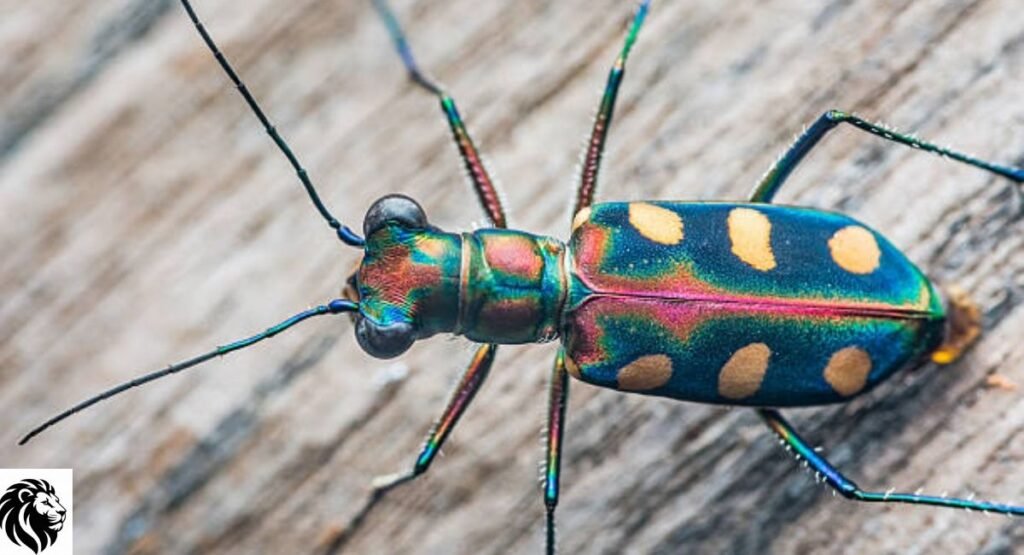
Tiger beetles are famous for bright metallic colors, large eyes, long legs, and astonishing speed. Their streamlined bodies help them chase prey across open ground. Some appear on sandy trails, woodland paths, riverbanks, or other sunny surfaces where they can quickly pursue smaller insects.
Their hunting style is especially interesting because they can sprint so quickly that their vision briefly becomes less useful. They pause, relocate, and chase again. This stop-and-go strategy makes them fascinating examples of specialized insect behavior.
10. Click Beetle
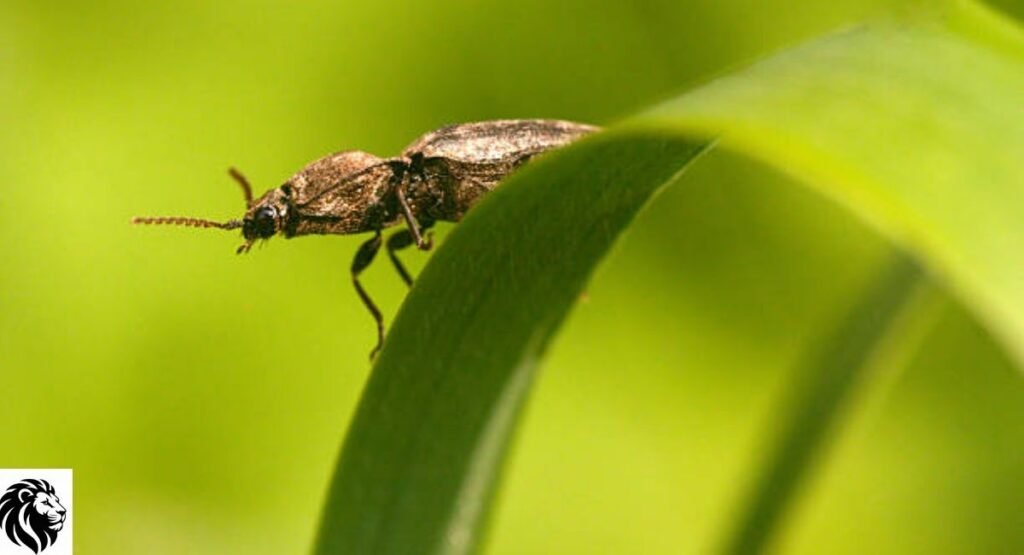
Click beetles get their name from a remarkable escape mechanism. When placed on their backs, they can snap a specialized structure between the thorax and abdomen, producing a sharp click that launches the beetle into the air.
Their larvae are commonly called wireworms, and some species feed on plant roots. Adults are often brown, gray, or elongated. If you find a narrow beetle that suddenly flips itself upright with a distinct snap, a click beetle becomes a strong possibility.
11. Firefly or Lightning Bug
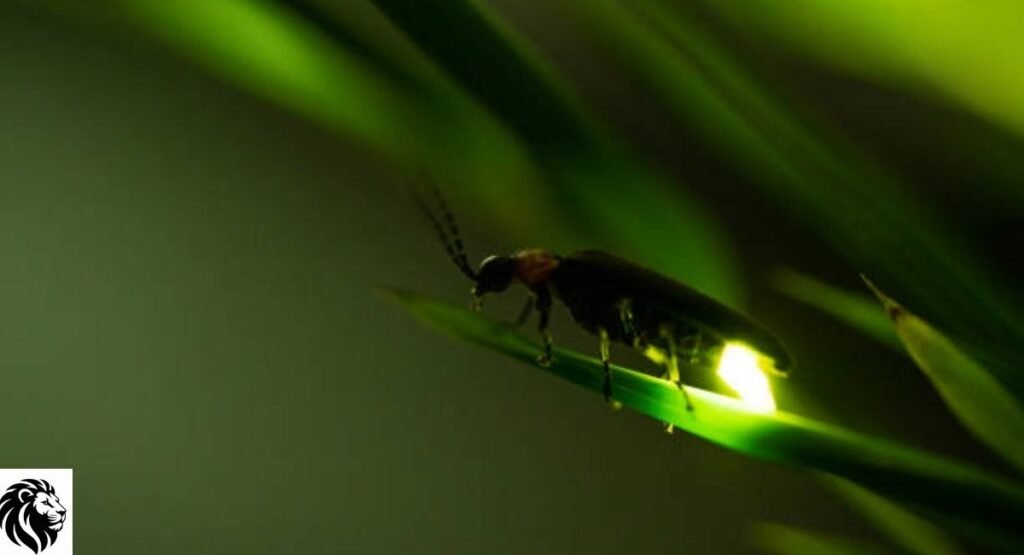
Fireflies are actually beetles belonging to the Lampyridae family. Their famous glow comes from bioluminescence, a chemical light-producing process in specialized organs. Flashing patterns help communicate with potential mates, making summer evenings feel almost magical.
Fireflies favor habitats with suitable moisture, vegetation, and food. Their larvae are predators and can feed on small soft-bodied animals. Their glowing display isn’t merely decorative; it plays an important role in communication and reproduction.
12. Carpet Beetle
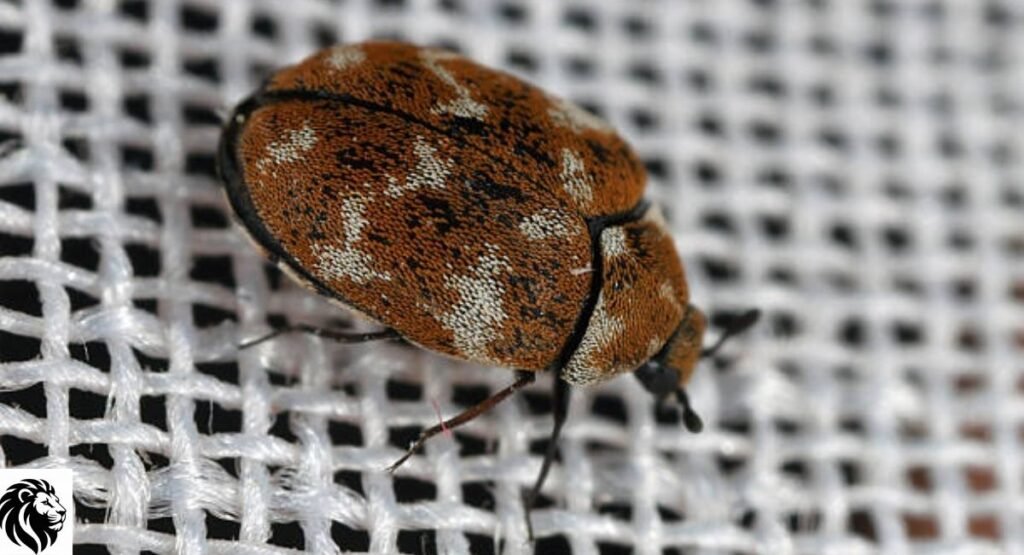
Carpet beetles are tiny household beetles that often escape notice until their larvae damage natural materials. Adults may appear mottled, while larvae commonly have hairy bodies. Wool, fur, feathers, silk, carpets, stored clothing, and hidden organic debris can support developing larvae.
Adults themselves usually aren’t responsible for the damage. The larvae are the problem. Check closets, carpet edges, furniture, vents, window areas, and quiet storage spaces if you repeatedly find these household beetles indoors.
13. Flour Beetle
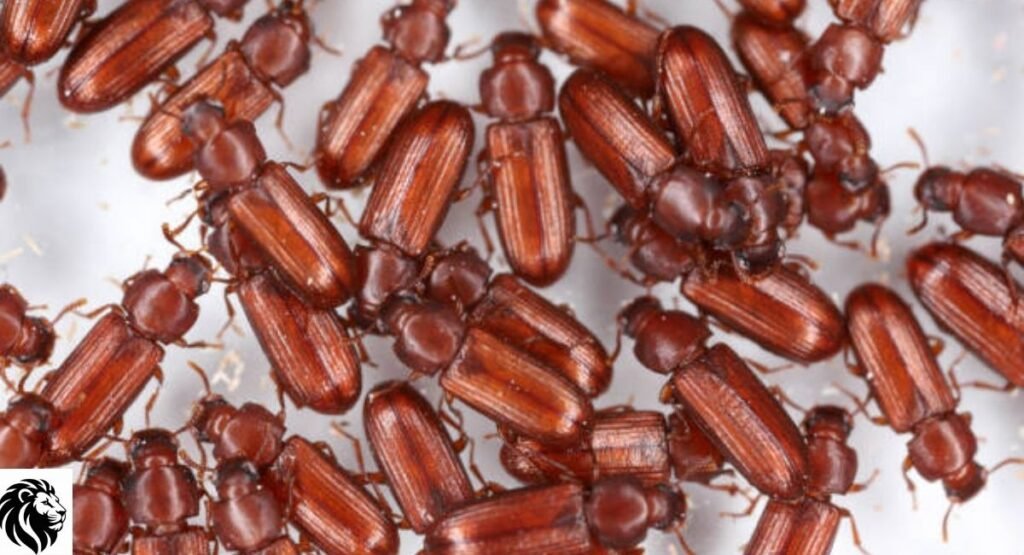
Flour beetles are small reddish-brown insects associated with stored foods. They may appear in flour, cereal, grains, baking mixes, and other dry products. Their flat bodies allow them to move through tiny spaces around containers, packaging, shelves, and food residues.
A single beetle doesn’t always prove a major infestation. Repeated sightings, insects around several products, or contaminated food suggest a wider problem. Inspect nearby packages carefully because pantry pests can spread between poorly sealed dry goods.
14. Longhorn Beetle
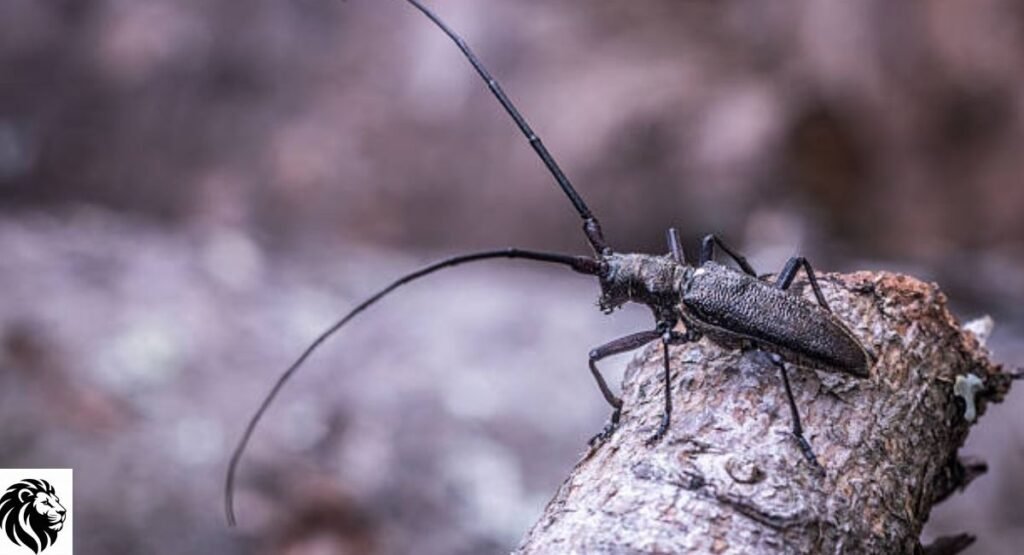
Longhorn beetles are famous for antennae that can become remarkably long compared with the body. Their shapes and patterns vary widely, but many have elongated bodies and strong jaws. Larvae usually develop inside woody plants, where they create tunnels while feeding.
Some longhorn beetles are harmless native species, while others can become serious timber pests. For identification, pay attention to antenna length, body markings, host tree, and exit holes. Never assume every large long-antenna beetle belongs to the same species.
15. Emerald Ash Borer
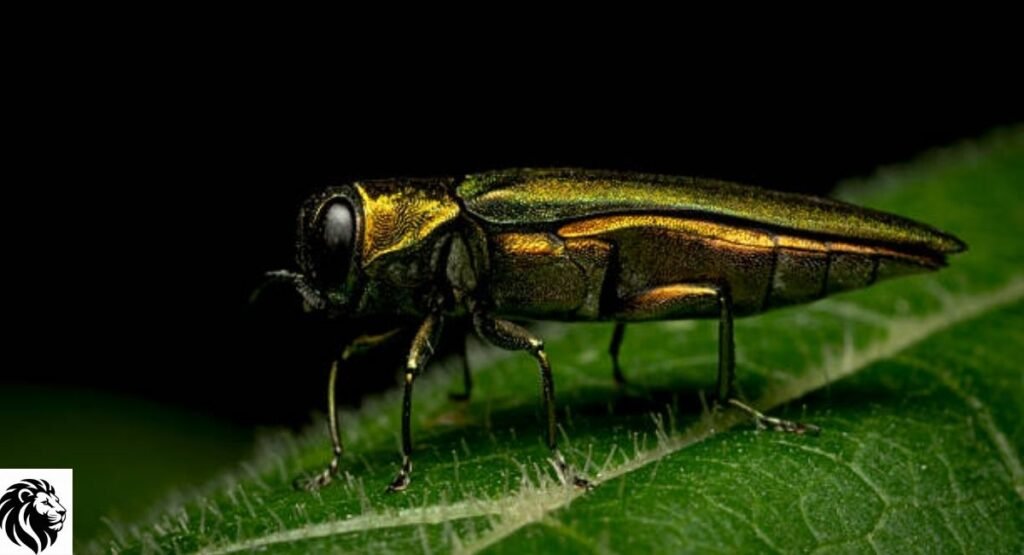
The emerald ash borer is a slender, metallic-green beetle that attacks ash trees. Adults are about half an inch long, while larvae tunnel beneath bark and feed on inner tissues. D-shaped adult exit holes are one important clue when examining an affected tree.
This invasive insect can kill healthy ash trees in forests, towns, suburbs, and rural landscapes. Other warning signs include thinning branches, bark cracks, epicormic shoots, and increased woodpecker activity. Because management rules can vary locally, suspected infestations should be reported to appropriate state or federal authorities.
Types of Beetles by Color
Color is an excellent first clue when you’re trying to identify an unfamiliar beetle. However, it shouldn’t be your final answer. A metallic-green beetle could represent several unrelated groups, while lighting can dramatically change how brown, black, or bronze surfaces appear.
Instead, combine color with markings, body proportions, habitat, and behavior. This approach works especially well for black beetles, green metallic species, striped beetles, and brightly colored lady beetles that beginners often encounter in the United States.
Black Beetles
Black beetles include ground beetles, darkling beetles, some stag beetles, and several household species. Their shared color makes identification tricky. Body shape provides the next clue. A shiny runner under a rock differs dramatically from a tiny oval beetle inside stored food.
Brown Beetles
Brown beetles appear around gardens, soil, timber, houses, and stored foods. Some have smooth shells, while others display grooves, hairs, scales, or patterns. Because brown is widespread among common beetles, always check size, body shape, habitat, and antennae before deciding what you’ve found.
Green Beetles
Green beetles can be brilliantly metallic or muted depending on light and viewing angle. Japanese beetles have green head and thorax areas, while emerald ash borers are slender and metallic. Tiger beetles can also appear vividly green, showing why color requires supporting clues.
Red, Orange & Yellow Beetles
Bright red, orange, and yellow bodies often make beetles easier to notice. Lady beetles are classic examples, while Colorado potato beetles combine yellow-orange coloring with dark stripes. Some vivid colors can serve as warning signals, although color alone doesn’t prove that an insect is dangerous.
Spotted and Striped Beetles
Spots and stripes can be among the strongest visual clues in beetle identification. Count markings when possible, then note their position rather than simply their number. The arrangement on the wing covers or pronotum may separate closely related beetles that share the same basic color.
Types of Beetle Insects by Habitat
Habitat often acts like a shortcut when identifying types of beetle insects. A beetle found in flour has very different possibilities from one found beneath tree bark. Food source, moisture, shelter, host plants, and temperature all influence where beetles spend their lives.
For that reason, always record where you discovered the insect. A simple note such as “under a maple log in Pennsylvania” can be more useful than color alone. Naturalists routinely combine appearance with location to improve identification accuracy.
Beetles Found in Gardens
Garden beetles may live on flowers, leaves, stems, soil, compost, or beneath plant debris. Lady beetles and ground beetles often help gardeners by hunting pests, while Japanese and Colorado potato beetles can damage crops. Check both the plant and soil for additional clues.
Beetles Found in Houses
The phrase types of beetle insect in house covers several very different situations. Some beetles enter accidentally through doors and windows, while others reproduce indoors around food, fabrics, or wood. Finding the beetle’s food source is often the quickest way to understand what brought it inside.
Beetles Found in Pantries
Pantry beetles thrive around dry foods and can remain hidden inside forgotten packages. Flour beetles, drugstore beetles, cigarette beetles, and related stored-product pests may spread through shelves when food containers remain poorly sealed. Inspect nearby dry goods rather than focusing only on the package where you found insects.
Beetles Found in Wood and Trees
Wood-associated beetles include bark beetles, longhorn beetles, furniture beetles, and invasive tree pests. Larvae may tunnel beneath bark or through timber, leaving galleries, powder, weakened wood, or exit holes. Identifying the host tree can greatly narrow the possible beetle group.
Aquatic Beetles
Aquatic beetles prove that beetles aren’t limited to dry land. Predaceous diving beetles swim with powerful, hair-fringed hind legs, while whirligig beetles spin rapidly across calm water. Some aquatic species carry air beneath their elytra, allowing them to remain underwater while hunting.
Common Types of Beetle Insects Found in Houses
Finding a beetle indoors can be unsettling, especially when you don’t know whether it damages property. Fortunately, context matters. A single ground beetle may have wandered through an open door, while repeated carpet or pantry beetles suggest an indoor food or material source.
Start by checking where the beetle appears most often. Windowsills can indicate wandering or overwintering insects, whereas closets, food cabinets, and wooden furniture point toward different groups. Don’t spray blindly before identifying the pest because treatment depends heavily on the species.
Carpet Beetles
Carpet beetle larvae often hide where natural fibers, pet hair, lint, feathers, or dead insects accumulate. Adults may be found near windows because they seek light. Repeated larvae, shed skins, or fabric damage deserve closer attention than the presence of one adult.
Pantry Beetles
Pantry beetles can leave you wondering where they came from. Look closely at flour, cereal, grains, spices, dried pet food, birdseed, and other dry products. Finding insects in several packages usually means you should inspect the entire storage area rather than discard only one item.
Beetles in Furniture and Wood
Small holes in furniture don’t always mean active beetles. Old damage can remain visible for years after insects disappear. Fresh powder, new exit holes, live adults, or repeated emergence provide stronger evidence that wood-boring beetles are still developing inside timber.
Are House Beetles Dangerous?
Most indoor beetles don’t pose a serious threat to people. The bigger concerns are damaged food, natural-fiber materials, furniture, or structural wood. Some beetles can pinch, while blister beetles may cause skin irritation through chemical compounds, so unfamiliar insects deserve cautious handling.
How to Identify Different Types of Beetle Insects
Good beetle identification doesn’t depend on one magical feature. Instead, use several clues together. Start with the overall shape, then inspect the wing covers, antennae, markings, size, and habitat. Think of each clue as a puzzle piece rather than a final verdict.
Photography can make the process much easier. A clear image from above may reveal color and shape, while a side view can show body proportions. Multiple angles are especially useful because one photograph may hide the exact feature needed for identification.
Step 1: Confirm It Is a Beetle
First, look for hard wing covers that meet along the middle of the back. Check for six legs and chewing mouthparts as well. These features can help separate beetles from flies, cockroaches, and true bugs that look superficially similar.
Step 2: Check Size and Body Shape
Measure approximately rather than guessing from memory. A beetle may be tiny, ladybug-sized, medium, or surprisingly large. Next, classify its shape as rounded, oval, flattened, elongated, cylindrical, or wedge-shaped to narrow your choices.
Step 3: Examine Color and Markings
Look carefully for spots, stripes, metallic sheen, bands, patches, and contrasting edges. Don’t rely on the overall color alone. Pattern placement can provide a much stronger clue, especially when several beetle species share similar shades.
Step 4: Look at Antennae and Pronotum
Antennae can be remarkably useful because different beetle groups develop distinct shapes and lengths. Also examine the pronotum, the shield-like section behind the head. Its color, shape, edges, and markings often provide another valuable identification feature.
Step 5: Consider Habitat and Location
Ask yourself exactly where you found the beetle. Was it on a rose, beneath a log, inside flour, near an ash tree, or swimming in a pond? Habitat clues can eliminate many possibilities before you even study tiny anatomical details.
Step 6: Observe Behavior
Behavior can reveal what appearance hides. A beetle that glows, clicks, swims, runs rapidly, flies toward lights, or burrows into soil offers additional clues. Note what the insect eats and how it moves, but observe without disturbing it unnecessarily.
Beetle Identification Chart
The table below gives you a fast comparison of the 15 featured beetle species. Use it as a starting point rather than a final diagnosis because several unrelated species can share similar colors or habitats.
| Beetle Type | Color | Key Identification Feature | Habitat | Common Role |
| Lady Beetle | Red/Orange | Black spots | Gardens | Beneficial predator |
| Asian Lady Beetle | Orange/Red | M/W marking | Gardens/Homes | Predator/house visitor |
| Japanese Beetle | Green/Copper | White hair tufts | Gardens | Plant pest |
| Colorado Potato Beetle | Yellow/Orange | Black stripes | Crops | Plant pest |
| Stag Beetle | Brown/Black | Large mandibles | Woodlands | Decomposer |
| Hercules Beetle | Brown/Green | Large horn | Forests | Decomposer |
| Rhinoceros Beetle | Brown/Black | Horn | Forests | Plant feeder |
| Ground Beetle | Black/Brown | Long legs | Soil/Leaf litter | Predator |
| Tiger Beetle | Metallic Green | Fast runner | Paths/Soil | Predator |
| Click Beetle | Brown/Gray | Clicking action | Soil/Vegetation | Predator/Pest |
| Firefly | Dark | Glowing abdomen | Moist habitats | Predator/Light producer |
| Carpet Beetle | Mottled | Hairy larvae | Homes | Household pest |
| Flour Beetle | Reddish-Brown | Small flat body | Pantry | Stored-food pest |
| Longhorn Beetle | Various | Long antennae | Trees | Wood feeder |
| Emerald Ash Borer | Metallic Green | Bullet-shaped body | Ash trees | Invasive pest |
Are Beetles Helpful or Harmful?
Calling every beetle a pest would miss half the story. Many species support ecosystems by controlling other insects, recycling dead material, visiting flowers, or feeding wildlife. Others damage crops, stored food, timber, ornamental plants, or living trees.
The key is context. A ground beetle hunting caterpillars can be beneficial, while a flour beetle inside a food package is unwanted. Knowing the species helps you choose a sensible response instead of treating every garden beetle or household visitor as a problem.
Beneficial Beetles
Lady beetles, ground beetles, tiger beetles, and soldier beetles can provide useful ecological services. Some control insects, others visit flowers, and many participate in decomposition. These beneficial insects contribute to food webs and natural pest regulation without requiring human intervention.
Harmful Beetles
Harmful species include plant feeders, stored-food pests, wood borers, and invasive insects. Japanese beetles can damage foliage, Colorado potato beetles attack crops, and emerald ash borers threaten ash trees. Damage level varies by species, location, season, and population size.
Beetles That Can Affect Humans
Most beetles aren’t interested in biting people. A few can pinch when handled, while blister beetles may release chemicals that irritate skin. The safest approach is simple: avoid squeezing unfamiliar insects and use a container or photograph when identification is necessary.
Why Do Beetles Have Bright Colors and Patterns?
Bright beetle colors can serve several purposes, including camouflage, courtship, warning signals, and mimicry. A vivid pattern may tell predators that the insect is unpleasant or dangerous. In other cases, the color helps a beetle blend into flowers, bark, soil, leaves, or sunlight.
One useful concept is aposematism, where conspicuous coloration warns predators of potential danger or poor taste. Another is Batesian mimicry, where a relatively harmless species resembles a defended species. These strategies show that beetle colors are often more than simple decoration.
Where Are Beetles Commonly Found?
Beetles live in remarkably varied environments. You may encounter them in gardens, forests, lawns, farms, houses, pantries, rotting logs, tree bark, ponds, streams, or damp soil. Each habitat provides different food, shelter, moisture, and breeding opportunities.
Location also changes what you’re likely to see. A beetle in Arizona’s dry landscape may belong to a very different ecological community from one found in a wet Pennsylvania woodland. Season matters too because many adults emerge only during specific periods.
Flying Beetles: Can All Beetles Fly?
Many beetles can fly, although not every species uses flight regularly. The hardened elytra protect the delicate hindwings rather than replacing them. Before takeoff, a beetle opens the elytra and unfolds the thin wings underneath, creating a surprisingly effective flight system.
Some flying beetles become active at night and may gather around porch lights. Others rarely fly because their habitat, body structure, or lifestyle makes walking more practical. Fireflies are a familiar example of flying beetles that use flight and light together during courtship.
Beetle Identification From a Picture
A photograph can be the fastest route to a useful identification, especially when the insect won’t stay still. Take clear images from several angles and include the surrounding habitat. iNaturalist recommends multiple views because important identification features may disappear from a single angle.
Don’t crop away every environmental clue. A photo showing the beetle on an ash tree, rose, pantry shelf, or pond edge can reveal valuable context. Apps may suggest likely species, but treat automated results as starting points rather than unquestionable answers.
What to Photograph
Photograph the beetle from above, from the side, and as close as you safely can. Include its antennae, wing covers, markings, and body shape. A size reference and habitat photograph can add useful context and improve the quality of later identification.
Best Beetle Identification Apps
iNaturalist allows users to upload observations and receive identification suggestions that can also be reviewed by its community. Seek by iNaturalist uses image recognition to identify organisms and can help beginners explore nearby wildlife. Neither tool should replace expert confirmation for important pest reports.
Conclusion
Once you learn the basic clues, beetles become much easier to appreciate. Their hardened wing covers, body shapes, colors, antennae, habitats, and behaviors provide a practical roadmap for identification. More importantly, these clues reveal what the insect is doing in its environment.
From tiny carpet beetles hiding indoors to metallic green beetles attacking trees, the world of types of beetle insects is surprisingly varied. Don’t judge a beetle by its appearance alone. Look closer, consider where you found it, and let several clues work together before deciding what you’ve discovered.
FAQs
What type of insect is a beetle?
A beetle is an insect in the order Coleoptera. Its most recognizable feature is a pair of hardened forewings called elytra that protect the delicate wings underneath.
What are the most common types of beetles?
Common U.S. examples include lady beetles, Japanese beetles, ground beetles, click beetles, carpet beetles, and flour beetles. The exact species varies by region and habitat.
How many types of beetles are there?
Beetles contain an enormous number of described species across many families. New species continue to be studied, which makes the group one of the richest areas of insect diversity.
What types of beetle insects are found in houses?
Carpet beetles, flour beetles, drugstore beetles, cigarette beetles, and Asian lady beetles can appear indoors. Outdoor beetles may also enter accidentally through doors, windows, cracks, or other openings.
Are beetles harmful to humans?
Most beetles are harmless to people. A few can pinch or cause skin irritation, while many more affect humans indirectly by damaging food, fabrics, plants, timber, or trees.

Welcome to natureanimalhub! I’m Anam Sattar, an AI Powered SEO, and Content Writer with 4 years of experirnce.
I help websites rank higher,grow traffic, and look amazing. My goal is to make SEO and web design simple and effective for everyone.
Let’s achieve more together!