

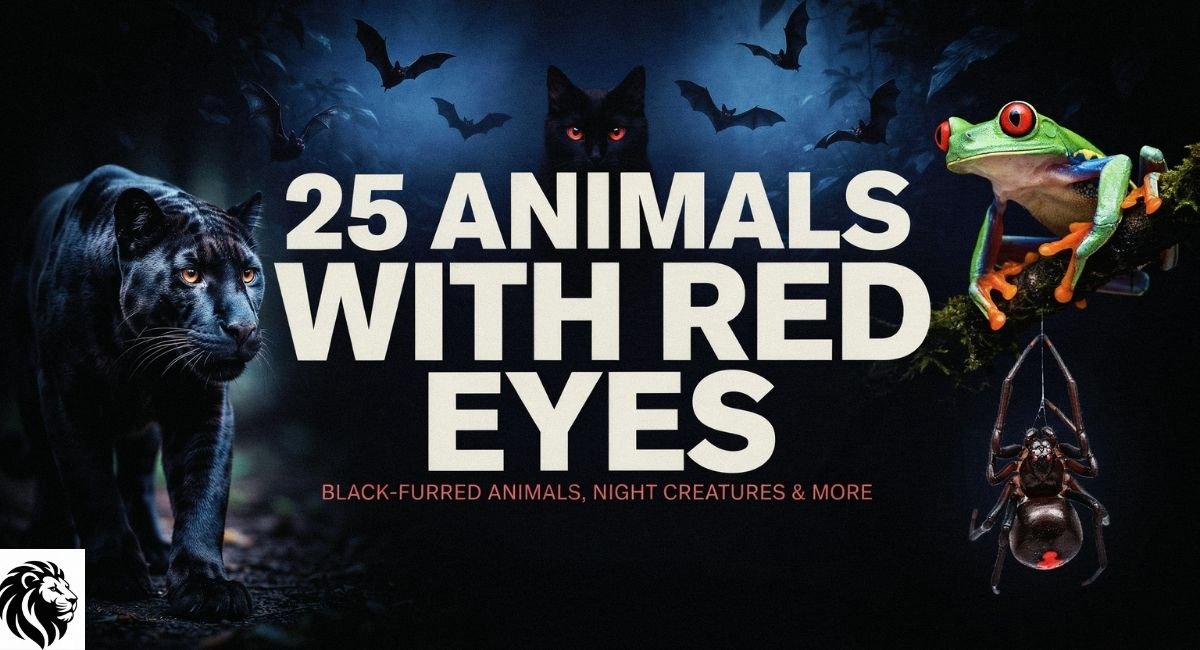
Red eyes can make an animal look mysterious, unusual, or almost unreal. Yet animals with red eyes aren’t all red-eyed for the same reason. Some species naturally have vivid red irises, while others develop pink or ruby-colored eyes because of albinism and reduced melanin. In darker settings, ordinary eyes can also appear red because of reflected light, especially in nocturnal animals and photographs.
This guide explores 25 fascinating species with striking red-looking eyes, from colorful frogs and birds to snakes, fish, and pale mammals. You’ll also discover which creatures can appear to have black fur and red eyes, why eye shine happens at night, and how to tell natural eye color from a camera effect.
What Causes Red Eyes in Animals?
Red-looking eyes don’t have one universal cause. The color can come from natural pigmentation, reduced pigmentation, genetics, or reflected light. Therefore, two animals with similar-looking eyes may have completely different biology behind them.
Your first clue is the animal’s entire appearance. A pale rabbit with pinkish-red eyes suggests a pigmentation condition, while a naturally dark-eyed bird can show a genuine red iris. Lighting adds another layer because reflected light can make an ordinary eye appear startlingly red.
Natural Eye Pigmentation
Natural eye color develops from pigments and structures within the eye. The iris controls how much light enters the pupil, while its pigmentation helps create the visible eye color. In some species, reddish or deep-crimson irises occur naturally.
Eye color can also vary between males and females. Male wood ducks, for example, have vivid red eyes, while females generally have brown eyes. Such differences show that iris coloration can form part of a species’ normal appearance rather than signaling disease or albinism.
Albinism and Lack of Melanin
Albinism changes the picture completely. True albinism involves reduced melanin production, which can leave the coat or skin unusually pale and make the eyes appear pink or red. Veterinary references note that true albinism is associated with pale irises and visual problems in domestic animals.
Because pigment normally masks underlying tissues, reduced pigmentation can make the eyes look reddish. Albino animals may also experience greater sensitivity to bright sunlight. That explains why an albino rabbit or rat can look dramatically different from a normally pigmented individual.
Why Do Some Animals Have Red Eyes at Night?
Nighttime creates a visual trick that can fool even experienced observers. Some nocturnal animals possess a reflective layer called the tapetum lucidum, which sends available light back through the retina and improves vision in dim conditions. This reflection can produce glowing eyes.
However, glowing eyes aren’t automatically genuine red eyes. A flashlight or camera flash can reflect from the eye and create a temporary ruby, amber, green, or white shine. In other words, eye shine and natural eye color are two different things.
Animals With Black Fur and Red Eyes
The phrase “black fur and red eyes” sounds like a perfect description of a mysterious wild creature. In reality, the combination deserves careful examination. Genuine black fur paired with naturally red irises is unusual, especially among mammals, because classic albinism normally reduces pigmentation throughout the body.
A dark animal photographed at night may therefore look red-eyed without actually having red irises. Before identifying it, consider lighting, camera flash, eye reflection, coat color, and the animal’s species. One photograph can tell a misleading story.
Black-Furred Animals With Naturally Red Eyes
Dark fur and genuine red eyes can occur through different genetic pathways, although the combination isn’t the classic appearance of albinism. Coat pigmentation and eye pigmentation don’t always behave as one simple package.
For identification, look beyond the eyes. Examine the animal’s ears, muzzle, tail, body markings, and habitat. This broader approach helps separate a genuinely unusual black-furred animal from a normally pigmented animal caught under strange lighting.
Black Animals That May Appear Red-Eyed in Low Light
Nighttime changes how animal eyes look. A beam of light can bounce back from internal eye structures and create a vivid glow. The reflected color depends on species, eye anatomy, viewing angle, and the light source.
This effect is common enough to confuse wildlife observers. A dark cat, fox, deer, or other nocturnal mammal may appear to have glowing red eyes even though its natural iris isn’t red. The phenomenon is called eyeseflective shine or eye shine.
Are Black-Furred Animals With Red Eyes Usually Albino?
Usually, no. Classic albinism causes very little melanin, so an albino mammal commonly has white or very pale hair rather than deep-black fur. Veterinary guidance also distinguishes true albinism from other white-color conditions.
Leucism offers another useful comparison. A leucistic animal can have reduced pigmentation in its coat while retaining normally pigmented eyes. White squirrels illustrate this difference particularly well because white coloration doesn’t necessarily mean albinism.
20+ Animals With Red Eyes
The animal kingdom offers red-eyed species in surprisingly different forms. Some are birds with brilliant irises, while others are frogs, snakes, fish, shrimp, or mammals affected by pigmentation changes. Their habitats range from North American ponds to tropical rainforests.
The following 25 examples show why eye color should never be studied in isolation. Body pattern, behavior, habitat, sex, genetics, and lighting all add important clues when you’re trying to identify a red-eyed creature.
1. Red-Eyed Dove
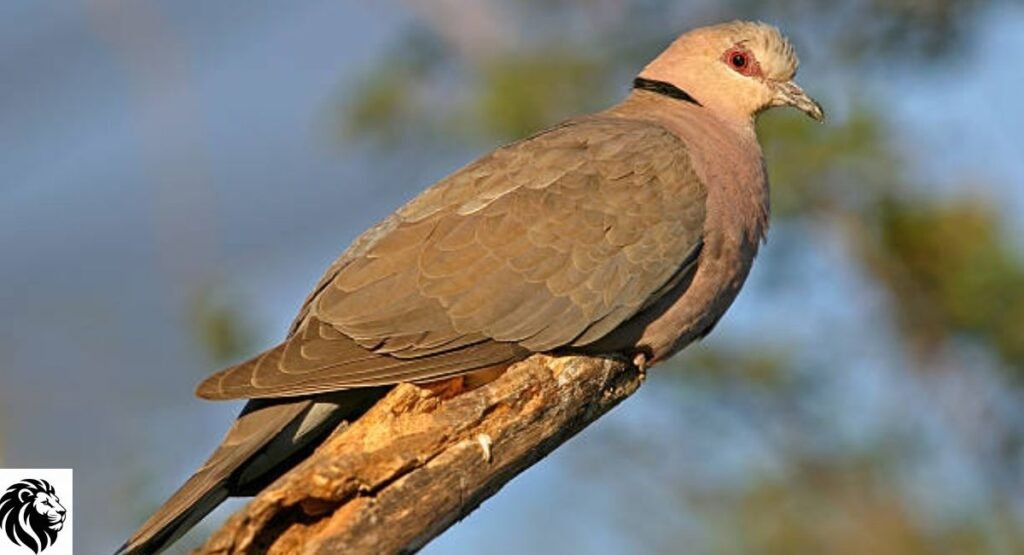
The red-eyed dove is a large pigeon found across much of Sub-Saharan Africa. It has pale brown wings and a conspicuous bright-red iris surrounded by pinkish skin. Its distribution generally follows suitable habitats rather than the continent’s harshest desert regions.
2. Eared Grebe
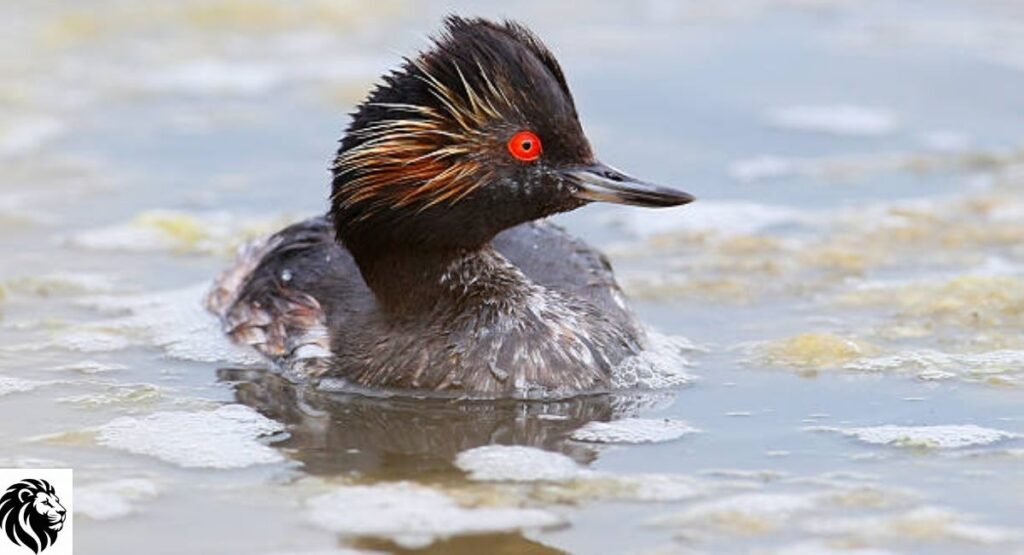
Eared grebes, also called black-necked grebes, have dark red eyes above their slim black bills. During the breeding season, their plumage becomes richer and more reddish-brown. They occur across parts of Europe, Asia, North America, and Africa, often gathering in large groups.
3. Night Heron
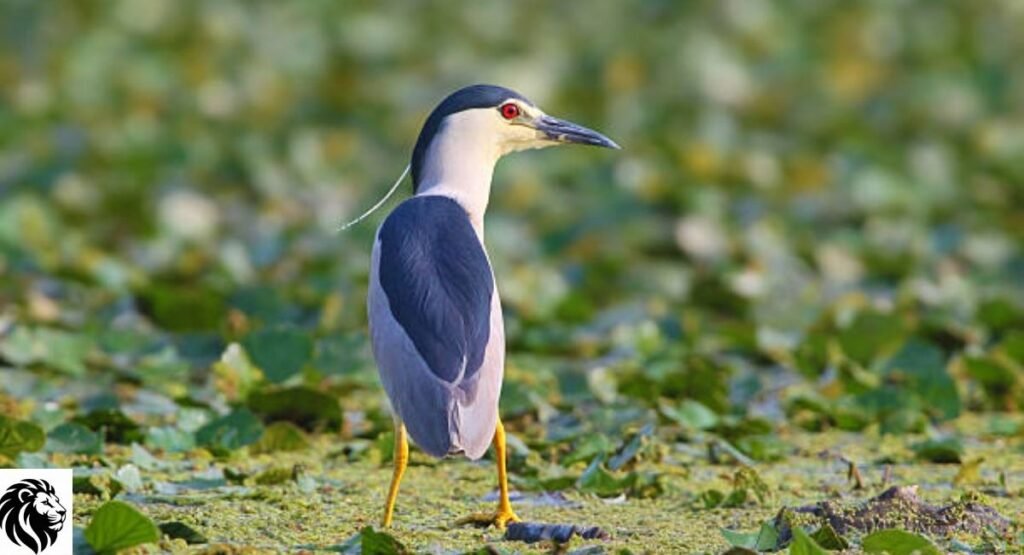
Night herons are built for patient hunting around wetlands and shorelines. Their red eyes stand out against their darker facial pattern, while their long legs help them move through shallow water. They feed on fish, frogs, insects, and other small prey, especially around low-light periods.
4. Snail Kite
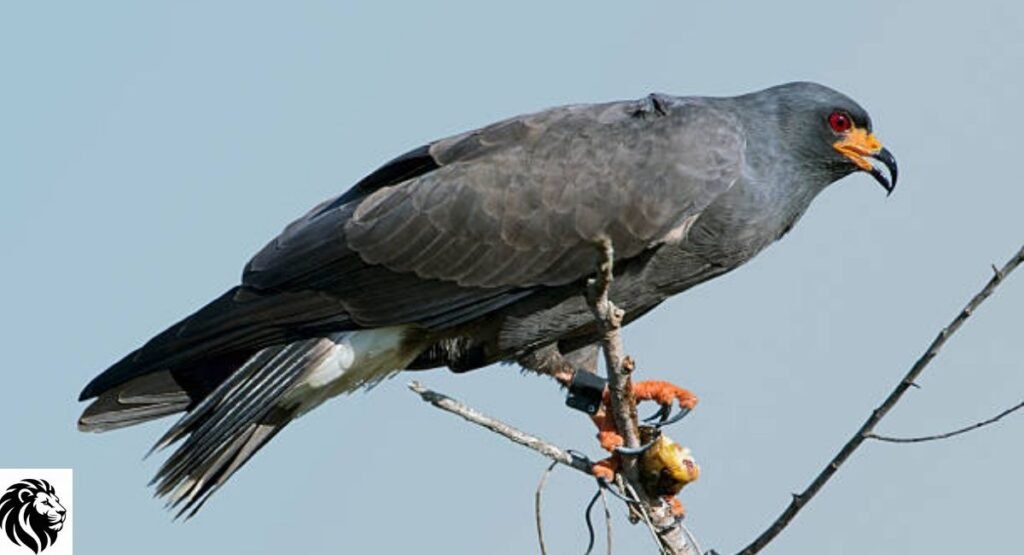
The snail kite combines broad wings, a triangular tail, dark plumage, and red eyes. Its name reveals its specialized diet: freshwater apple snails. Because those prey require suitable aquatic habitat, these birds favor marshes, lakes, and open freshwater areas where snails are accessible.
5. Wood Duck
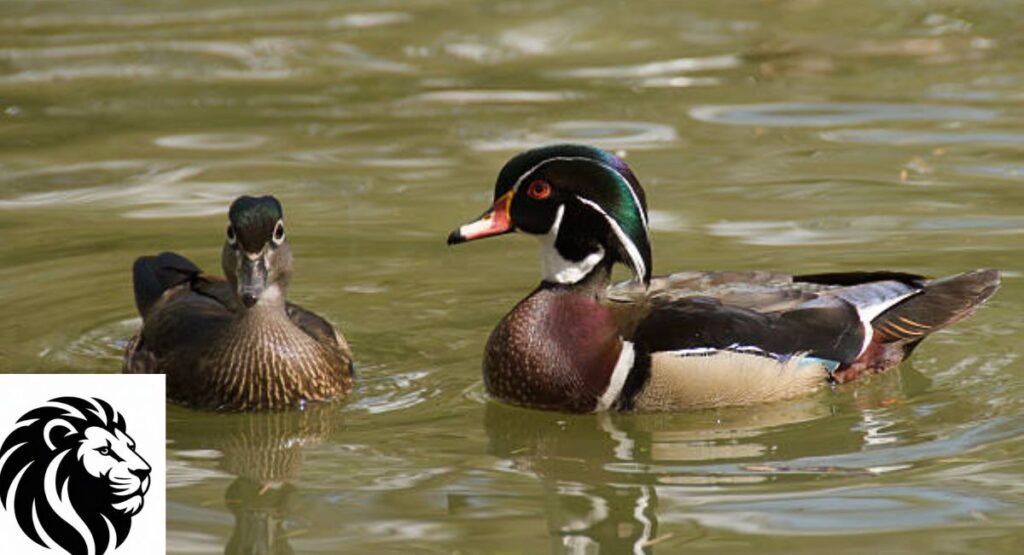
Male wood ducks have striking red eyes, while females generally have brown eyes. The male also carries a red bill and colorful plumage, creating an unusually vivid face. This North American duck often perches in trees, where strong vision helps it navigate a complex woodland environment.
6. Red-Eyed Vireo
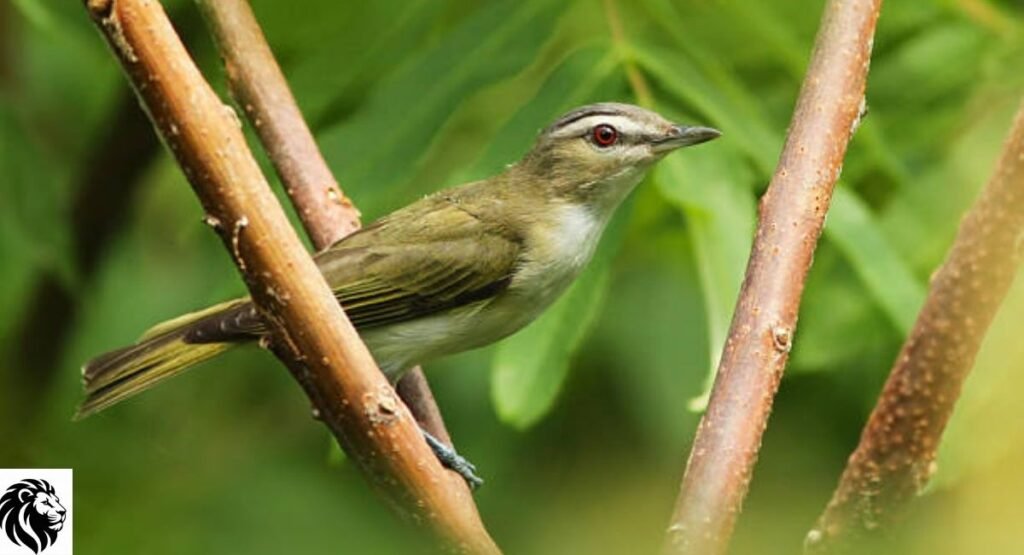
The red-eyed vireo is a small songbird recognized by its reddish eye, pale eyebrow stripe, and olive-green upperparts. It occurs widely in North America and spends much of its time searching vegetation for insects and other small food. Its eye adds a subtle flash to an otherwise understated appearance.
7. Red-Eyed Bulbul
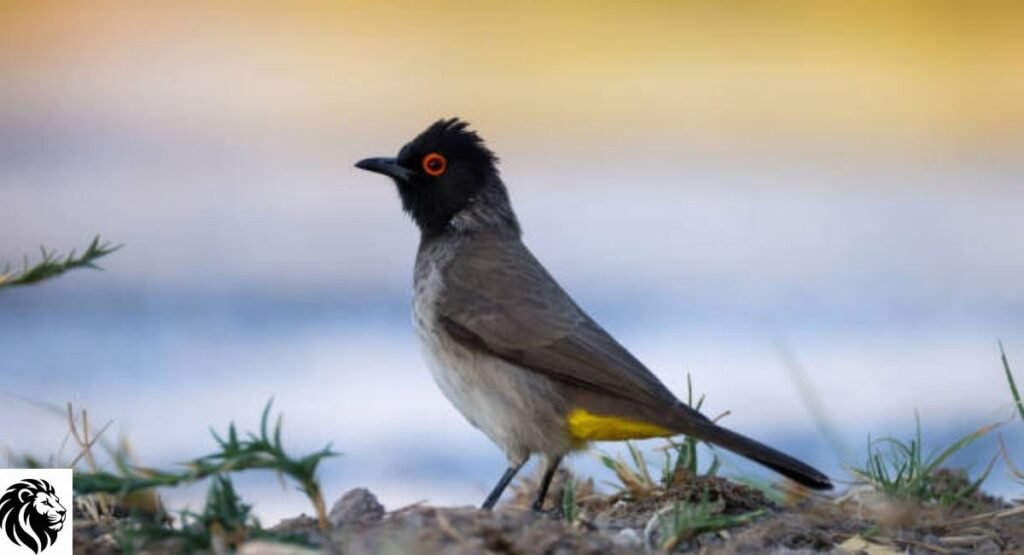
The red-eyed bulbul carries the distinctive facial combination that its name suggests. Its reddish iris contrasts with surrounding plumage and makes the bird easier to recognize. Like other bulbuls, it belongs to a diverse group of passerines that occupy habitats ranging from woodland edges to gardens.
8. Stygian Owl
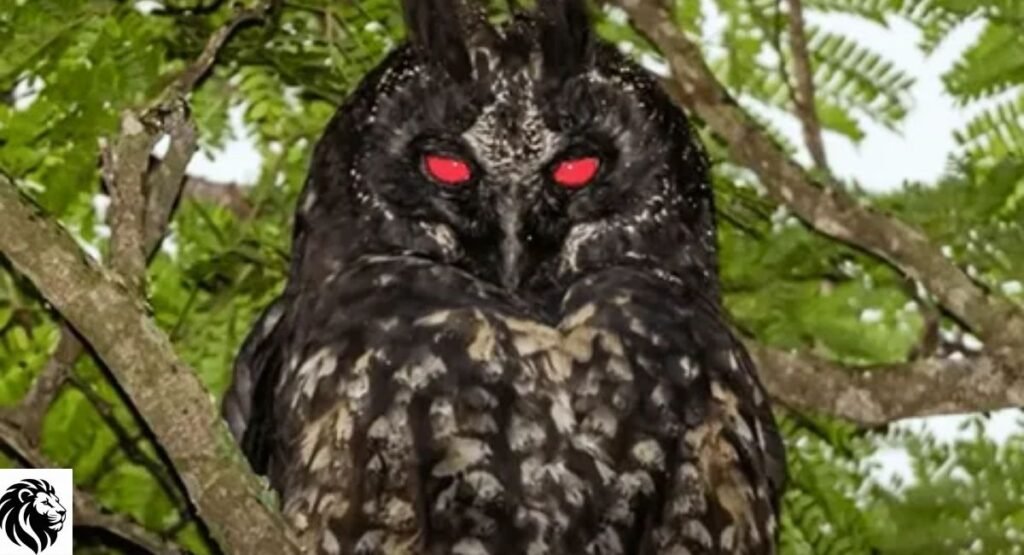
The Stygian owl is a mysterious-looking nocturnal owl associated with dark forest habitats. Its shadowy plumage and striking eyes give it an especially dramatic appearance after sunset. Like other owls, it relies on more than vision, using hearing and stealth to locate prey in darkness.
9. Black-Shouldered Kite
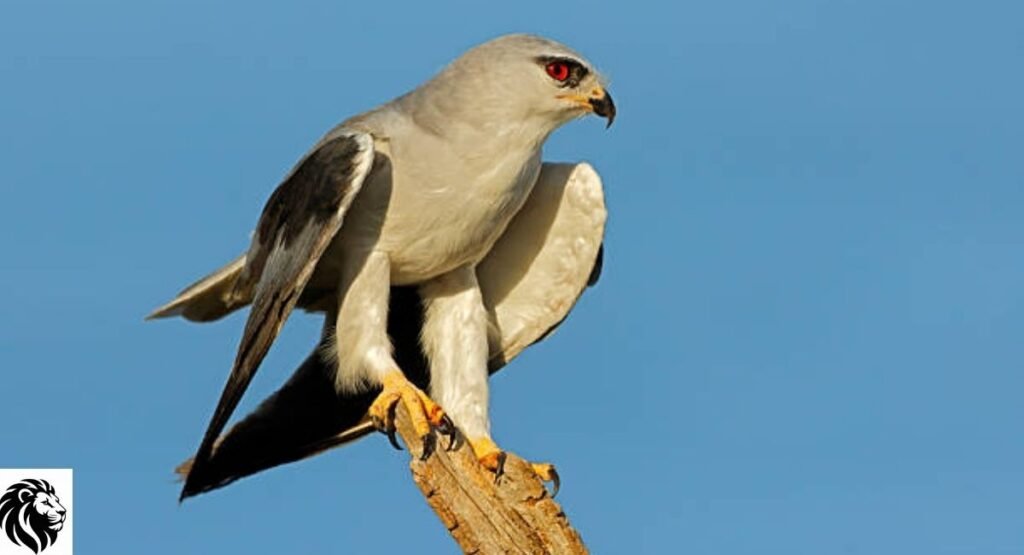
The black-shouldered kite has pale plumage with dark shoulder patches and a distinctive facial appearance. It often hunts over open country by hovering before dropping toward prey. Its eyes add another recognizable feature, although behavior and wing pattern remain more reliable identification clues.
10. Red-Eyed Tree Frog
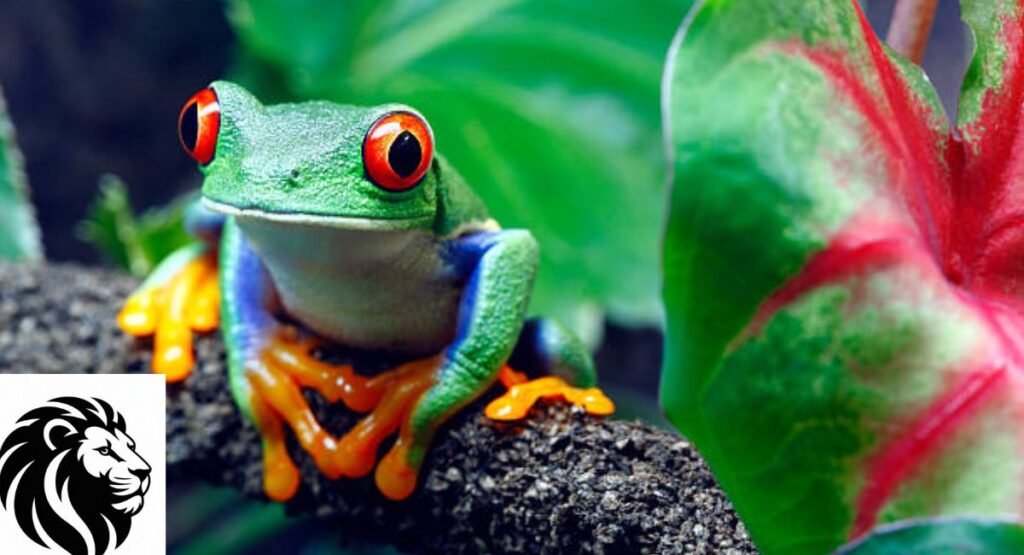
Few amphibians are as visually memorable as the red-eyed tree frog. Its scarlet eyes contrast with a green body, blue-and-yellow sides, and orange feet. When disturbed, it suddenly exposes these colors, potentially startling predators long enough to escape.
This frog is nocturnal and lives in tropical forests from southern Mexico through Central America and into northern South America. Its dramatic appearance isn’t merely decoration. Researchers describe the flashing colors as a possible startle defense, while its green body helps it blend with foliage.
11. Eastern Box Turtle
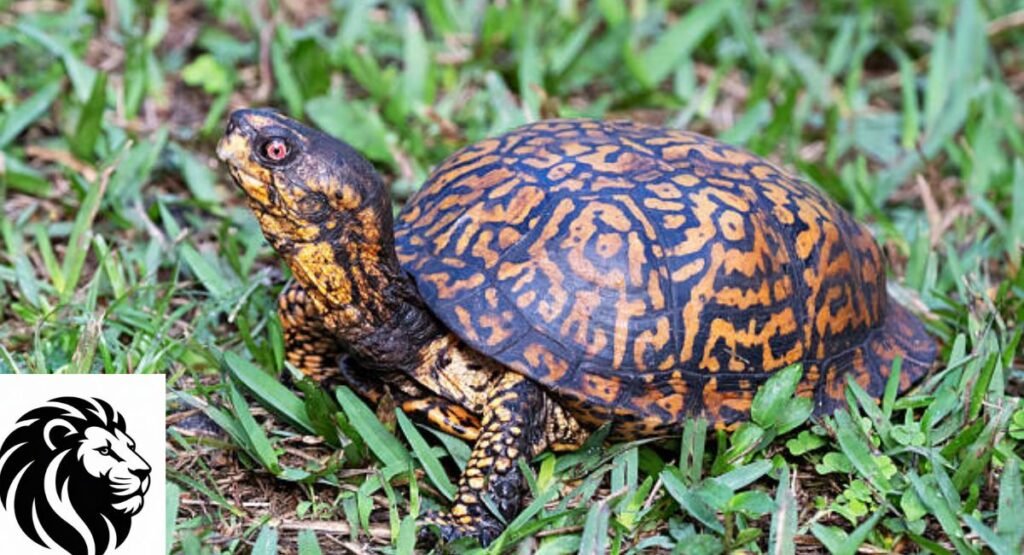
Male eastern box turtles commonly show red eyes, while females usually have brown eyes. These turtles inhabit the eastern United States and possess a hinged shell that lets them close themselves tightly when threatened.
This is a useful example of sexual dimorphism, where males and females of one species differ in visible traits. The difference can involve coloration, body structure, or other features.
12. Satanic Leaf-Tailed Gecko
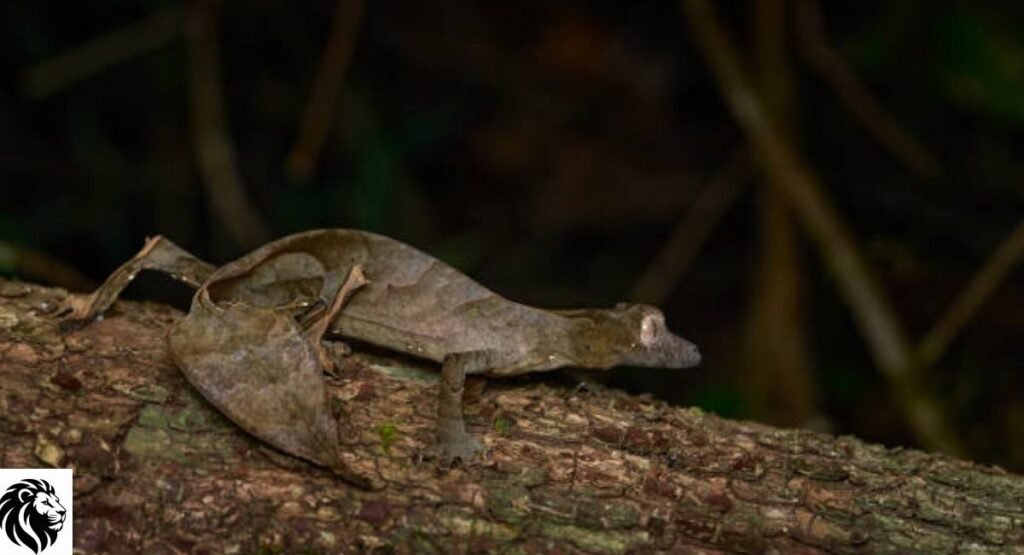
The satanic leaf-tailed gecko has one of nature’s finest camouflage tricks. Its flattened tail resembles a dry leaf, complete with vein-like markings and irregular coloration. Bright red eyes add a startling contrast to its otherwise cryptic appearance.
This Madagascar native has another unusual feature. Instead of ordinary movable eyelids, it uses its tongue to keep its exposed eye surfaces clean and moist. That strange adaptation makes this gecko even more memorable.
13. European Adder
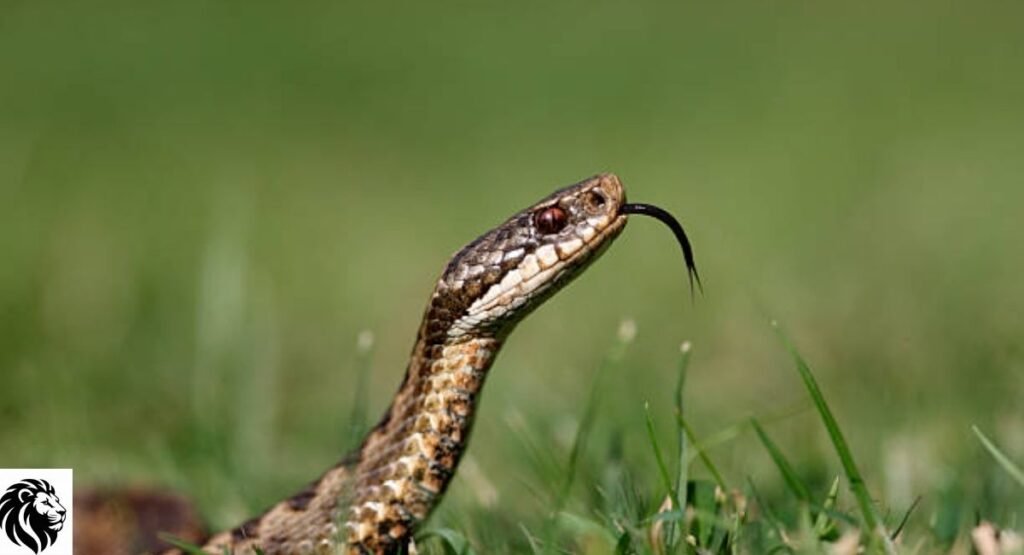
The European adder is a venomous snake with variable coloration and distinctive eyes. It can tolerate a wide range of climates and has an unusually broad distribution for a viper. Its sexual dimorphism also means males and females can look noticeably different.
Although eye color can help with identification, never approach a wild snake simply because its markings seem familiar. Regional variation can be substantial, and a photograph may hide important details.
14. Tree Viper
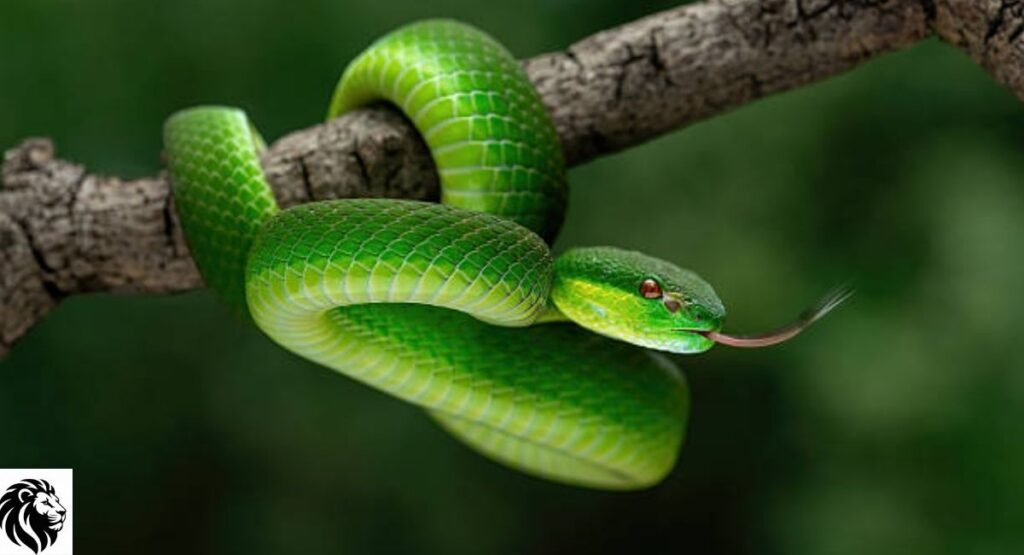
Tree vipers combine green scales with conspicuous red eyes, creating a striking appearance among forest vegetation. They are venomous and often live in arboreal environments. Their coloration can provide camouflage while their eyes become an obvious clue at close range.
The source notes that eye color can help distinguish the tree viper from a similar green snake. Still, wildlife identification should use several traits rather than one feature alone.
15. Albino Corn Snake
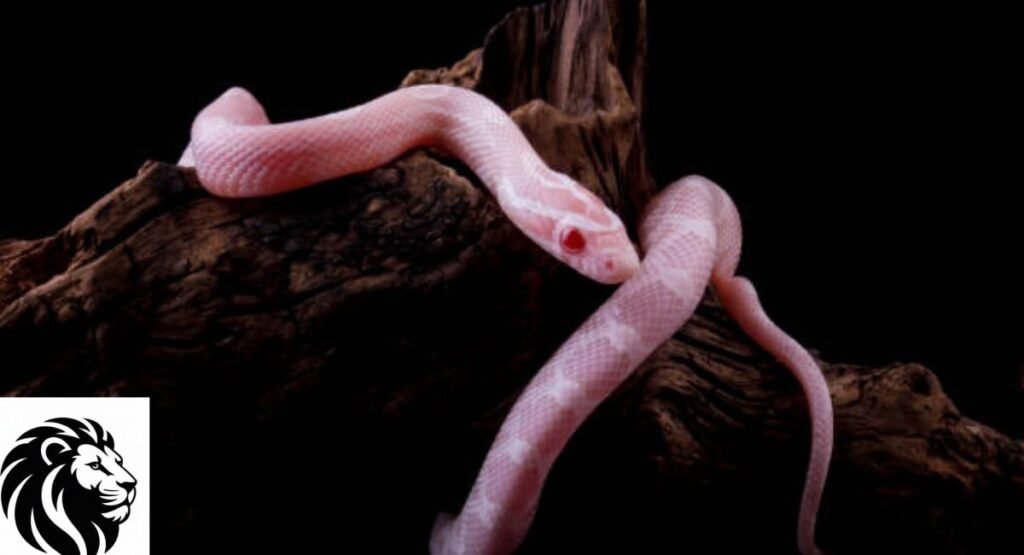
Albino corn snakes have reduced pigmentation, giving their bodies a pale appearance and their eyes a pinkish or reddish look. Unlike normally colored corn snakes, they lack the usual dark pigments that create the familiar orange, red, and brown pattern.
This is a useful example of how genetic pigmentation changes can transform an animal’s appearance. It also shows why a pale body paired with red eyes should make you consider albinism rather than assume natural red iris pigmentation.
16. Peacock Mantis Shrimp
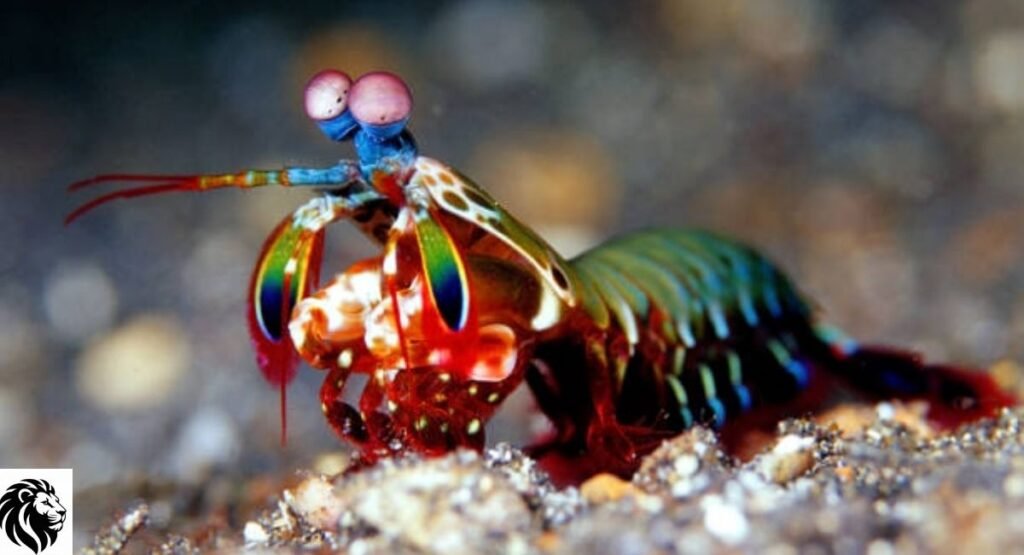
The peacock mantis shrimp has eyes unlike anything you’d find on a typical mammal. Its stalked compound eyes can detect polarized light and process visual information in remarkable ways. Smithsonian sources note that mantis shrimp can detect ultraviolet light and polarized patterns.
Its unusual eyes are part of a sophisticated visual system adapted to life underwater. Instead of simply asking whether the eyes are red, it’s more revealing to ask what those eyes can actually detect.
17. Rock Bass
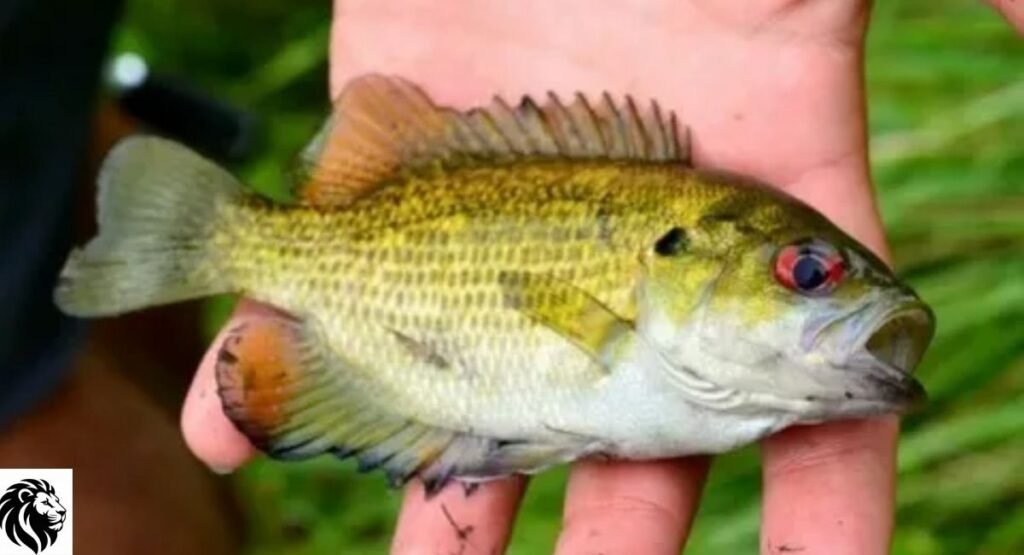
Rock bass are freshwater fish with large mouths and noticeable dark-red eyes. They occur in lakes and ponds across North America and belong to the sunfish family. Their body color can shift slightly, helping them blend into their surroundings.
The competitor source links their eye coloration with seeing in darker water. However, eye color alone doesn’t prove superior night vision. Aquatic vision depends on many structures and environmental factors.
18. Red-Eyed Tetra
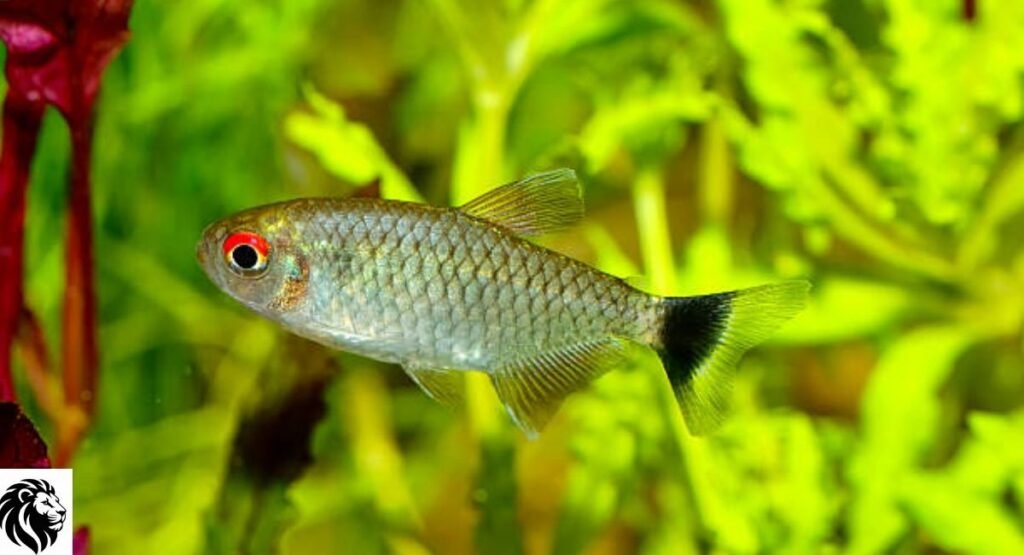
The red-eyed tetra is a small South American freshwater fish with vivid red eyes that contrast sharply with its silvery body. It forms schools and has become a popular aquarium species because of its peaceful behavior.
These fish usually reach only a few inches in length. In an aquarium, keeping them with much larger aggressive fish can create problems because their small size makes them vulnerable to predation.
19. Albino Rabbit
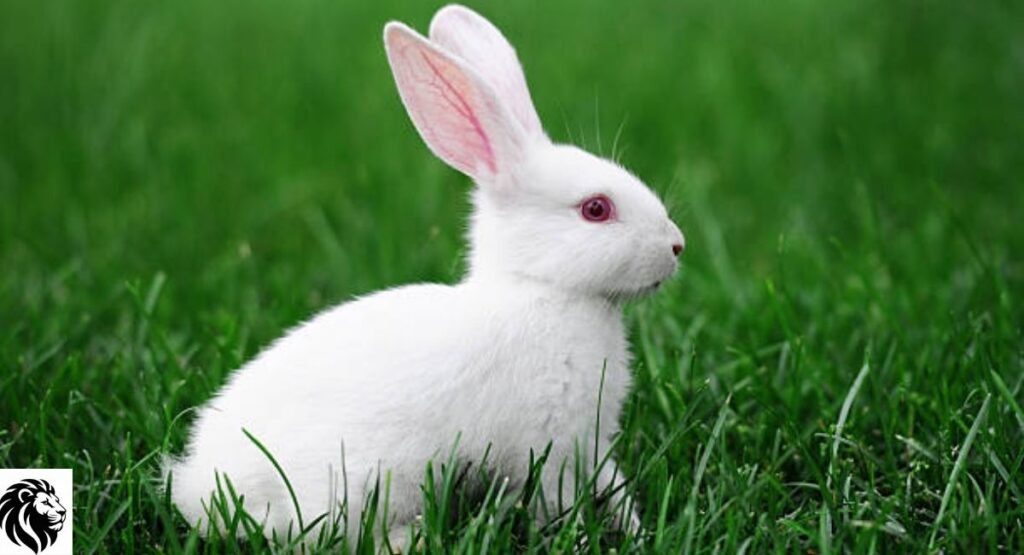
Albino rabbits typically have white fur and pink or red-looking eyes because of reduced pigmentation. Their lack of melanin can make their eyes more sensitive to bright light. This condition creates a very different appearance from ordinary brown- or dark-eyed rabbits.
A white rabbit isn’t automatically albino. Eye color matters here. A truly albino rabbit generally shows the characteristic combination of very low pigmentation and pale body coloration.
20. Albino Rat
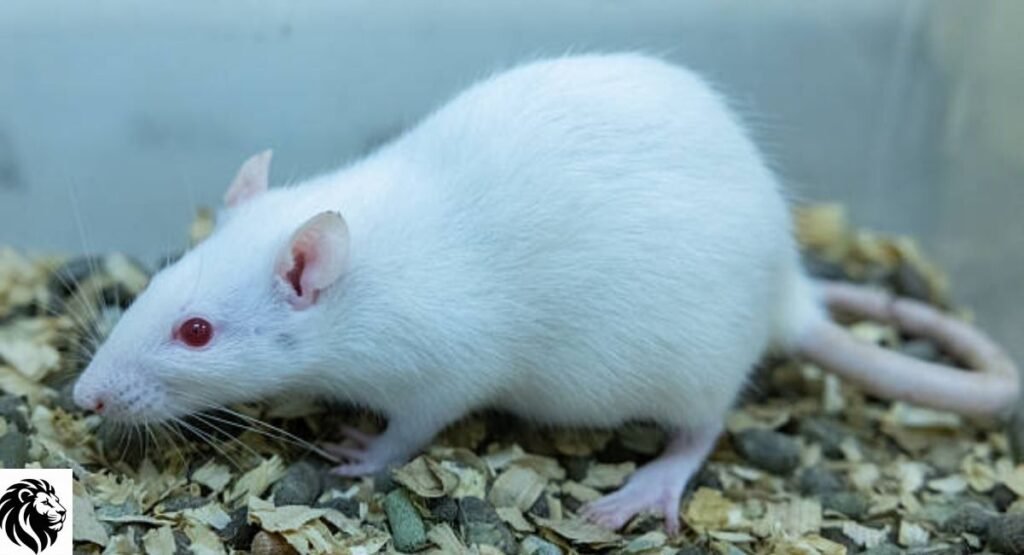
Albino rats are among the best-known laboratory animals with red or pink eyes. Their reduced pigmentation makes their eyes more light-sensitive, so bright illumination can be uncomfortable or visually challenging.
Interestingly, not every red-looking eye in a rat means albinism. Rats can also develop reddish material around their eyes from porphyrin-rich secretions associated with stress or illness. Veterinary guidance calls this condition chromodacryorrhea.
21. Albino Squirrel
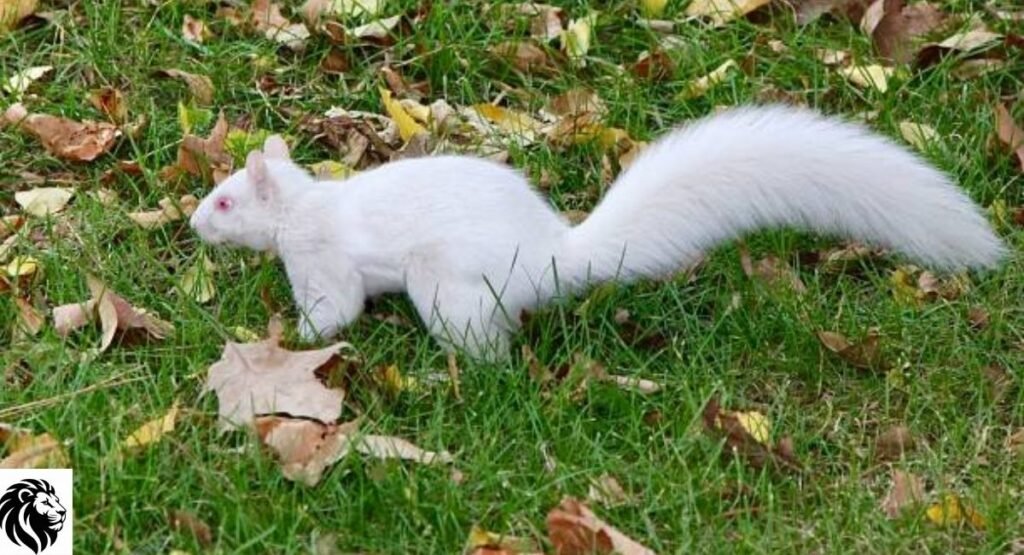
Albino squirrels are uncommon and can be confused with ordinary white squirrels. The key difference often lies in the eyes. Albino squirrels typically have red eyes, while leucistic white squirrels can retain normally pigmented eyes.
This distinction matters because leucism reduces pigmentation differently from albinism. In squirrels, the difference can also affect how the animal looks and how much pigment remains in its tissues.
22. Albino Ferret
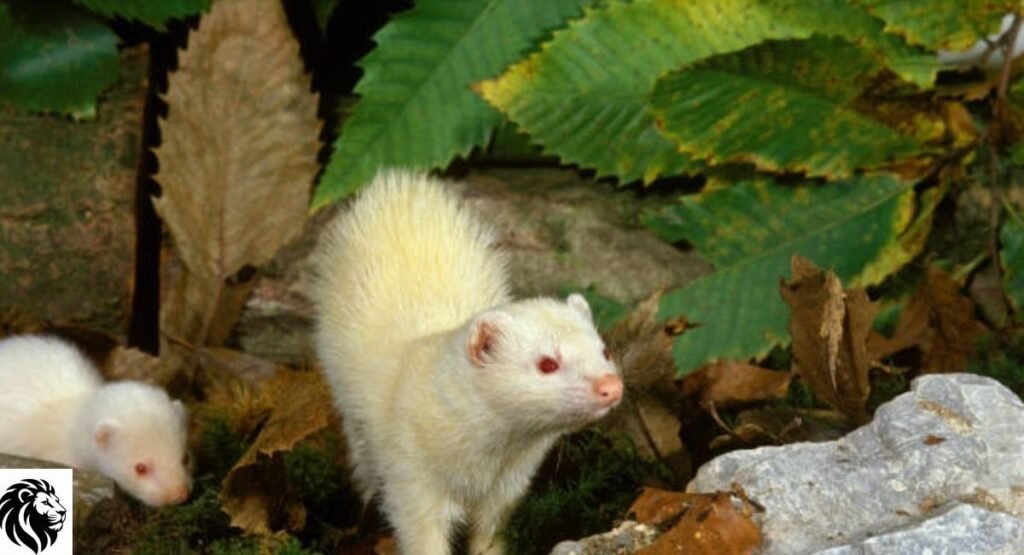
Albino ferrets have pale coats and reddish or pink eyes caused by reduced pigmentation. Their unusual appearance comes from genetics rather than a separate wild species. Compared with darker ferrets, their lack of pigment makes the eyes particularly conspicuous.
When identifying one, consider coat color and eye color together. A pale coat alone doesn’t prove albinism because several genetic patterns can produce unusually light animals.
23. Albino European Hedgehog
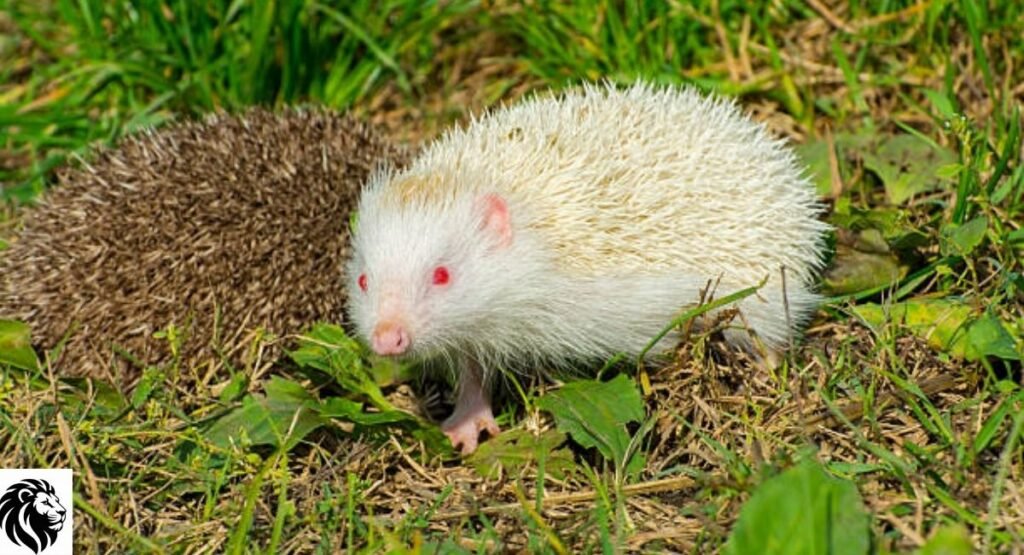
An albino European hedgehog looks dramatically different from its normally pigmented relatives. Its spines and skin become unusually pale, while its eyes can appear pink or red because pigment is greatly reduced.
Such individuals are uncommon compared with ordinary hedgehogs. Their unusual coloration makes them fascinating, yet it doesn’t mean they belong to a separate species or subspecies.
24. Albino Wallaby
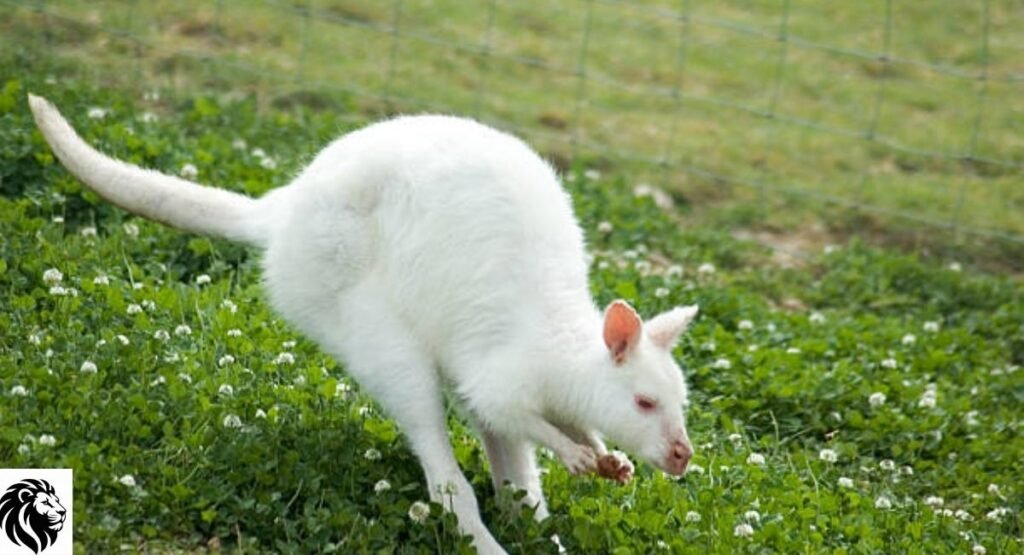
An albino wallaby can display very pale fur, pinkish skin, and reddish-looking eyes. The unusual appearance results from reduced pigmentation rather than a special wallaby species.
Because wallabies normally rely on camouflage and body coloration within their environment, an extremely pale individual can stand out more easily. This makes pigmentation an interesting intersection of genetics, appearance, and survival.
25. Ring-Tailed Lemur
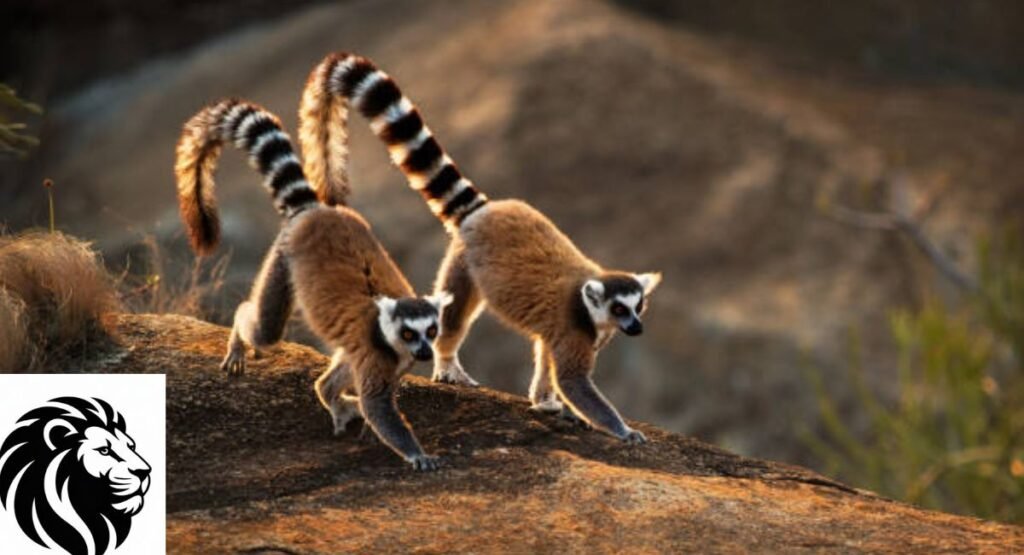
Ring-tailed lemurs are instantly recognizable because of their bold facial markings and long black-and-white tails. They aren’t a classic example of mammalian albinism, so they should be treated separately from the albino animals above.
Their inclusion highlights an important lesson: unusual eye appearance doesn’t always have one explanation. Species identity, genetics, light reflection, and anatomy all need consideration before assigning a cause.
Birds With Red Eyes
Birds display some of the most striking natural eye colors in the animal kingdom. Red irises can contrast sharply with pale feathers, dark plumage, or colorful facial markings. In some species, males and females even show different eye colors.
The table below gives a quick comparison of several species discussed above. Their habitats range from African landscapes to North American wetlands and woodland environments.
| Bird | Red-Eye Feature | Habitat |
| Red-Eyed Dove | Bright red iris | Sub-Saharan Africa |
| Eared Grebe | Dark red eyes | Wetlands |
| Night Heron | Red eyes associated with low-light activity | Shorelines and wetlands |
| Snail Kite | Red eyes with dark plumage | Marshes and lakes |
| Wood Duck | Red eyes mainly in males | North America |
| Stygian Owl | Striking eyes and nocturnal behavior | Forests |
The competitor’s source groups several of these birds together and notes differences in eye color, plumage, habitat, and behavior.
Reptiles and Amphibians With Red Eyes
Reptiles and amphibians demonstrate how red eyes can serve very different purposes. A frog may flash its eyes as a defensive signal, while a snake’s eye color can form part of its natural appearance. Albinism creates another route to reddish eyes.
The strongest examples include the red-eyed tree frog, eastern box turtle, satanic leaf-tailed gecko, European adder, tree viper, albino corn snake, red-eyed crocodile skink, and white-lipped island pitviper. The broader source list also includes several other red-eyed reptiles.
Fish and Aquatic Animals With Red Eyes
Underwater environments create their own visual challenges. Water filters light differently from air, while glare and polarization can affect what animals detect. Some aquatic species have therefore evolved remarkable visual systems that go far beyond simple color perception.
The broader group includes peacock mantis shrimp, rock bass, red-eyed tetra, red-tail dwarf puffer fish, and bluesied wrasse. The mantis shrimp is particularly unusual because it can detect polarized patterns and other wavelengths humans cannot see.
Mammals With Red Eyes
Mammalian red eyes are especially interesting because many familiar examples involve albinism rather than naturally pigmented red irises. Albino rabbits, rats, squirrels, ferrets, hedgehogs, and wallabies can all show this striking combination.
The important exception is that unusual-looking eyes don’t always mean the same thing. A rat may have red-looking material around its eyes because of porphyrins, while a nocturnal mammal can show reflective eye shine. Good identification requires more than color alone.
Albino Rabbits
Albino rabbits commonly have white fur with pink or red eyes. Reduced melanin makes the eyes appear brighter and can increase sensitivity to intense light. Their appearance differs from ordinary white rabbits that retain normal eye pigmentation.
Albino Rats
Albino rats are widely used in research and can have conspicuous red or pink eyes. Their reduced pigmentation makes them sensitive to bright light. However, reddish material around a rat’s eyes can also result from porphyrin-rich tears.
Albino Squirrels
Albino squirrels are rare compared with ordinary gray squirrels. Their white coat and red eyes help distinguish them from leucistic squirrels, which may have white fur but normally pigmented eyes.
Albino Ferrets
Albino ferrets have pale coats and red or pink eyes caused by reduced pigmentation. Their appearance can be striking, especially beside darker ferrets. Coat color and eye color together provide better identification clues.
Albino Hedgehogs
Albino hedgehogs show pale spines, skin, and reddish or pink eyes. Their unusual coloring results from reduced pigmentation rather than a separate species. Such individuals are much less common than normally colored hedgehogs.
Albino Wallabies
Albino wallabies can have extremely pale fur and reddish-looking eyes. Their appearance results from pigmentation genetics. Because the condition is uncommon, a pale wallaby can look dramatically different from the usual brown, gray, or reddish forms.
Ring-Tailed Lemurs
Ring-tailed lemurs are better known for their striped tails and expressive faces than for red eyes. Their inclusion here provides useful context because not every unusual eye appearance fits neatly into the albinism category.
Animals With Red Eyes at Night
Nighttime can transform an ordinary wildlife encounter into something almost cinematic. A pair of bright eyes may appear from the darkness, especially when a flashlight, headlamp, or camera illuminates the animal. The effect often comes from reflected light rather than naturally red irises.
Many nocturnal species have eye structures adapted to dim conditions. The tapetum lucidum can reflect light through the retina, improving the amount of available light used for vision. This adaptation can also create the glowing-eye effect people notice at night.
| What You See at Night | Likely Explanation | What to Check |
| Bright red glow | Reflected light or natural pigmentation | Observe the animal in normal light |
| Green or yellow shine | Reflective eye structures | Compare several photographs |
| Pinkish eyes with pale fur | Possible albinism | Check coat and eye pigmentation |
| Red eyes only in flash photos | Camera red-eye effect | Look at unflashed images |
| Eyes visible from far away | Eye shine from artificial light | Avoid disturbing the animal |
A red glow therefore doesn’t prove an animal has red eyes. Wildlife photographers and night observers should treat color as one clue among several.
Animals With Red Eyes and Black Fur: Quick Comparison
Black fur can make red-looking eyes appear even more dramatic. However, the visual effect can come from several different mechanisms. Natural pigmentation, albinism, reflected light, and camera exposure can each produce different results.
The comparison below separates these possibilities. It helps explain why a dark animal photographed at night shouldn’t automatically be labeled an albino or naturally red-eyed species.
| Animal Type | Fur/Body Color | Eye Appearance | Main Reason |
| Black-furred mammals | Black or dark | Red-looking | Reflected light or unusual pigmentation |
| Albino mammals | White or pale | Red or pink | Very low melanin |
| Dark-feathered birds | Dark plumage | Red | Natural eye coloration in some species |
| Red-eyed reptiles | Green, brown, or scaled | Red | Natural coloration or pigmentation |
| Red-eyed fish | Various | Red | Species-specific eye coloration |
The biggest takeaway is simple: red-looking eyes aren’t one biological category. Always consider the animal’s body color, lighting, genetics, and species before drawing a conclusion.
Albino Animals vs. White Animals With Red Eyes
White coloration creates plenty of confusion. People often assume every white animal with red eyes is albino, while others assume every white animal must have the same genetic condition. Neither shortcut works reliably.
True albinism involves a major reduction in melanin production. White spotting, leucism, and other pigmentation patterns can create pale animals without producing the same eye appearance. Veterinary references specifically emphasize the need to distinguish true albinism from other white-color conditions.
What Is an Albino Animal?
An albino animal has a genetic condition that greatly reduces or prevents normal melanin production. Melanin contributes to coloration in hair, skin, feathers, scales, and eyes.
Because pigment production changes throughout the body, albinism can create a distinctive combination of pale coloration and pinkish or reddish eyes. It can also affect vision and sensitivity to sunlight.
Why Do Albino Animals Have Red Eyes?
When eye pigmentation is greatly reduced, underlying tissues become more visible through the iris. That can create pink, ruby, or reddish eye coloration.
The exact appearance varies among species and individuals. Therefore, red eyes should be treated as a clue rather than an absolute diagnostic test for albinism.
Albino vs. Leucistic Animals
Leucism and albinism are not interchangeable. Leucism can reduce pigmentation in the skin, hair, or feathers while leaving the eyes normally pigmented.
White squirrels provide a useful example. An albino squirrel typically has red eyes, whereas a leucistic white squirrel can retain darker eyes.
Can a White Animal Have Normal-Colored Eyes?
Yes. A white animal can retain normally pigmented eyes. That simple detail is one of the easiest ways to avoid confusing ordinary white coloration with albinism.
If you see a white squirrel, rabbit, bird, or other animal, examine the eyes carefully. Body color alone cannot settle the question.
Are Red Eyes in Animals Rare?
Red eyes are less common than brown, black, yellow, or other familiar eye colors across many animals. Yet the trait appears in several unrelated groups, which makes it more widespread than you might expect.
Birds can naturally possess red irises, while mammals often show reddish eyes because of reduced pigmentation. Reptiles and amphibians add another layer of diversity. In short, the color is uncommon, but it isn’t a biological oddity limited to one family.
Do Red Eyes Help Animals See Better?
Eye color itself doesn’t guarantee better vision. A red iris doesn’t automatically give an animal stronger night vision, sharper focus, or superior eyesight. Visual ability depends on eye structure, photoreceptors, retinal anatomy, brain processing, and the animal’s environment.
Nocturnal animals may possess specialized adaptations that improve low-light vision. The tapetum lucidum is one example, while increased rod photoreceptors can provide another advantage. These features matter far more than iris color alone.
Red Eyes in Animals vs. Red-Eye Effect in Photos
A photograph can turn a normal-looking eye into a glowing red orb. Camera flash sends intense light into the eye, and some of that light reflects back toward the lens. The resulting image can resemble natural red pigmentation even when the animal doesn’t have it.
Night photographs can be especially deceptive. Depending on species and anatomy, eyes may appear red, green, yellow, orange, or white. Compare several photographs under different lighting before identifying a species from eye color alone.
How to Identify an Animal With Red Eyes
Identification becomes easier when you stop treating the eyes as the whole story. Start with the iris, then examine body markings, size, habitat, behavior, and time of activity. A single red reflection is rarely enough for confident identification.
For example, a green frog with enormous red eyes points toward a very different animal than a pale rabbit with ruby-colored eyes. Habitat can narrow the options even further. A marsh bird, freshwater fish, forest gecko, and backyard mammal each leave very different clues.
Check the Eye Color
Look for the actual iris color rather than a glowing reflection. Natural red eyes remain reddish under ordinary lighting, while reflected eye shine may disappear or change color when the light angle changes.
Look at Fur, Feathers, or Scales
Body coloration often provides the strongest secondary clue. A white coat with pink eyes suggests a different pathway from dark plumage surrounding a naturally red iris.
Consider the Habitat
Location can quickly narrow your choices. A red-eyed frog in a tropical forest points toward a different identification than a red-eyed fish in a North American pond.
Check Whether the Animal Is Nocturnal
Nighttime activity can explain unusual eye shine and other visual features. However, don’t assume every animal seen after dark is nocturnal because some species are crepuscular or opportunistic.
Look for Other Distinctive Features
Pay attention to tails, bills, shells, scales, facial markings, body shape, and movement. These details often confirm an identification when eye color alone remains ambiguous.
Conclusion
Red eyes can make an animal look strange, beautiful, or even mysterious, but there’s usually a fascinating reason behind them. Animals with red eyes may have natural eye pigmentation, reduced melanin, or eyes that simply reflect light in darkness. From red-eyed tree frogs and colorful birds to albino mammals, each example shows how varied nature can be.
So, the next time you spot glowing eyes at night, look twice. It may not be a true red eye at all. Lighting, genetics, habitat, and albinism can completely change what you see.
FAQs
What animals have naturally red eyes?
Several birds, reptiles, amphibians, and fish can naturally show reddish eyes. Red-eyed doves, wood ducks, night herons, eastern box turtles, and red-eyed tree frogs provide recognizable examples.
What animals have black fur and red eyes?
A genuine black-furred mammal with naturally red irises is unusual. Dark animals can appear red-eyed at night because reflected light creates a temporary glow.
Why do some animals have red eyes?
Red eyes can result from natural pigmentation, reduced melanin, genetic conditions, or reflected light. The cause depends on the species and the situation.
Why do animals’ eyes look red at night?
Darkness makes reflected light much more noticeable. A flashlight or camera can illuminate reflective structures inside the eye and create a red or glowing appearance.
Do albino animals always have red eyes?
Many albino animals have pink or red-looking eyes because pigmentation is greatly reduced. However, eye appearance can vary between species and should not be used as the only diagnostic clue.
Are red-eyed animals rare?
Red eyes are relatively uncommon compared with several other eye colors. Still, they occur across many animal groups, from birds and frogs to fish and albino mammals.
What mammals have red eyes?
Albino rabbits, rats, squirrels, ferrets, hedgehogs, and wallabies can show reddish or pink eyes. Mammalian examples often involve reduced pigmentation rather than naturally red irises.
What birds have red eyes?
Red-eyed doves, eared grebes, night herons, snail kites, wood ducks, red-eyed vireos, and Stygian owls are notable examples. Eye color can vary with sex in some species.
What reptiles have red eyes?
Eastern box turtles, tree vipers, European adders, satanic leaf-tailed geckos, and some albino snakes can display red or reddish eyes. Their causes and functions differ between species.
What fish have red eyes?
Rock bass and red-eyed tetras are two recognizable examples. Some other fish also display red eyes, although appearance can vary with age, lighting, and individual coloration.

Welcome to natureanimalhub! I’m Anam Sattar, an AI Powered SEO, and Content Writer with 4 years of experirnce.
I help websites rank higher,grow traffic, and look amazing. My goal is to make SEO and web design simple and effective for everyone.
Let’s achieve more together!
1 thought on “25 Animals With Red Eyes: Black-Furred Animals, Night Creatures & More”