

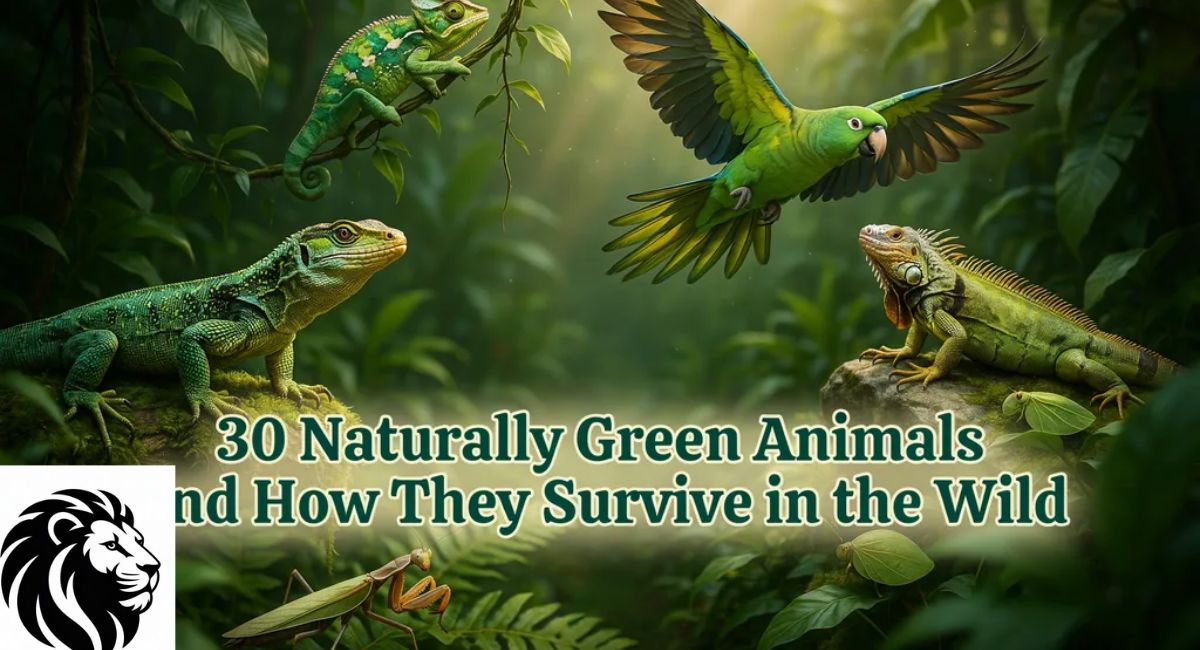
Green Animals are among the most fascinating creatures in the natural world. Although green is a common color in plants, it is surprisingly rare among animals. Many naturally green animals use their unique coloration to blend into forests, wetlands, and grasslands, making them masters of animal camouflage. From vibrant parrots and tree frogs to striking snakes and insects, these green species have evolved remarkable adaptations that help them survive in different environments.
Some display green pigments in their skin or feathers, while others gain their color through unusual biological processes. These green wildlife creatures showcase the beauty of nature and the power of environmental adaptation in the animal kingdom.
Why Are Some Animals Naturally Green?
Nature rarely creates color without a purpose. In many green species, coloration develops through pigments stored in skin cells, feathers, or scales. Some animals produce yellow and blue pigments that combine to create a green appearance. Others rely on microscopic structures that reflect light in ways that make them look green. This process is known as structural coloration, and it appears in several birds and insects.
Evolution has also played a major role in shaping animals with green coloration. Over thousands of generations, individuals that blended better into their surroundings survived more often and passed their traits to offspring. This form of natural selection helped create many of today’s wild green animals. Whether living in forests, wetlands, or tropical regions, green coloration often provides a valuable survival advantage.
How Green Color Helps Animals Survive
Color serves as more than decoration in the animal kingdom. For many green animals in nature, green shades provide excellent protection against danger. A green tree frog resting on a leaf can become nearly invisible. Likewise, a green snake hidden among vines may avoid detection from larger animals. This form of protective coloration allows species to hide effectively within their natural habitat.
Green coloration can also help hunters. Some reptiles and insects remain motionless among leaves until prey moves within striking distance. In these situations, camouflage becomes a powerful hunting tool. Beyond concealment, green coloration may assist with communication, territory defense, and mating displays. Across many ecosystems, green remains one of the most effective colors for survival.
List of Naturally Green Animals
Green Keel-Bellied Lizard

Bright colors instantly make the Green Keel-Bellied Lizard stand out among green reptiles. Native to Southeast Asian forests, this striking lizard displays vivid green scales mixed with blue and yellow markings. Despite its colorful appearance, it blends surprisingly well into dense vegetation. Its agility allows it to escape threats quickly while remaining hidden within the forest canopy.
Emerald Tree Monitor

The Emerald Tree Monitor ranks among the most beautiful exotic green animals on Earth. Found in New Guinea, this slender reptile spends most of its life high in trees. Its emerald coloration helps it disappear among leaves. Long claws and a prehensile tail provide excellent climbing ability, making survival easier in complex forest environments.
Green Anaconda

Known as one of the world’s largest snakes, the Green Anaconda demonstrates the power of environmental adaptation. Its olive-green scales blend into swampy habitats throughout South America. This massive predator often waits underwater for prey. Its coloration hides its enormous body and helps it ambush animals that approach the water’s edge.
Plumed Basilisk

Often called the “Jesus Christ Lizard,” the Plumed Basilisk can run across water for short distances. This remarkable green lizard inhabits tropical rainforests in Central America. Its bright coloration matches surrounding foliage. Combined with speed and agility, this natural disguise helps the species avoid predators while searching for food.
Green Crested Lizard

The Green Crested Lizard lives among dense tropical vegetation where concealment remains essential. Its bright scales and distinctive crest help it blend into leafy surroundings. As one of many forest-dwelling animals, it spends much of its time resting quietly on branches. This behavior reduces exposure to potential threats.
Red-Eyed Tree Frog

Few green amphibians are as recognizable as the Red-Eyed Tree Frog. Its brilliant green body contrasts sharply with bright red eyes. During daylight hours, it remains hidden among leaves. At night, it becomes active and hunts insects. Its coloration provides effective protection while resting in rainforest vegetation.
American Green Tree Frog

The American Green Tree Frog represents one of North America’s most famous green wildlife species. Found near ponds and wetlands, it uses its bright color to blend into aquatic plants. This adaptation protects it from birds and snakes. Its sticky toe pads also help it climb vegetation with ease.
Green and Golden Bell Frog

Australia’s Green and Golden Bell Frog displays vibrant green shades mixed with golden markings. It thrives near marshes, lakes, and wetlands. These colors provide camouflage among reeds and grasses. Although habitat loss threatens populations, this species remains an excellent example of successful wildlife adaptation.
European Green Toad

Unlike many toads with dull colors, the European Green Toad features striking green patches across its body. These markings help break up its outline when resting on the ground. Such coloration improves concealment and supports survival within diverse habitats ranging from grasslands to semi-arid regions.
Green Ringtail Possum

The Green Ringtail Possum lives in the rainforests of Australia and New Guinea. Its greenish appearance comes from the way light reflects off its fur, helping it blend into leafy surroundings. This nocturnal mammal spends most of its time in trees, where camouflage provides protection from predators.
Hoffmann’s Two-Toed Sloth

Hoffmann’s Two-Toed Sloth is one of the most unusual green mammals found in tropical rainforests. Algae grow on its fur through a symbiotic relationship, giving it a green tint. This natural camouflage helps the sloth remain hidden among branches and dense foliage.
Brown-Throated Three-Toed Sloth

The Brown-Throated Three-Toed Sloth often appears green because algae thrive on its coarse fur. Native to Central and South America, it moves slowly through the forest canopy. Its greenish coat makes it difficult for predators to spot, enhancing its survival in rainforest habitats.
Pygmy Three-Toed Sloth

The Pygmy Three-Toed Sloth is a rare species found only on a small island off Panama. Like other sloths, it develops a green appearance from algae growing on its fur. This adaptation helps it blend into mangrove forests and avoid detection from predators.
Green-Colored Woolly Flying Squirrel

Some populations of Woolly Flying Squirrels can appear slightly greenish under certain lighting conditions due to the texture and coloration of their fur. These tree-dwelling mammals glide between branches and rely on forest cover for protection. Their muted coloring helps them remain concealed in dense woodland habitats.
Green-Headed Tanager

The Green-Headed Tanager showcases some of the most brilliant colors among green birds. Native to South American forests, it combines green feathers with blue and yellow accents. Despite its colorful appearance, it blends remarkably well among leaves and fruits. This balance of beauty and camouflage highlights nature’s ingenuity.
Golden-Fronted Leafbird

The Golden-Fronted Leafbird spends much of its life in tropical forests across Asia. Its green plumage resembles fresh leaves. This resemblance makes it difficult for predators to detect. The bird also feeds on nectar and insects, helping maintain ecological balance within its habitat.
Eclectus Parrot

Among all animals with green feathers, the Eclectus Parrot stands out for its striking appearance. Males display vivid green plumage while females appear bright red and blue. The male’s green coloration provides excellent camouflage among rainforest foliage. This adaptation helps protect the bird while foraging for fruits and seeds.
Green Parakeet

The Green Parakeet thrives across several regions of Central and North America. Its bright feathers blend naturally with trees and shrubs. Living in social groups offers additional protection from predators. Together, camouflage and flock behavior contribute significantly to the species’ survival.
Green Sunfish

Freshwater environments support many fascinating green fish species. The Green Sunfish features olive-green coloration with shimmering blue markings. Found in rivers and lakes, it uses underwater vegetation as cover. This concealment helps it avoid predators while hunting smaller aquatic creatures.
Green Terror Cichlid

Despite its intimidating name, the Green Terror Cichlid is admired for its beauty. This freshwater fish displays metallic green patterns that shimmer under light. Such coloration blends with aquatic environments while helping establish dominance during territorial interactions. Its adaptability contributes to its success in various freshwater habitats.
Emerald Catfish

The Emerald Catfish is a peaceful freshwater species known for its metallic green shine. Native to South America, this fish often lives near river bottoms where vegetation provides shelter. Its reflective coloration helps it blend into underwater surroundings. As one of the more attractive green marine animals found in aquariums, it remains popular among fish enthusiasts.
Common Dolphinfish

Despite its name, the Common Dolphinfish is not a dolphin. Also known as mahi-mahi, this fast-swimming fish displays brilliant green and blue colors. It inhabits warm ocean waters and uses speed as its primary defense. Its coloration changes slightly depending on light conditions, helping it adapt to different marine environments.
Katydid

The Katydid ranks among the finest examples of animal camouflage in nature. Its body closely resembles a green leaf, complete with vein-like patterns. Predators often overlook it because it appears almost identical to surrounding vegetation. This remarkable disguise highlights the effectiveness of protective coloration.
Luna Moth

The Luna Moth captures attention with its pale green wings and elegant appearance. Found throughout North America, this moth becomes active during the night. Its coloration helps it blend into leaves during resting periods. Long tail extensions on its wings may also confuse predators such as bats.
Glorious Scarab

The Glorious Scarab is one of the most visually stunning green insects in the world. Its metallic green shell reflects sunlight and creates a jewel-like appearance. This beetle inhabits dry regions where its coloration helps it blend into shrubs and vegetation. The species demonstrates how beauty and survival often work together.
Dogbane Beetle

The Dogbane Beetle displays an iridescent green body that shifts color under changing light. Found across North America, it feeds primarily on dogbane plants. Its reflective shell may confuse predators and make detection more difficult. This beetle serves as an excellent example of structural coloration in insects.
Green Stink Bug

The Green Stink Bug uses its bright color to remain hidden among leaves and stems. When threatened, it releases a strong odor that discourages predators. This combination of camouflage and chemical defense gives the insect multiple layers of protection. It remains one of the most common green-colored animals in gardens.
Green Lynx Spider

Unlike web-building spiders, the Green Lynx Spider actively hunts prey. Its vivid green body allows it to blend perfectly into flowering plants and shrubs. This camouflage helps it approach insects unnoticed. As a skilled predator, it plays an important role in controlling insect populations.
Leaf Slug

The Leaf Slug appears almost unreal due to its bright green body and leaf-like shape. Found in marine environments, this remarkable creature absorbs chloroplasts from algae it consumes. These chloroplasts continue functioning inside its body. This unusual adaptation contributes to its green appearance and makes it one of nature’s most fascinating examples of species diversity.
Dido Longwing Butterfly

The Dido Longwing Butterfly displays rich green patterns across its wings. Native to tropical forests, it spends much of its time feeding on nectar. Its coloration blends well with surrounding vegetation. This adaptation reduces visibility and increases survival in habitats filled with potential predators.
Which Green Animals Have the Best Camouflage?
Some green animals around the world have evolved camouflage so effective that spotting them becomes nearly impossible. Species such as the Katydid, Green Tree Frog, Green Vine Snake, and Leaf Slug blend seamlessly into their surroundings. Their shapes, textures, and colors work together to create extraordinary concealment. In many cases, even experienced wildlife photographers struggle to locate them.
Camouflage does more than hide animals from danger. It also improves hunting success. The Green Lynx Spider waits among flowers while unsuspecting insects move within reach. Likewise, snakes hidden among leaves can strike before prey notices them. Across different ecosystems, camouflage remains one of the most successful survival strategies ever developed through natural selection.
| Animal | Camouflage Level | Habitat |
| Katydid | Excellent | Forests and shrubs |
| Green Tree Frog | Excellent | Wetlands and rainforests |
| Green Vine Snake | Excellent | Tropical forests |
| Leaf Slug | Very High | Marine environments |
| Green Lynx Spider | High | Gardens and grasslands |
Where Do Green Animals Live?
The majority of green habitats exist in regions filled with dense vegetation. Tropical rainforests support countless green species because leaves create the perfect environment for camouflage. Birds, reptiles, insects, and amphibians often depend on these habitats for shelter and food. Forest canopies offer protection while allowing animals to remain hidden from predators.
However, not all green animals in nature live in forests. Some inhabit wetlands, freshwater rivers, grasslands, and oceans. The Green Sunfish thrives in lakes and streams. Green Sea Turtles spend much of their lives in marine environments. Even deserts support a few green-colored species adapted to local conditions. This diversity demonstrates the incredible flexibility of wildlife ecology.
Green Animal Habitats at a Glance
| Habitat | Examples of Green Animals |
| Rainforest | Tree frogs, parrots, anacondas |
| Wetlands | Green toads, tree frogs |
| Freshwater Rivers | Green Sunfish, Emerald Catfish |
| Oceans | Green Sea Turtle, Green Moray Eel |
| Grasslands | Katydids, Green Stink Bugs |
Interesting Facts About Naturally Green Animals
One surprising fact about naturally green animals is that not all of them produce green pigments. Some species appear green because microscopic structures reflect specific wavelengths of light. This phenomenon, known as structural coloration, occurs in several insects and birds. It creates vibrant colors that often appear brighter than pigment-based coloration.
Another fascinating example involves sloths. These animals are not born green. Instead, algae grow on their fur through a unique symbiotic relationship. The algae gain a place to live while the sloth receives additional camouflage in the rainforest canopy. This partnership demonstrates how survival in nature often depends on cooperation as much as adaptation.
“In nature, color is never random. Every shade tells a survival story.”
Many people also assume bright colors attract predators. Yet for numerous green wildlife species, bright green actually reduces visibility. In environments dominated by vegetation, green serves as one of the most effective forms of concealment. This explains why so many reptiles, insects, amphibians, and birds evolved green coloration independently.
Green Animals vs Other Colorful Animals
Compared with red, blue, or yellow species, green animals often enjoy a greater camouflage advantage. Green matches the dominant color found in forests, wetlands, and grasslands. Animals with red or orange coloration typically rely on warning signals rather than concealment. Green species, by contrast, frequently avoid attention altogether.
This difference influences behavior. Brightly colored poison frogs may advertise their toxicity. Green tree frogs prefer to remain unseen. While both strategies can succeed, camouflage generally requires less energy and reduces the need for direct confrontation. This advantage helps explain the widespread presence of green creatures throughout the natural world.
Threats Facing Green Animals Today
Despite their impressive adaptations, many rare green animals face growing threats. Deforestation continues to destroy important habitats across tropical regions. Wetland drainage reduces breeding areas for frogs and aquatic species. Climate change further disrupts ecosystems by altering rainfall patterns, temperatures, and food availability.
Conservation efforts aim to protect these remarkable creatures before populations decline further. National parks, wildlife reserves, and habitat restoration projects provide safe environments for vulnerable species. Supporting wildlife conservation not only protects individual animals but also preserves entire ecosystems that depend on healthy biodiversity.
Conclusion
The world of Green Animals reveals some of nature’s most remarkable examples of adaptation and survival. From frogs hiding among leaves to snakes concealed in rainforest canopies, these creatures demonstrate how color can become a powerful tool. Their green appearance helps them hunt, avoid predators, and thrive within diverse environments.
As we learn more about these unique green animals, we gain a deeper appreciation for the complexity of life on Earth. Whether living in forests, wetlands, rivers, or oceans, these fascinating species remind us that every color in nature serves a purpose. Protecting their habitats ensures future generations can continue to admire the beauty, diversity, and resilience of the planet’s most extraordinary green wildlife.
FAQs
What are the most common green animals?
Some of the most common Green Animals include tree frogs, parakeets, green snakes, katydids, and green sea turtles. These species are found in forests, wetlands, and coastal regions worldwide.
Why are many animals green?
Many animals are green because the color helps them blend into their surroundings. This camouflage makes it easier to avoid predators and sometimes helps them catch prey.
Do green animals only live in rainforests?
No. While many naturally green animals live in rainforests, others inhabit grasslands, wetlands, freshwater lakes, and oceans. Their habitats vary depending on the species.
Which green animal is the largest?
The Green Anaconda is one of the largest green reptiles in the world. It can grow over 20 feet long and lives in the swamps and rivers of South America.
Are green animals born green?
Not always. Some species are born with green coloration, while others develop it as they mature. In the case of sloths, green algae growing on their fur creates their green appearance.

Welcome to natureanimalhub! I’m Anam Sattar, an AI Powered SEO, and Content Writer with 4 years of experirnce.
I help websites rank higher,grow traffic, and look amazing. My goal is to make SEO and web design simple and effective for everyone.
Let’s achieve more together!