

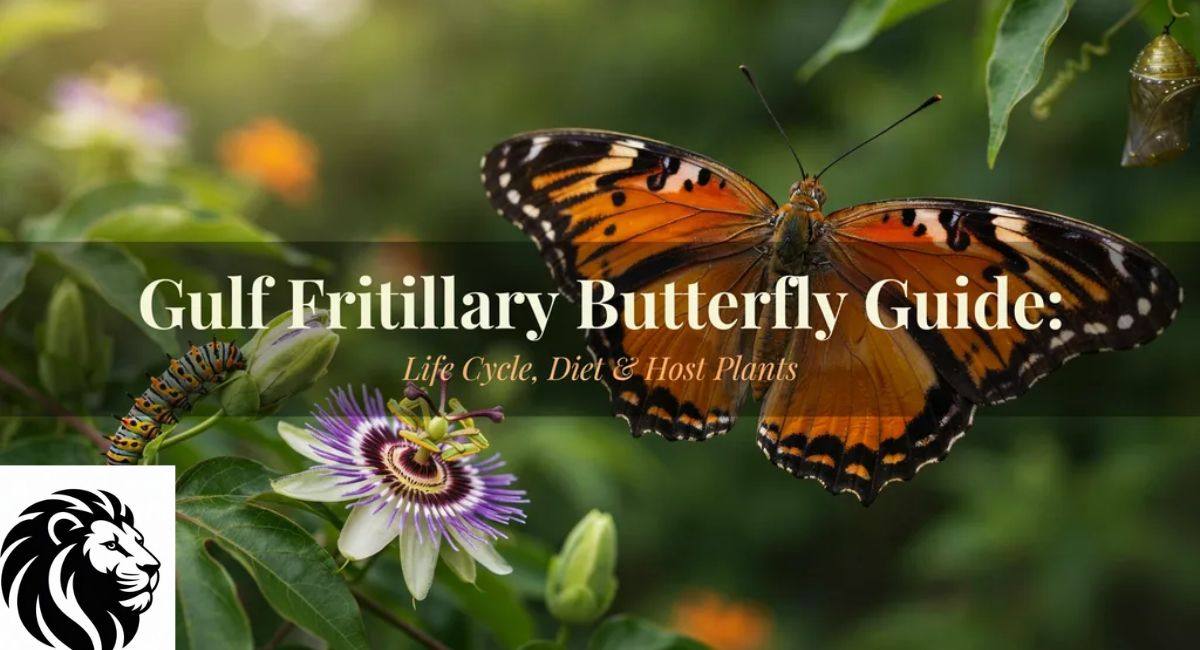
The Gulf Fritillary Butterfly is one of the most eye-catching butterflies found across the southern United States. Its glowing orange wings and silver markings make it easy to recognize in gardens, parks, and open meadows. Many people first discover this species when they notice bright orange caterpillars feeding on a passionflower vine.
Beyond its beauty, this butterfly plays an important role as a pollinator and supports local ecosystems. Its fascinating journey through eggs, caterpillars, and a brown chrysalis offers a perfect example of complete metamorphosis. Whether you enjoy wildlife gardening or simply love butterflies, the migratory butterfly never fails to impress.
Gulf Fritillary Butterfly Overview

Unlike its name suggests, the Gulf Fritillary Butterfly is not a true fritillary at all. Scientists place it in the brush-footed butterfly family called Nymphalidae rather than among the true fritillaries. The butterfly earned its common name because early observers frequently saw these insects moving across areas surrounding the Gulf of Mexico.
Its scientific name is Agraulis vanillae. This beautiful species thrives throughout the southern United States, Mexico, the Caribbean, and parts of South America. In recent decades, expanding populations of passionflower vine plants have helped this butterfly spread into new regions including parts of California and the southeastern states.
| Classification | Details |
| Kingdom | Animalia |
| Phylum | Arthropoda |
| Class | Insecta |
| Order | Lepidoptera |
| Family | Nymphalidae |
| Genus | Agraulis |
| Scientific Name | Agraulis vanillae |
How to Identify a Gulf Fritillary Butterfly

Spotting a Gulf Fritillary Butterfly becomes easier once you know its signature features. Adults display brilliant orange wings decorated with black markings that stand out even from a distance. The underside tells an even more interesting story because it contains shiny silver spots that shimmer when sunlight hits them.
Many people confuse this butterfly with the Variegated Fritillary or even young Monarch butterflies. However, the orange butterfly with black spots appearance combined with metallic silver markings underneath quickly separates it from similar species. Females usually appear darker and slightly larger than males while males often show brighter coloration.
| Feature | Description |
| Wingspan | 2.5 to 3.5 inches |
| Main Color | Bright orange |
| Wing Markings | Black spots and streaks |
| Underside Pattern | Silver spots |
| Female Appearance | Darker coloration |
| Male Appearance | Brighter orange tones |
Gulf Fritillary Eggs

Every butterfly adventure begins with an egg no larger than a pinhead. Female butterflies carefully place Gulf Fritillary eggs one at a time on leaves, stems, and curling tendrils of passionflower plants. This strategy reduces competition among siblings and gives each caterpillar immediate access to food after hatching.
Fresh eggs display a bright yellow color and stand upright like miniature towers attached to the plant surface. Depending on temperature, most eggs hatch within four to seven days. Warm southern climates often speed up development while cooler spring weather can delay emergence slightly.
Gulf Fritillary Caterpillar

The caterpillar stage surprises many gardeners because the larvae look fierce despite being harmless to humans. A mature Gulf Fritillary caterpillar develops a bright orange body covered with rows of long black spines. These spikes appear dangerous yet remain soft and non-stinging when touched carefully.
Many people ask whether these caterpillars are poisonous. The answer is partly yes. As a toxic caterpillar, it absorbs chemical compounds from Passiflora species during feeding. These compounds make the caterpillar taste unpleasant to some predators, creating an effective defense system that nature perfected over thousands of years.
What Do Gulf Fritillary Caterpillars Eat?

A hungry caterpillar acts like a tiny eating machine. The Gulf Fritillary caterpillar feeds almost exclusively on leaves from butterfly host plants belonging to the passionflower family. This close relationship makes the butterfly highly dependent on healthy populations of these vines.
Popular food sources include maypop, blue passionflower, and corkystem passionflower. Large groups of caterpillars can strip leaves quickly, leaving gardeners shocked by the damage. Fortunately, healthy vines usually recover fast and produce fresh growth within weeks.
| Preferred Host Plant | Scientific Name |
| Maypop Passionflower | Passiflora incarnata |
| Blue Passionflower | Passiflora caerulea |
| Corkystem Passionflower | Passiflora suberosa |
| Yellow Passionflower | Passiflora lutea |
Gulf Fritillary Chrysalis

One of nature’s greatest magic tricks begins when the caterpillar stops feeding and searches for a secure place to hang upside down. After shedding its skin for the final time, it reveals a beautifully sculpted brown chrysalis that resembles a curled dead leaf.
This remarkable disguise protects the developing butterfly from birds and other hunters. Inside the chrysalis, the insect undergoes complete metamorphosis as caterpillar tissues reorganize into wings, antennae, legs, and reproductive organs. Most adults emerge after ten to fourteen days depending on temperature and humidity.
What Do Adult Gulf Fritillary Butterflies Eat?

After emerging, adult butterflies switch from leaves to nectar. The nectar feeding butterfly uses its long proboscis like a drinking straw to collect sugary liquid from flowers. This energy powers flight, migration, and reproduction.
Favorite nectar sources include porterweed, lantana, zinnias, pentas, verbena, and milkweed. Gardens filled with these flowers often become busy feeding stations where butterflies gather throughout the day. Many gardeners notice that freshly opened blooms receive the most visits during warm mornings.
Gulf Fritillary Host Plants

Every successful butterfly garden depends on providing the right host plants. Adult butterflies may visit many flowers, yet females only lay eggs on specific butterfly host plants that can support developing caterpillars.
The best option for most American gardeners remains the passionflower vine. Native species such as maypop survive winter conditions across much of the southern United States and return year after year. Planting these vines transforms ordinary gardens into nurseries for future generations of butterflies.
Habitat and Distribution
The moment you step into a sunny garden in the southern United States, you may already be standing inside perfect butterfly habitat. The Gulf Fritillary Butterfly prefers open spaces filled with warmth, flowers, and climbing vines. Parks, meadows, roadsides, farms, and suburban gardens often provide ideal living conditions.
This species occurs throughout Florida, Texas, Arizona, California, and much of the Southeast. Its range extends through Mexico, Central America, the Caribbean, and northern South America. Warmer winters have helped this migratory butterfly expand farther north during recent decades.
Gulf Fritillary Life Cycle

Nature rarely tells a better story than the journey of the Gulf Fritillary Butterfly. It begins as an egg attached to a passion vine leaf. Within days, a tiny larva emerges and starts eating almost immediately. The caterpillar grows rapidly and sheds its skin several times as its body expands.
The next chapter arrives when the caterpillar forms a chrysalis. During this stage, hidden changes reshape the insect completely. Wings develop, body structures reorganize, and a new butterfly eventually emerges. This process represents one of nature’s finest examples of complete metamorphosis.
| Life Stage | Average Duration |
| Egg | 4–7 days |
| Caterpillar | 11–16 days |
| Chrysalis | 10–14 days |
| Adult Butterfly | 2–4 weeks |
How Long Does a Gulf Fritillary Live?
A single adult Gulf Fritillary Butterfly usually lives between two and four weeks in the wild. Weather, predators, food availability, and migration demands all influence survival. Some adults perish quickly while others survive long enough to reproduce several times.
When measured from egg to adulthood, the entire life cycle often lasts two to three months. In warmer climates such as Florida, several generations may appear during a single year, creating nearly continuous butterfly activity.
Gulf Fritillary Migration
Some butterflies disappear with winter. The Gulf Fritillary Butterfly takes a different approach and travels to warmer regions instead. This seasonal movement helps adults avoid freezing temperatures and locate fresh nectar sources.
Many populations spend winter months in southern Florida and along the Gulf Coast. As temperatures rise during spring, these butterflies begin moving northward again. Their annual journey makes them one of the lesser-known examples of butterfly migration in North America.
Predators and Natural Enemies
Life in the insect world can feel like running through an obstacle course. Birds, spiders, praying mantises, assassin bugs, and parasitic wasps all prey upon various life stages of the Gulf Fritillary Butterfly.
Interestingly, many predators avoid mature caterpillars after tasting them once. Their unpleasant flavor acts like a warning sign in nature. Even so, some reptiles and specialized insects continue feeding on them despite these chemical defenses.
Adaptations and Survival Strategies
Bright colors often serve as advertisements in the natural world. The orange body of the caterpillar and the vivid wings of the adult signal danger to predators. Scientists call this warning system aposematic coloration.
The butterfly gains additional protection by storing chemicals from Passiflora species inside its tissues. Combined with camouflage during the brown chrysalis stage, these defenses give the species an impressive survival advantage.
Mating and Reproduction
Romance among butterflies looks surprisingly elegant. Male butterflies patrol open areas searching for females while using visual signals to identify potential mates. Courtship often includes circling flights and short aerial displays.
After mating, females quickly begin laying eggs on suitable host plants. A single female may deposit hundreds of eggs during her lifetime. This high reproductive output helps offset losses caused by weather and predators.
Are Gulf Fritillary Caterpillars Dangerous?
Despite their spiky appearance, Gulf Fritillary caterpillars are not dangerous to humans. Their black spines do not sting, bite, or release venom, making them generally safe to observe in gardens and around children.
These caterpillars feed on passionflower plants, which contain natural chemicals that make them unappealing to some predators. While they may be mildly toxic if eaten by certain animals, they pose no significant risk to people or pets under normal circumstances.
Are Gulf Fritillaries Good for Gardens?
Gardeners often panic when they discover leaves disappearing from their vines. However, the presence of the Gulf Fritillary Butterfly usually signals a healthy ecosystem rather than a problem.
These butterflies support pollination and increase biodiversity. Their caterpillars may temporarily defoliate a vine, yet healthy plants recover quickly. For many gardeners, watching the life cycle unfold becomes far more rewarding than preserving perfect leaves.
How to Attract Gulf Fritillary Butterflies
Creating a butterfly-friendly yard does not require complicated landscaping. The most important step involves planting a passionflower vine that females can use for egg laying. Without host plants, butterflies simply visit briefly before moving elsewhere.
Adult butterflies also need reliable nectar sources. Flowers such as lantana, zinnias, porterweed, and verbena provide energy throughout the growing season. A sunny location with minimal pesticide use often attracts visitors surprisingly fast.
| Garden Feature | Benefit |
| Passionflower Vine | Caterpillar food source |
| Nectar Flowers | Adult feeding |
| Sunny Areas | Body temperature regulation |
| Water Source | Hydration |
| No Pesticides | Improved survival |
Interesting Facts About Gulf Fritillaries
The Gulf Fritillary Butterfly carries several surprises that even experienced gardeners may not know. Despite its common name, it does not belong to the true fritillary group. Its silver wing spots also reflect sunlight in remarkable ways during flight.
Another fascinating detail involves the butterfly’s wing scales. A gentle touch can remove some of these scales, which explains why old butterflies often appear faded or worn compared with newly emerged adults.
Conservation Status
Good news surrounds the future of the Gulf Fritillary Butterfly. Scientists currently classify the species as one of least concern because populations remain stable across much of its range.
Habitat loss and pesticide exposure still present challenges in some areas. Home gardeners can make a significant difference by planting native flowers and reducing chemical use. Small actions repeated across thousands of gardens create large conservation victories.
Conclusion
The story of the Gulf Fritillary Butterfly combines beauty, science, migration, and survival into one extraordinary insect. From tiny eggs to shimmering orange wings, every stage offers a fresh reminder that nature still holds remarkable mysteries.
Plant a passionflower vine, add a few nectar flowers, and you may soon witness the entire journey in your own backyard. Once you watch a caterpillar transform into a butterfly, ordinary gardens never seem ordinary again.
FAQs
1. Are Gulf Fritillary caterpillars poisonous?
Yes, Gulf Fritillary caterpillars absorb chemicals from passionflower plants, which makes them unpleasant for many predators to eat.
2. What do Gulf Fritillary caterpillars eat?
They feed mainly on leaves of passionflower vines, especially species from the Passiflora family.
3. How long does a Gulf Fritillary butterfly live?
Adult butterflies usually live for two to four weeks, while the complete life cycle lasts several months.
4. Where can you find Gulf Fritillary butterflies in the United States?
They are common in southern states such as Florida, Texas, California, and other warm regions.
5. Are Gulf Fritillaries beneficial for gardens?
Yes, they help pollinate flowers and support local biodiversity while adding beauty to butterfly gardens.

Welcome to natureanimalhub! I’m Anam Sattar, an AI Powered SEO, and Content Writer with 4 years of experirnce.
I help websites rank higher,grow traffic, and look amazing. My goal is to make SEO and web design simple and effective for everyone.
Let’s achieve more together!