

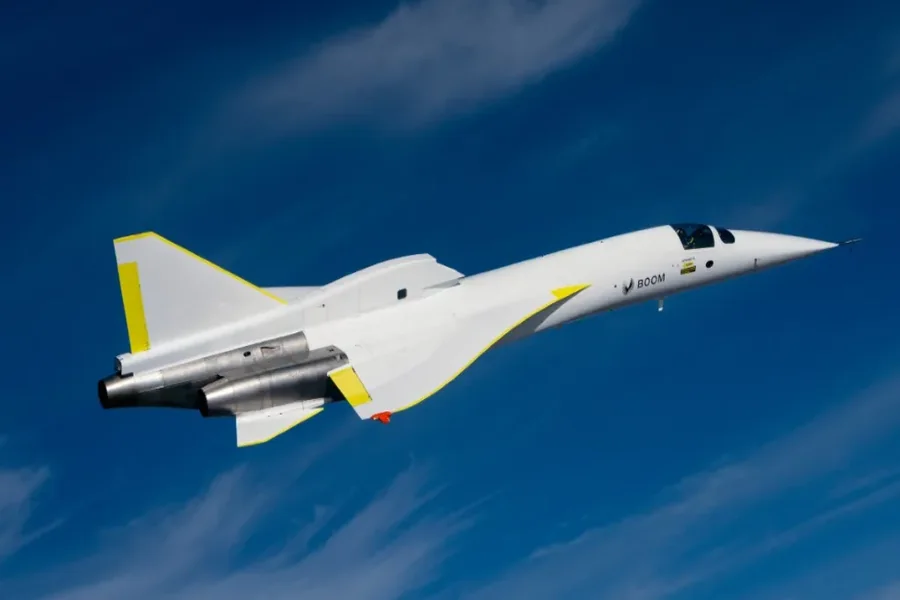
The aviation industry reached a monumental milestone this week as the Experimental Supersonic Jet Successfully Completes First Commercial Test Flight. For decades, the dream of crossing oceans in half the standard time has felt like a relic of the past, permanently grounded alongside the iconic Concorde. However, this recent achievement proves that ultra-fast transit is not just a concept confined to the drawing board, but a tangible reality returning to our skies. Aviation enthusiasts, business travelers, and technological innovators are collectively watching as a new era of aerospace engineering takes flight. By successfully simulating a full commercial route with a prototype aircraft, manufacturers have demonstrated that high-speed travel can be achieved without compromising safety, comfort, or environmental standards. This monumental test flight represents years of rigorous aerodynamic research, advanced material science, and a complete reimagining of what a commercial airliner can be. As we stand on the precipice of a transportation revolution, it is crucial to examine the technological marvels, economic implications, and passenger benefits that this breakthrough brings to the modern world.
The Dawn of High-Speed Commercial Travel
The retirement of the Concorde in 2003 left a massive void in the commercial aviation sector. While standard jetliners became more fuel-efficient and capable of ultra-long-haul flights, their cruising speeds remained fundamentally unchanged for over fifty years. The fact that the Experimental Supersonic Jet Successfully Completes First Commercial Test Flight changes this stagnant narrative entirely. This recent test was not merely a brief sprint to break the sound barrier; it was a comprehensive demonstration of commercial viability. The flight profile mimicked a real-world transatlantic route, testing everything from takeoff protocols in crowded airspace to sustained supersonic cruising at altitude. Engineers monitored thousands of data points, including thermal stress on the fuselage, engine efficiency, and cabin pressure stability. The success of this flight signals to regulatory bodies, airlines, and investors that the next generation of supersonic aircraft is ready to transition from testing facilities to active commercial fleets. The return of supersonic travel is no longer a question of if, but rather a question of when these magnificent machines will begin appearing at international terminal gates. We are witnessing the dawn of an era where a morning meeting in London and an afternoon coffee in New York is an easily achievable itinerary.
Breaking the Sound Barrier Quietly
One of the primary reasons previous supersonic programs struggled was the infamous sonic boom—a thunderous shockwave created when an aircraft exceeds the speed of sound. This acoustic disruption led to strict regulations banning supersonic flight over populated landmasses, severely limiting the routes these aircraft could profitably serve. The engineers behind this new aircraft have dedicated immense resources to solving the noise problem. Through the use of advanced computational fluid dynamics, the jet’s aerodynamic profile has been sculpted to disperse shockwaves rather than allowing them to merge and hit the ground as a single, deafening boom. The needle-like nose, heavily swept wings, and precisely positioned engines work in harmony to transform the sonic boom into a muffled “sonic thump.” During the recent commercial test flight, acoustic monitors placed on the ground recorded noise levels that blended seamlessly into normal background city noise. This acoustic triumph is arguably just as important as the speed itself. By proving that the aircraft can break the sound barrier quietly, manufacturers can lobby regulatory agencies to revise overland flight bans. Opening up transcontinental routes—such as flying from New York to Los Angeles in just over two hours—drastically increases the market potential and operational flexibility for airlines adopting this technology.
Sustainable Fuel and Economic Viability
A glaring critique of historical supersonic flight was its voracious appetite for fossil fuels and its correspondingly massive carbon footprint. In today’s climate-conscious world, introducing a gas-guzzling aircraft would be entirely unacceptable. The creators of this new jet understood this reality from day one, ensuring that sustainability was built into the aircraft’s core architecture. The recent test flight was powered entirely by Sustainable Aviation Fuel (SAF), derived from renewable biomass and waste resources rather than newly extracted petroleum. SAF has the potential to reduce lifecycle carbon emissions by up to eighty percent compared to conventional jet fuel. By successfully utilizing this green alternative during a high-stress commercial test profile, the aerospace company proved that extreme speed does not have to come at the expense of our planet. Furthermore, the economic model has been entirely restructured. Standard ticket prices for historical supersonic flights were astronomically high, reserved only for the ultra-wealthy. Thanks to lighter carbon-composite airframes, more efficient engine cycles, and reduced maintenance costs, airlines project that tickets for these new flights will be priced comparably to current long-haul business class fares. This pricing strategy democratizes high-speed travel, opening it up to corporate travelers and vacationers looking to maximize their time abroad.
Redefining the Passenger Experience
Speed and sustainability are incredible feats of engineering, but the interior cabin experience determines whether passengers will actually embrace the new aircraft. Historically, supersonic jets featured cramped cabins and tiny windows due to the immense structural pressures of high-altitude, high-speed flight. Today’s advanced composite materials have revolutionized cabin architecture. Passengers stepping aboard this new aircraft will immediately notice the spaciousness. The windows are significantly larger, allowing natural light to flood the cabin and offering breathtaking views of the Earth’s curvature and the deep darkness of the stratosphere. Because the aircraft cruises at an altitude of sixty thousand feet—far above standard commercial traffic and weather systems—the flight is exceptionally smooth, virtually eliminating the turbulence that plagues lower altitudes. The cabin is pressurized to a lower altitude equivalent, meaning passengers absorb more oxygen and experience significantly less fatigue. When combined with flight times that are sliced in half, the dreaded phenomenon of jet lag is drastically reduced. A traveler can cross multiple time zones in just a few hours, arriving at their destination feeling refreshed and ready to engage, rather than requiring a full day of recovery. Every element of the interior, from the ergonomic seating to the advanced noise-canceling acoustics, has been curated to provide an oasis of calm while hurtling through the atmosphere at staggering speeds.
FAQs
What is a commercial test flight? A commercial test flight is a rigorous aviation trial where a prototype aircraft flies a route designed to simulate standard airline operations, ensuring the plane can handle real-world conditions safely and efficiently.
How fast does the new supersonic jet fly? The new aircraft is designed to cruise at Mach 1.7, which is roughly one thousand three hundred miles per hour and twice as fast as standard commercial jetliners.
Will supersonic flights be affordable for average travelers? Airlines aim to price these high-speed flights competitively with current business class fares, making them much more accessible than historical supersonic options.
Does the jet run on standard aviation fuel? No, the aircraft is purposefully designed to operate on one hundred percent sustainable aviation fuel to drastically reduce its carbon footprint and environmental impact.
Is the sonic boom still a problem for this aircraft? Engineers have utilized advanced aerodynamic shaping to disperse shockwaves, effectively reducing the traditional deafening sonic boom to a gentle thump that is barely noticeable on the ground.
When will standard passengers be able to book a flight? While exact dates depend on final regulatory approvals and manufacturing timelines, airlines expect to begin welcoming passengers aboard commercial flights by the end of the decade.
How does the altitude of this jet affect turbulence? By cruising at sixty thousand feet, the aircraft flies far above standard weather systems and the jet stream, resulting in a significantly smoother ride with almost no turbulence.
Final Thought
The reality that the Experimental Supersonic Jet Successfully Completes First Commercial Test Flight is a testament to human ingenuity and our relentless pursuit of progress. This achievement effectively closes the chapter on the stagnation of commercial flight speeds and opens a thrilling new frontier for global connectivity. By marrying extreme velocity with sustainable fuel initiatives and groundbreaking noise-reduction technology, the aerospace industry has proven that we can travel faster without leaving a heavier footprint. As the final regulatory hurdles are cleared and production scales up, the prospect of boarding a supersonic airliner will soon shift from a headline-making novelty to a routine convenience. The world is about to become remarkably smaller, bringing cultures, economies, and people closer together than ever before.

Welcome to natureanimalhub! I’m Anam Sattar, an AI Powered SEO, and Content Writer with 4 years of experirnce.
I help websites rank higher,grow traffic, and look amazing. My goal is to make SEO and web design simple and effective for everyone.
Let’s achieve more together!