

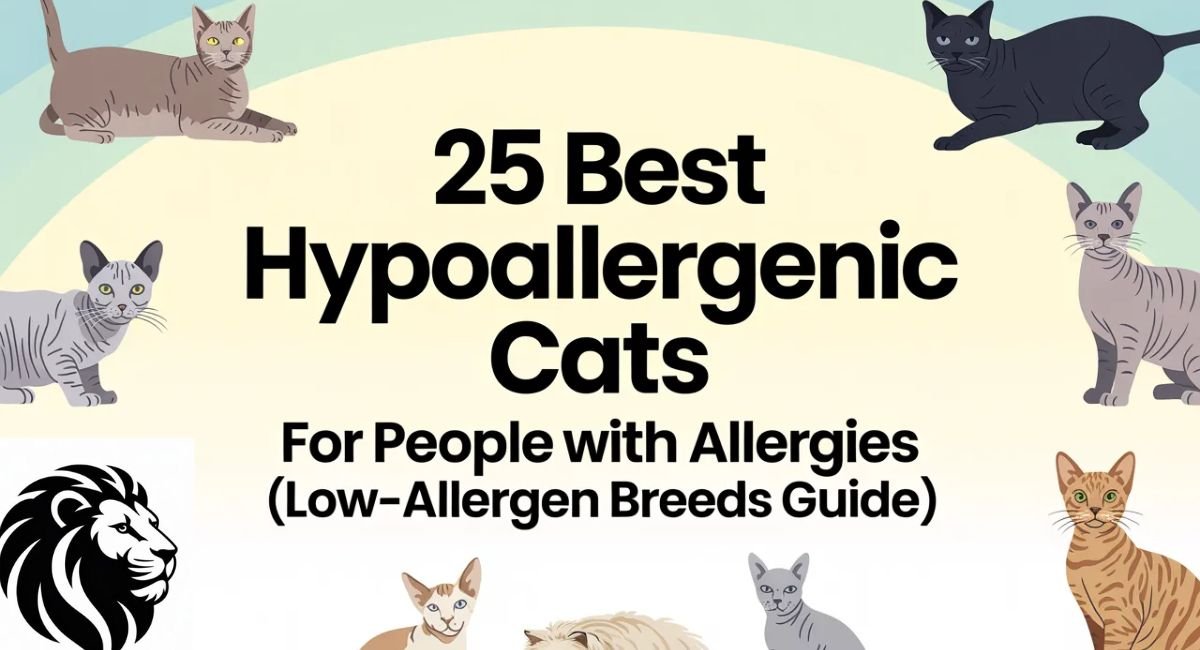
Cats bring comfort, love, and companionship, but for many people, cat allergies can make pet ownership difficult. The good news is that some hypoallergenic cats produce fewer allergens and may help reduce sneezing, itchy eyes, and other allergic reactions. While no cat is completely allergy-free, several low allergen cats create lower levels of the Fel d 1 protein, which is the main cause of allergies. These breeds also tend to spread less cat dander around the home. In this guide, you will discover the best cats for allergy sufferers, learn how allergies work, and explore practical ways to live comfortably with a feline companion while managing symptoms more effectively.
What Is a Hypoallergenic Cat?
A hypoallergenic cat is a breed that may produce fewer allergens than regular cats. These breeds often shed less fur, create less cat dander, or produce lower levels of Fel d 1 protein. Many people believe these cats are completely allergy-free, but that is not true. Even hairless cats can still trigger allergies because allergens come from saliva and skin oils, not only fur.
The term low-allergen cats simply means the breed is less likely to cause strong symptoms. Some cats spread fewer allergens because they groom less or have coats that trap allergens better. This is why breeds like the Siberian, Balinese, and Russian Blue are popular among people with allergy symptoms.
| Term | Meaning |
| Hypoallergenic Cats | Cats that may trigger fewer allergies |
| Fel d 1 Protein | Main allergen produced by cats |
| Cat Dander | Tiny flakes of skin carrying allergens |
| Low Shedding Cats | Cats that spread less fur and allergens |
What Causes Cat Allergies?
Most people think cat hair causes allergies, but the real problem is the Fel d 1 protein. This allergen sticks to fur, furniture, carpets, and clothing. When cats lick themselves, allergens spread through saliva onto their coat. As fur and skin flakes move around the home, allergy sufferers breathe in the particles.
Symptoms of cat allergies include sneezing, coughing, itchy eyes, congestion, and asthma flare-ups. Some people have mild symptoms while others experience serious breathing problems. Studies show male cats may produce more allergens than females, and neutered cats may produce lower allergen levels.
| Common Allergy Symptoms | Description |
| Sneezing | Irritation from airborne allergens |
| Itchy Eyes | Red and watery eyes |
| Runny Nose | Common reaction to pet dander |
| Asthma Problems | Trouble breathing or wheezing |
| Skin Rash | Allergic irritation after touching cats |
How We Chose the Best Low-Allergen Cat Breeds
The breeds in this guide were selected based on their allergen levels, grooming habits, shedding, and popularity among allergy sufferers. Cats with lower shedding coats often spread fewer allergens around the home. Some breeds also naturally produce less Fel d 1 protein, making them a better choice for sensitive owners.
We also considered temperament, maintenance, and indoor lifestyle compatibility. Many people searching for best cats for allergies want calm indoor pets that are easy to care for. Breeds with minimal grooming needs and gentle personalities were prioritized in this list.
25 Best Hypoallergenic Cat Breeds for Allergy Sufferers
Siberian Cat

The Siberian is one of the most famous hypoallergenic cat breeds. Even though it has a thick and fluffy coat, this breed produces lower levels of Fel d 1 protein than many other cats. This makes it a favorite choice for allergy sufferers who still want a long-haired cat.
Siberians are affectionate, playful, and intelligent. They enjoy family life and adapt well to homes with children. Regular grooming helps control shedding and keeps allergens lower inside the home.
Bengal Cat

The Bengal is a beautiful cat with a wild appearance and short sleek fur. This breed sheds less than many traditional cats, which helps reduce cat allergens around the house. Bengals also groom themselves less frequently.
These cats are active and energetic. They enjoy climbing, running, and interactive toys. Bengal cats are ideal for owners who want a playful and smart companion.
Sphynx Cat

The Sphynx is famous for being one of the best hairless cats for allergy sufferers. Since it lacks fur, allergens are less likely to spread through shedding. However, allergens still exist on the skin and saliva.
Sphynx cats need regular baths because oils build up on their skin. They are friendly, social, and love human attention. Many owners describe them as dog-like because they enjoy following people around the house.
Devon Rex

The Devon Rex has soft curly fur and sheds very little. Because this breed has less hair, it spreads fewer allergens into the environment. It is one of the best low shedding cats for apartment living.
These cats are playful, loving, and highly social. Devon Rex cats enjoy sitting on laps and staying close to family members. Their grooming needs are also fairly low.
Cornish Rex

The Cornish Rex has a fine wavy coat that produces minimal shedding. Unlike many cats, it only has a soft undercoat, which reduces allergen spread. This makes it one of the best allergy-friendly feline breeds.
Cornish Rex cats are energetic and athletic. They enjoy jumping and interactive games. Their affectionate personality makes them popular with families.
Russian Blue

The Russian Blue is often recommended for people with pet allergies. Its dense coat traps allergens better than many other breeds. This helps reduce airborne allergens in the home.
Russian Blues are quiet, gentle, and intelligent. They enjoy peaceful environments and bond strongly with their owners. Their elegant silver-blue coat also makes them visually striking.
Siamese Cat

The Siamese is one of the most popular cats for allergy sufferers. Its short coat sheds less and requires minimal grooming. Many people also believe Siamese cats produce lower allergen levels.
Siamese cats are vocal and social. They love interaction and dislike being left alone for long periods. Their affectionate nature makes them excellent indoor companions.
Balinese Cat

The Balinese is often called the long-haired Siamese. Despite its fluffy appearance, this breed produces lower levels of Fel d 1 protein. This makes it a surprisingly good choice for people with allergies.
Balinese cats are elegant, intelligent, and highly affectionate. They enjoy attention and communicate frequently with their owners. Their silky coat also tangles less than other long-haired breeds.
Oriental Shorthair

The Oriental Shorthair has fine short fur that sheds minimally. Because of its low grooming needs, fewer allergens spread around the home. It is considered one of the best low allergen cats.
This breed is playful and curious. Oriental Shorthairs form strong bonds with owners and enjoy active households. They are also highly intelligent and easy to train.
Javanese Cat

The Javanese has a silky coat without a thick undercoat. This means less shedding and reduced allergen spread. Many allergy sufferers find this breed easier to tolerate.
Javanese cats are social, vocal, and affectionate. They enjoy climbing and interactive toys. Their elegant appearance makes them one of the most attractive hypoallergenic cats.
Burmese Cat

The Burmese cat has a short silky coat that requires little grooming. Because it sheds less, allergens stay more controlled in the environment.
Burmese cats are loving lap cats that crave attention. They are friendly with children and adapt well to indoor life. Their playful personality keeps owners entertained.
Tonkinese Cat

The Tonkinese combines Siamese and Burmese genetics. This breed has a short easy-to-maintain coat and moderate allergen levels.
Tonkinese cats are energetic and affectionate. They enjoy social interaction and often follow owners around the home. Their intelligence makes training easier.
LaPerm

The LaPerm has a unique curly coat that sheds minimally. Its unusual fur texture helps reduce allergen spread compared to heavy-shedding breeds.
LaPerm cats are calm, gentle, and affectionate. They enjoy cuddling and adapt well to families. Their curly appearance also makes them stand out.
Peterbald

The Peterbald is another popular hairless cat breed. Some have completely hairless bodies while others have soft fuzz. Less fur means reduced allergen spread.
These cats are highly social and intelligent. They love human interaction and dislike loneliness. Regular skin care is important to control oils and allergens.
Ocicat

The Ocicat has a wild leopard-like appearance but is fully domestic. Its short coat sheds very little, making it easier for allergy sufferers.
Ocicats are active and friendly. They enjoy games and social interaction. Their outgoing personality makes them good pets for families.
Abyssinian Cat

The Abyssinian has sleek short fur and minimal grooming needs. This breed produces fewer allergens than many traditional cats.
Abyssinians are highly energetic and curious. They love climbing and exploring the house. Their intelligence makes them excellent companions for active owners.
Exotic Shorthair

The Exotic Shorthair has a dense but manageable coat. With regular grooming, allergen levels can stay lower than many long-haired breeds.
These cats are calm and affectionate. They enjoy quiet homes and relaxed lifestyles. Their teddy bear appearance makes them very popular.
Snowshoe Cat

The Snowshoe is closely related to the Siamese breed. It has a short coat and lower shedding levels, which may help allergy sufferers.
Snowshoe cats are social and gentle. They enjoy human company and adapt well to indoor environments. Their unique markings also make them attractive pets.
Savannah Cat

The Savannah is an exotic-looking breed with a short coat and low shedding. This may help reduce airborne allergens in the home.
Savannah cats are highly energetic and intelligent. They need plenty of space and stimulation. Their active lifestyle suits experienced cat owners.
Selkirk Rex

The Selkirk Rex has a curly plush coat that sheds less than many traditional cats. This may reduce allergen spread.
These cats are patient and friendly. They adapt well to families and enjoy cuddling. Their relaxed personality makes them excellent indoor pets.
Turkish Angora

The Turkish Angora has a silky single-layer coat that sheds less than heavy double-coated breeds. This may help people with mild allergies.
Turkish Angoras are graceful and intelligent. They enjoy climbing and attention from family members. Their elegant appearance adds to their popularity.
Colorpoint Shorthair

The Colorpoint Shorthair is closely related to the Siamese. It has short fur and lower grooming needs, which may reduce allergens.
These cats are playful and social. They enjoy active homes and constant companionship. Their affectionate personality makes them ideal indoor pets.
Korat Cat

The Korat has a silver-blue coat that sheds minimally. This helps reduce indoor allergens and makes cleaning easier.
Korats are gentle and loyal. They form strong bonds with owners and prefer calm homes. Their quiet personality suits apartment living.
British Shorthair

The British Shorthair has a thick coat but moderate shedding. Regular grooming can help control allergens effectively.
These cats are calm, independent, and easygoing. They enjoy indoor living and adapt well to families. Their relaxed personality makes them low maintenance.
Burmese European

The European Burmese has a sleek short coat and lower grooming requirements. This can help reduce allergen spread inside the house.
These cats are affectionate and playful. They enjoy attention and bond strongly with owners. Their social nature makes them excellent companions.
Best Hypoallergenic Cats by Lifestyle
Different people need different types of cats. Apartment owners may prefer quiet and calm breeds like the Russian Blue or British Shorthair. Families with children often choose playful breeds such as the Bengal or Burmese.
People with severe allergies may prefer hairless cats like the Sphynx or Peterbald. Seniors may enjoy low-maintenance breeds such as the Exotic Shorthair. Choosing the right breed depends on lifestyle, grooming tolerance, and allergy severity.
| Lifestyle | Recommended Breeds |
| Apartments | Russian Blue, Devon Rex |
| Families | Burmese, Bengal |
| Seniors | Exotic Shorthair |
| Severe Allergies | Sphynx, Peterbald |
Hypoallergenic Cat Myths Debunked
Myth #1: Hypoallergenic Cats Are Completely Allergy-Free
Many people believe hypoallergenic cats do not cause allergies at all, but this is not true. Every cat produces allergens, especially the Fel d 1 protein found in saliva and skin oils. Some breeds simply produce fewer allergens than others, which may reduce symptoms for allergy sufferers.
Myth #2: Hairless Cats Don’t Cause Allergies
A common misunderstanding is that hairless cats are allergy-free because they do not shed fur. In reality, allergens come from saliva, skin, and oils, not just hair. Breeds like the Sphynx can still trigger allergic reactions if proper cleaning is not maintained.
Myth #3: Long-Haired Cats Are Worse for Allergies
Many people assume long-haired cats always cause stronger allergies, but coat length is not the main issue. Some long-haired breeds like the Balinese and Siberian produce lower levels of Fel d 1 protein, making them better choices than some short-haired cats.
Myth #4: Bathing Removes All Cat Allergens
Bathing can help reduce cat dander and allergens temporarily, but it does not remove them completely. Allergens return as cats continue grooming themselves and producing saliva and skin oils. Regular cleaning is still important for allergy management.
Myth #5: Expensive Cat Breeds Are Better for Allergies
Price does not always determine how allergy-friendly a cat is. Some affordable breeds may produce fewer allergens than expensive designer cats. It is better to spend time with a breed first to see how your body reacts before making a decision.
“No cat is truly hypoallergenic, but some breeds are much easier for allergy sufferers to live with.”
How to Reduce Cat Allergens at Home
Managing allergens is very important for people with cat allergies. Using HEPA air purifiers and vacuum cleaners can remove allergens from carpets and furniture. Washing bedding and curtains regularly also helps reduce airborne particles.
Keeping cats out of the bedroom can significantly improve sleep quality for allergy sufferers. Grooming pets regularly and using hypoallergenic pet wipes may also lower allergen levels. Some special pet foods are designed to reduce Fel d 1 protein in cat saliva.
| Allergy Reduction Method | Benefit |
| HEPA Air Purifier | Removes airborne allergens |
| Frequent Vacuuming | Reduces dander buildup |
| Cat Grooming | Controls loose fur |
| Washing Bedding | Removes allergens from fabric |
Treatments for Cat Allergy Symptoms
Many allergy sufferers use medications to manage symptoms. Antihistamines such as Claritin, Zyrtec, and Benadryl can reduce sneezing and itching. Nasal sprays like Flonase may help with congestion and inflammation.
Some people choose allergy shots, also called immunotherapy. This treatment slowly trains the immune system to become less sensitive to allergens over time. Consulting an allergist is important before starting long-term treatment.
Things to Know Before Adopting a Hypoallergenic Cat
Before adopting a cat, spend time around the breed first. Every person reacts differently to allergens. Visiting breeders or shelters can help determine whether symptoms stay manageable.
Future owners should also understand grooming costs, cleaning responsibilities, and veterinary care. Even low allergen cats need regular maintenance to keep allergen levels under control. Adopting a pet is a long-term commitment that requires time, patience, and proper care.
Conclusion
Living with cat allergies does not always mean giving up your dream of owning a cat. Choosing the right hypoallergenic cats and following proper cleaning habits can help reduce allergens and make daily life more comfortable. Breeds like the Siberian, Russian Blue, and Sphynx are popular choices for people with sensitivities.
Although no cat is completely allergy-free, many low allergen cats produce fewer allergens and spread less cat dander. With the right care, grooming, and allergy management, cat lovers can still enjoy a happy and healthy life with a furry companion at home.
FAQs
1. Are hypoallergenic cats completely allergy-free?
No, no cat is fully allergy-free. However, some breeds produce fewer allergens and may reduce allergy symptoms.
2. Which cat breed is best for people with cat allergies?
Breeds like the Siberian, Russian Blue, Balinese, and Sphynx are often considered the best low allergen cats for allergy sufferers.
3. Do hairless cats cause allergies?
Yes, hairless cats can still cause allergies because allergens come from saliva and skin oils, not only fur.
4. How can I reduce cat dander at home?
Using HEPA air purifiers, vacuuming regularly, washing bedding, and grooming your cat can help lower allergen levels.
5. Can allergy medicine help people live with cats?
Yes, antihistamines, nasal sprays, and allergy shots may help manage symptoms and make living with cats easier.
Welcome to natureanimalhub! I’m Anam Sattar, an AI Powered SEO, and Content Writer with 4 years of experirnce.
I help websites rank higher,grow traffic, and look amazing. My goal is to make SEO and web design simple and effective for everyone.
Let’s achieve more together!