

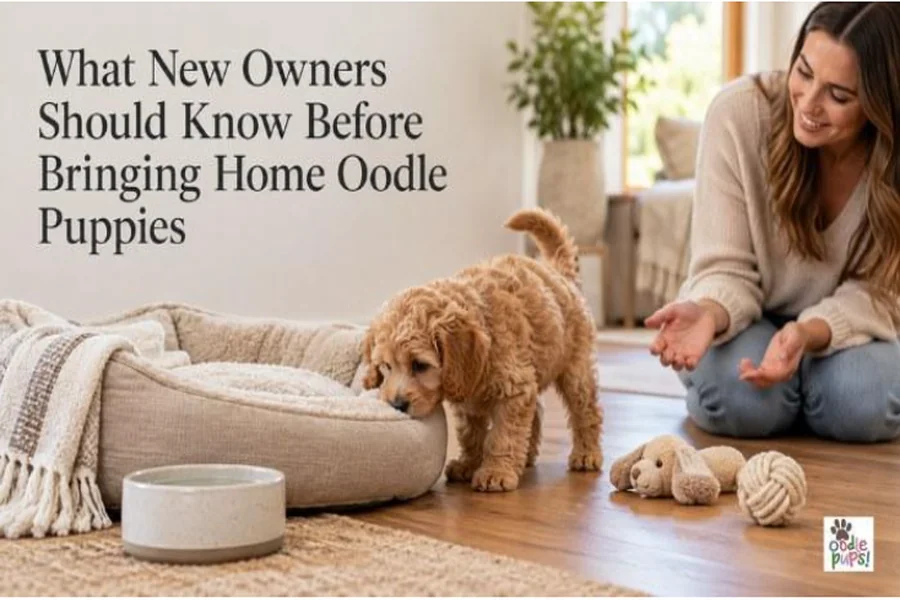
So you’re bringing home an oodle puppy. You’ve bought the bed, the toys are lined up, and your family can’t stop talking about it. But the first few days revolve around sleep schedules, toilet timing, and a puppy that misses its littermates.
Your routine changes within hours, and that adjustment period is exactly why we put this guide together. We’re Oodle Pups, a small Brisbane-based breeder of multi-generational Australian Labradoodles. We’ve guided more than 50 families through these early weeks and know where new owners tend to get stuck.
This blog covers the setup, the first night, toilet training, and early socialisation. All the stuff that tends to blindside new owners.
Oodle Puppies Need a Slower Start at Home
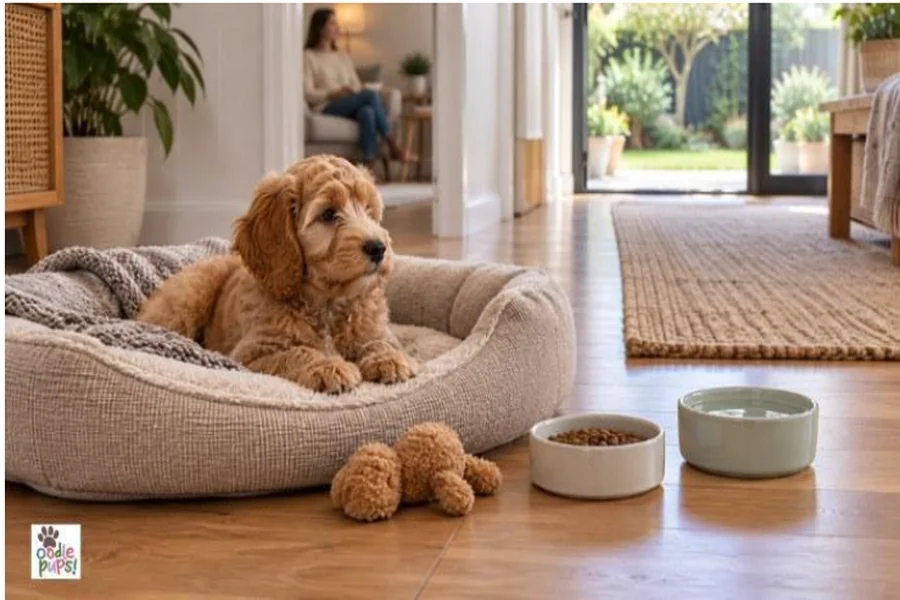
Every new owner wants to show off their puppy straight away, and that’s a fair impulse. But oodle puppies process a new environment in stages. Too many visitors, rooms, and sounds in the first 48 hours can cause stress behaviours like whining, hiding, or refusing food.
You have to remember that your puppy just left its littermates, its breeder, and the only space it has ever known (even a single visitor can tip the balance). So keep the family circle small, the house calm, and the first few days predictable. That consistency gives your puppy time to bond with your household.
What to Set Up Before Your New Puppy Arrives
You don’t need a pet store haul to prepare for your puppy’s arrival. A few basics in the right spots will do more for your dog’s early days than a house full of toys. For the general checklist, RSPCA Australia has a solid rundown on new puppy care.
Here’s how we’d set things up for oodle puppies specifically.
One Room Is Plenty to Start
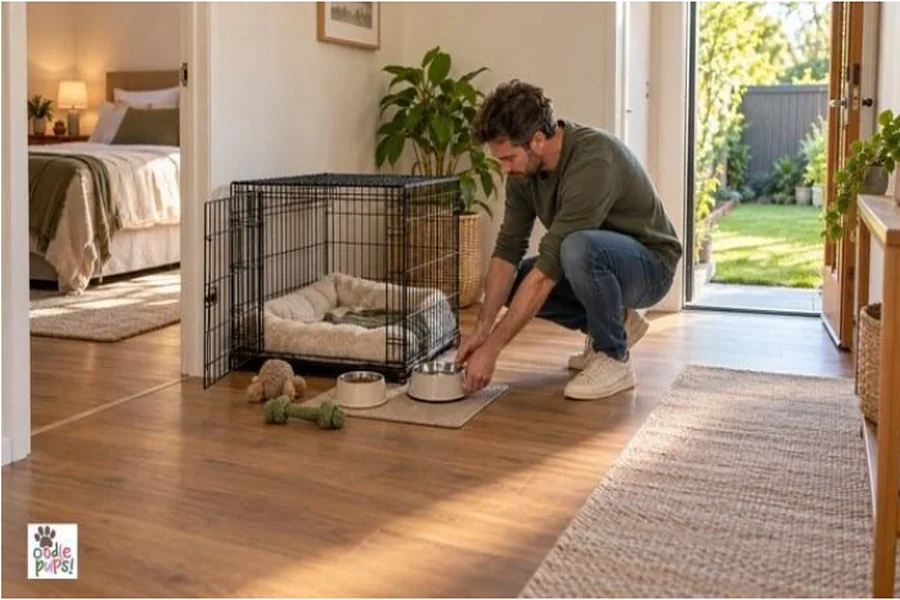
Pick one room with easy access to outside, and set it up with food, water, bedding, and a couple of toys. That single room becomes your pup’s home base, and it’s all they need at first. As your puppy gains confidence over the first two weeks, you can open up one new room at a time.
Smaller spaces mean fewer accidents and less chance of chewing something dangerous while you’re in another part of the house.
Sleep Gear and Crate Placement
Place the crate in your bedroom for the first week so your puppy can hear you breathing. That closeness helps them fall asleep without panicking. A warm blanket and a ticking clock inside the crate recreate the feel of being next to a sibling, which cuts down on overnight crying.
Pip (one of our two Labradoodle girls) slept through by night four once we stopped moving her crate around. When your pup sleeps through consistently, move the crate to its permanent spot.
The First Night You Bring Home an Oodle Puppy Sets the Rhythm
Once the room and crate are sorted, the real test begins. Expect toilet breaks overnight, a lot of whining, and very little sleep for you.
Your instinct will be to pick the puppy up every time it cries. A calm voice and a gentle hand on the crate door work better. That response builds trust, and your dog starts to learn you’re close even when you don’t scoop it up. The opposite approach, ignoring the crying completely, can spike anxiety and make the following nights worse.
The overnight routine comes down to three trips. A short one outside right before bed gets you started (set a phone alarm so you don’t have to lie there watching the clock). Then another round around 2 am, and once more at first light.
Within a week, most puppies stretch that middle gap to four or five hours.
Toilet Training Starts the Moment You Arrive
Potty training isn’t glamorous, but it’s where the first good habits form. It starts the moment you walk through the front door. Take your pup to the designated toilet area within five minutes of arriving home, and keep using that same area every time.
Once that first trip is done, your daily routine will revolve around three timing cues.
- After Every Meal: Puppies need to go roughly 10 to 15 minutes after eating. If you wait too long, you’ll find the evidence on your floor instead.
- After Every Nap: The second your pup wakes up, carry it to the toilet area. At eight weeks old, most puppies can only hold on for about two hours.
- After Every Play Session: Physical activity speeds up digestion, so don’t wait for signs. Head outside the moment your dog stops playing.
Use calm praise rather than treats when your puppy gets it right. Praise teaches your pup to remember the spot, while treats just teach it to perform for food. Stick with that approach, and you’ll notice the gaps between trips stretching over the first few weeks as your pup grows.
From there, you can start settling into a broader routine.
Two Weeks of Boredom Is a Good Sign
If the first fortnight feels uneventful, that will mean your puppy is adjusting well. Calm days with short five-minute training sessions and gentle handling around the paws and ears are plenty. A couple of toys to chew on rounds out the setup, and your dog won’t need much else.
That said, there’s a difference between a settled puppy and an overstimulated one.
| Calm Settling Signs | Overstimulation Signs |
|---|---|
| Sleeps regularly through the day | Refuses to rest or nap |
| Chews toys at a normal pace | Chews socks, furniture, or your head |
| Plays in short bursts then rests | Zoomies that won’t stop |
(If your puppy can’t wind down after play, that’s your cue to dial things back.)
We hear this from almost every family we place a puppy with. The quiet weeks felt slow at the time, but the pup that came out the other side was calmer and healthier for it.
Try limiting visitors to two or three people during this period, and save the big introductions for later. And if your puppy shows signs like refusing food, excessive whining, or sudden changes in temperament, don’t wait on it. Book a visit with your vet to rule anything out.
Early Socialisation Looks Different for Oodle Pups
Now that the first two weeks are behind you, your puppy is ready for a bit of the world. That doesn’t mean a trip to the dog park, though. Instead, think smaller. A quiet outing at a café teaches your puppy how to observe and stay calm. A crowded park at this age just floods the senses.
The early socialisation window sits between 3 and 14 weeks, so use that time well. Start by carrying your pup to a footpath or shopfront and letting it watch people and animals from your arms. From there, let children approach gently and give your dog a chance to sniff unfamiliar friends.
Once your pup seems comfortable with that, clip on a collar and try short walks around the block. Just steer clear of off-leash parks or weekend markets for now.
Since oodle breeds pick up their social temperament from their poodle parent, your puppy will likely take to people without much coaxing. That’s a good sign, but don’t rush it. Spend time on every outing, and you’ll see your pup grow steadier with each visit.
Bringing Home Oodle Puppies With Confidence
You don’t need to get everything perfect. You just need to prepare for the right things. A calm first week, a steady toilet routine, and gradual socialisation will carry your new puppy through the toughest stretch.
If your family is ready to welcome a new life into the home, we’d love to help you get started. Oodle Pups can walk you through our upcoming litters, puppy vaccinations, and your first vet visit. There’s a lot of joy ahead.

Welcome to natureanimalhub! I’m Anam Sattar, an AI Powered SEO, and Content Writer with 4 years of experirnce.
I help websites rank higher,grow traffic, and look amazing. My goal is to make SEO and web design simple and effective for everyone.
Let’s achieve more together!