

Animals that start with P include an amazing variety of mammals, birds, reptiles, fish, insects, and marine creatures. From the powerful polar bear and puma to the colorful peacock and playful penguin, these animals live in habitats ranging from tropical forests to frozen Arctic landscapes.
Some P animals are common and familiar, while others are unusual species with remarkable adaptations. Learning about them provides a fun look at the diversity of wildlife and the different ways animals survive in their environments.
Panda
Pandas are famous mammals native to the mountain forests of central China. Giant pandas are easily recognized by their black-and-white fur and rounded bodies.
Although they belong to the order Carnivora, giant pandas mainly eat bamboo. They have strong jaws and specialized wrist bones that help them grip and process bamboo stems and leaves.
Penguin
Penguins are flightless seabirds that live primarily in the Southern Hemisphere. They are excellent swimmers and use their wings like flippers to move efficiently underwater.
Different penguin species live in a variety of environments, from icy Antarctic regions to temperate coastal areas. They mainly eat fish, krill, squid, and other marine animals.
Peacock
The word peacock commonly refers to male peafowl, famous for their colorful tail feathers. During courtship, males spread their long feathers into a large fan to attract females.
Peafowl are native to South Asia and have also been introduced to many other parts of the world. They eat seeds, fruits, plants, insects, and other small foods.
Parrot
Parrots are highly intelligent birds known for their curved beaks, colorful feathers, and strong feet. Many species are capable of learning sounds and mimicking human speech.
They are found mainly in tropical and subtropical regions. Their diets commonly include fruits, seeds, nuts, flowers, and plant material.
Polar Bear
Polar bears are large Arctic predators adapted to life in extremely cold environments. Their thick fur and layers of body fat help protect them from freezing temperatures.
They spend much of their time around sea ice, where they hunt seals and other marine prey. Polar bears are powerful swimmers and can travel significant distances through cold water.
Puma
The puma, also called a mountain lion or cougar, is a large wild cat native to the Americas. It has a wide geographic range extending from Canada to southern South America.
Pumas are solitary hunters that commonly prey on deer, but they may also eat smaller mammals and birds. Their powerful legs allow them to leap and move quietly through rugged landscapes.
Pig
Pigs are intelligent mammals found both in the wild and on farms. Domestic pigs have been raised by humans for thousands of years, while wild pigs such as wild boars live across large areas of Europe, Asia, and other regions.
Pigs have an excellent sense of smell and use their strong snouts to search for roots, insects, fruits, and other food.
Porcupine
Porcupines are rodents covered with sharp modified hairs called quills. When threatened, some species can raise their quills to discourage predators.
They live in forests, grasslands, deserts, and rocky areas depending on the species. Porcupines generally eat bark, leaves, roots, fruits, and other plant material.
Pelican
Pelicans are large waterbirds recognized by their long bills and expandable throat pouches. Their bills allow them to scoop up fish and other aquatic animals.
They live around lakes, rivers, coastal areas, and wetlands. Pelicans often work together when feeding, especially when gathering fish in shallow water.
Python
Pythons are large nonvenomous snakes found mainly in Africa, Asia, and Australia. They capture prey with their teeth and use powerful muscles to constrict it.
Depending on the species, pythons can eat rodents, birds, reptiles, and mammals. Some of the largest species are capable of swallowing surprisingly large prey.
Puffin
Puffins are seabirds recognized by their colorful bills and distinctive appearance. Atlantic puffins breed on coastal cliffs and islands in the North Atlantic.
They are excellent swimmers and can dive underwater to catch small fish. Their compact bodies and specialized wings allow them to move quickly through the water.
Pangolin
Pangolins are unusual mammals covered in protective scales. When threatened, they can curl their bodies into a tight ball, using their scales as armor.
They primarily eat ants and termites. Their long tongues help them reach insects inside nests and underground spaces.
Platypus
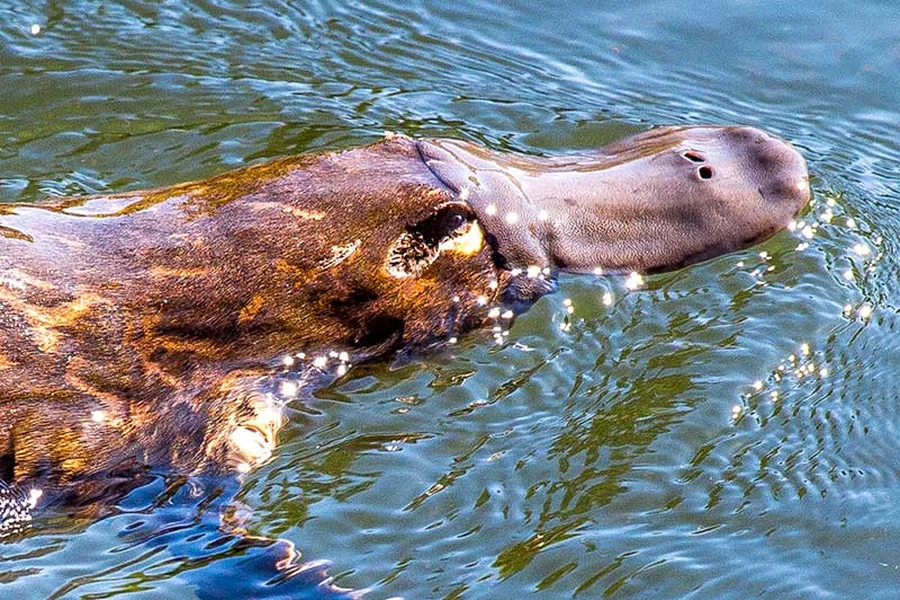
The platypus is a unique semi-aquatic mammal native to eastern Australia. It has a duck-like bill, webbed feet, dense fur, and a broad tail.
Platypuses spend much of their time in freshwater environments and feed on aquatic insects, worms, crustaceans, and other small organisms. They are also one of the few mammals that lay eggs.
Prairie Dog
Prairie dogs are burrowing rodents native to North American grasslands. They live in large underground colonies sometimes called towns.
They communicate using a variety of vocalizations and warning calls. Prairie dogs mainly eat grasses and other vegetation and play an important role in grassland ecosystems.
Praying Mantis
Praying mantises are predatory insects known for their long front legs, which are adapted for grabbing prey. Their upright posture gives them their familiar name.
They use camouflage and patience to approach insects before striking quickly. Some larger mantis species can capture small vertebrates such as frogs or lizards.
Peacock Spider
Peacock spiders are tiny jumping spiders famous for the colorful patterns displayed by males during courtship. They are mainly found in Australia.
Male peacock spiders perform visual displays and movements to attract females. Despite their small size, they have excellent vision and active hunting behavior.
Piranha
Piranhas are freshwater fish native to South America. They are known for their sharp teeth and strong jaws, although their behavior varies considerably among species.
Many piranhas are omnivorous and eat fish, insects, fruits, seeds, and other available foods. They typically inhabit rivers, lakes, and flooded forests.
Possum
Possums are marsupials found in Australia, New Guinea, and nearby regions. They include many different species with varied body sizes and lifestyles.
Possums may live in trees, forests, gardens, and urban environments. Their diets can include fruits, leaves, insects, nectar, and other foods depending on the species.
Polar Fox
The polar fox, more commonly called the Arctic fox, is a small fox adapted to extremely cold northern environments. Its thick fur provides insulation during freezing winters.
Its coat can change color seasonally, helping it blend into snowy and rocky surroundings. Arctic foxes eat rodents, birds, eggs, fish, and carrion.
Porpoise
Porpoises are small marine mammals related to dolphins. They generally have compact bodies and shorter, more rounded snouts than many dolphins.
They live in oceans and coastal waters and feed on fish, squid, and other marine organisms. Several porpoise species face conservation concerns because of accidental capture in fishing equipment.
Parakeet
Parakeets are small to medium-sized parrots with long tails. Many species have bright green, blue, yellow, or other colorful feathers.
They are popular as companion birds, but many parakeet species also live naturally in forests, grasslands, and open woodland. Their diets commonly include seeds, fruits, flowers, and vegetation.
Plover
Plovers are small to medium-sized shorebirds found in many parts of the world. They often live near beaches, mudflats, wetlands, and open ground.
Many plovers feed by quickly running across the ground and picking up insects, worms, crustaceans, and other small creatures.
Prawn
Prawns are aquatic crustaceans found in freshwater and marine environments. They have segmented bodies, multiple legs, and long antennae.
They are important parts of aquatic food webs and are also widely harvested as seafood. Depending on the species, prawns may feed on algae, plants, small animals, and organic material.
Painted Turtle
Painted turtles are freshwater turtles native to North America. They are recognized by colorful red, yellow, and orange markings along their shells and bodies.
They commonly live in ponds, lakes, slow-moving rivers, and wetlands. Painted turtles eat aquatic plants, insects, small fish, and other available foods.
Final Thought
Animals that start with P include an impressive collection of wildlife, from giant polar bears and powerful pumas to tiny peacock spiders and colorful parrots. These animals occupy nearly every major habitat on Earth.
Each species has unique adaptations that help it survive. Penguins are built for swimming, pangolins have protective scales, platypuses are adapted to freshwater life, and prairie dogs create complex underground communities. Together, these animals demonstrate the incredible diversity of the natural world.
FAQs
What animals start with P?
Some animals that start with P include panda, penguin, peacock, parrot, polar bear, puma, pig, porcupine, pelican, python, pangolin, platypus, prairie dog, and piranha.
What is the largest animal that starts with P?
The polar bear is one of the largest land animals that starts with P. Among marine animals, several large species also begin with P, including some whales commonly known by scientific or regional names.
Are pythons venomous?
No, pythons are nonvenomous snakes. They capture prey using their teeth and powerful muscles rather than venom.
What do pandas eat?
Giant pandas mainly eat bamboo. They may also consume small amounts of other plant material and occasionally other foods.
Where do penguins live?
Penguins mainly live in the Southern Hemisphere. Different species inhabit environments ranging from Antarctica to temperate coastal regions.
Are pangolins mammals?
Yes, pangolins are mammals. They are unusual because their bodies are covered with protective keratin scales.
What is special about a platypus?
The platypus is a semi-aquatic mammal that lays eggs. It also has a duck-like bill, webbed feet, and a highly specialized body adapted to freshwater habitats.

Welcome to natureanimalhub! I’m Anam Sattar, an AI Powered SEO, and Content Writer with 4 years of experirnce.
I help websites rank higher,grow traffic, and look amazing. My goal is to make SEO and web design simple and effective for everyone.
Let’s achieve more together!