
Savanna animals are wildlife species that live in warm grassland ecosystems with scattered trees and seasonal rainfall. Savannas are especially famous for their incredible variety of large mammals, predators, birds, reptiles, and insects.
These habitats can be found in Africa, Australia, South America, and parts of Asia. Animals living in savannas must adapt to changing conditions, including long dry seasons, high temperatures, limited water, and frequent competition for food.
African Elephant
African elephants are among the largest land animals on Earth and are iconic residents of African savannas. They use their trunks to collect water, grasp vegetation, communicate, and interact with their surroundings.
Elephants eat grasses, leaves, bark, roots, and branches. Their feeding behavior can change the structure of vegetation, creating open areas that benefit other animals.
Lion
Lions are some of the most recognizable predators of the African savanna. They often live in social groups called prides, where several females may cooperate while hunting.
Lions commonly prey on zebras, wildebeest, antelope, and other large herbivores. Their powerful bodies, sharp claws, and strong jaws help them capture and consume prey.
Giraffe
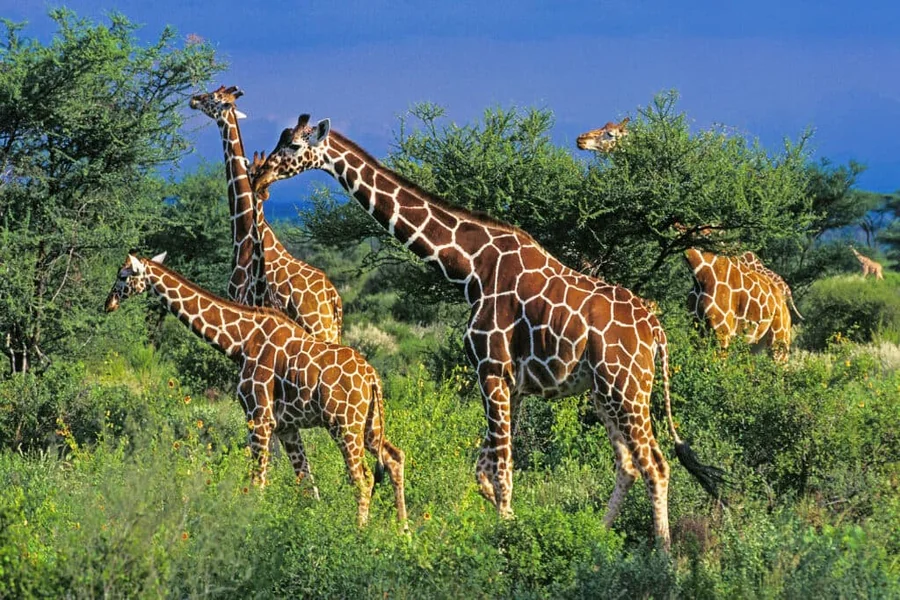
Giraffes are famous for their extremely long necks and legs. Their height allows them to reach leaves high in trees that many other herbivores cannot access.
They mainly feed on leaves, especially from acacia trees. Their long tongues help them pull vegetation from branches while avoiding many of the plant’s sharp thorns.
Zebra
Zebras are striped members of the horse family that live in African grasslands and savannas. Their black-and-white patterns make them one of the most recognizable animals in Africa.
They mainly eat grasses and can travel long distances while searching for fresh vegetation and water. Zebras often live in groups, which can provide protection against predators.
Cheetah
Cheetahs are specialized predators famous for their incredible speed. They use their acceleration to chase prey across open grassland.
Cheetahs commonly hunt smaller and medium-sized animals such as gazelles and young antelope. Their lightweight bodies, long legs, flexible spine, and large nasal passages are adapted for fast pursuit.
Wildebeest
Wildebeest are large African antelopes that are especially famous for their seasonal migrations. Huge groups can move across savannas in search of fresh grass and water.
Their migrations provide food for predators and influence the movement of many other animals. Wildebeest mainly feed on grasses and other vegetation.
Spotted Hyena
Spotted hyenas are powerful predators and scavengers found across much of sub-Saharan Africa. They have extremely strong jaws capable of crushing bones.
Hyenas live in complex social groups called clans. They hunt a variety of prey but also consume carrion and leftovers from other predators.
African Buffalo
African buffalo are large, powerful herbivores that often live in herds. They have heavy bodies and distinctive curved horns.
They mainly graze on grass and can travel considerable distances in search of water and food. Their size, strength, and group behavior provide protection from many predators.
Rhinoceros
Rhinoceroses are large herbivores that can be found in certain African savanna habitats. The white rhinoceros is particularly associated with open grasslands.
Rhinos use their horns for defense and competition. White rhinos mainly graze on grass, while black rhinos generally browse on leaves, shoots, and branches.
Gazelle
Gazelles are graceful antelopes commonly found in African savannas. They are fast runners and can make sudden turns to escape predators.
Many gazelle species feed primarily on grasses, leaves, and other vegetation. Their speed and alert behavior help them survive in landscapes where predators are often visible from a distance.
Hippopotamus
Hippopotamuses spend much of the day in rivers, lakes, and other bodies of water before moving onto land to feed, often at night.
Despite their heavy bodies, hippos can move surprisingly quickly on land. They mainly eat grass and play an important role in ecosystems around African waterways.
Ostrich
The ostrich is the world’s largest living bird and is well adapted to open African landscapes. It cannot fly but has powerful legs that allow it to run at high speeds.
Ostriches eat plants, seeds, fruits, and small animals. Their excellent eyesight helps them detect predators across open terrain.
Secretary Bird
The secretary bird is a tall African bird of prey known for its long legs and unusual hunting style. Instead of capturing prey mainly from the air, it often walks across the ground searching for food.
It can use powerful kicks to kill snakes, lizards, insects, and other small animals. Its long legs allow it to move efficiently through grasslands.
Meerkat
Meerkats are small mammals that live in the dry savannas and deserts of southern Africa. They live in social groups and often take turns watching for predators.
Their diet includes insects, spiders, scorpions, lizards, and small animals. Their strong claws are useful for digging burrows and searching for food.
Warthog
Warthogs are wild members of the pig family that live across many African grassland habitats. They have large tusks and distinctive facial growths.
Warthogs often feed on grasses, roots, bulbs, and other vegetation. They can also use abandoned burrows for shelter, sometimes entering them backward so their tusks face outward.
Impala
Impala are medium-sized antelopes known for their speed and remarkable jumping ability. They live in herds and are common across many African savanna regions.
They eat grasses, leaves, shoots, and other vegetation. When threatened, impalas can make long leaps and sudden changes of direction to escape predators.
African Wild Dog
African wild dogs are highly social predators that live in packs. They are known for their colorful coats, large rounded ears, and excellent endurance.
Unlike ambush predators, African wild dogs often rely on coordinated pursuit. They can work together to chase prey across long distances before making a successful capture.
Jackal
Jackals are adaptable carnivores and omnivores found in several African habitats. They may hunt small animals, eat insects and fruits, or feed on carrion.
Their adaptability allows them to survive in areas where food availability changes throughout the year. Jackals may also take advantage of leftovers from larger predators.
Savanna Birds
Savannas support many bird species beyond ostriches and secretary birds. Vultures, hornbills, starlings, eagles, rollers, weavers, and vultures can all be found in different savanna environments.
Some birds feed on seeds and insects, while others hunt small animals or consume carrion. Their different feeding strategies help support the complex food web of grassland ecosystems.
Final Thought
Savanna animals have developed remarkable adaptations for life in open grasslands, where temperatures can be high and water may become scarce during dry seasons. Large herbivores such as elephants, giraffes, zebras, and wildebeest depend on vegetation, while predators such as lions, cheetahs, hyenas, and African wild dogs help regulate prey populations.
From tiny insects and meerkats to enormous elephants and rhinoceroses, every species contributes to the balance of the savanna ecosystem. Protecting these habitats is essential for maintaining the extraordinary wildlife diversity found across the world’s grasslands.
FAQs
What are savanna animals?
Savanna animals are species that live in grassland ecosystems with seasonal rainfall, scattered trees, and warm temperatures. They include mammals, birds, reptiles, insects, and other wildlife.
What animals live in the African savanna?
African savanna animals include lions, elephants, giraffes, zebras, cheetahs, wildebeest, hyenas, African buffalo, rhinos, gazelles, hippos, ostriches, and many others.
What is the largest animal in the savanna?
The African elephant is the largest land animal and one of the largest animals commonly found in savanna ecosystems.
What predators live in the savanna?
Common savanna predators include lions, cheetahs, spotted hyenas, African wild dogs, leopards, jackals, and several species of birds of prey.
How do savanna animals survive dry seasons?
Many animals survive dry seasons by traveling to areas with food and water, changing their diets, conserving energy, living in groups, or using adaptations that help them tolerate heat and limited water.
What do savanna herbivores eat?
Savanna herbivores eat grasses, leaves, bark, roots, fruits, shoots, and other plant material. Different species often specialize in different types of vegetation.
Why are savannas important for animals?
Savannas provide food, water, shelter, and breeding areas for a huge variety of wildlife. They also support complex food webs involving herbivores, predators, scavengers, birds, and insects.

Welcome to natureanimalhub! I’m Anam Sattar, an AI Powered SEO, and Content Writer with 4 years of experirnce.
I help websites rank higher,grow traffic, and look amazing. My goal is to make SEO and web design simple and effective for everyone.
Let’s achieve more together!