

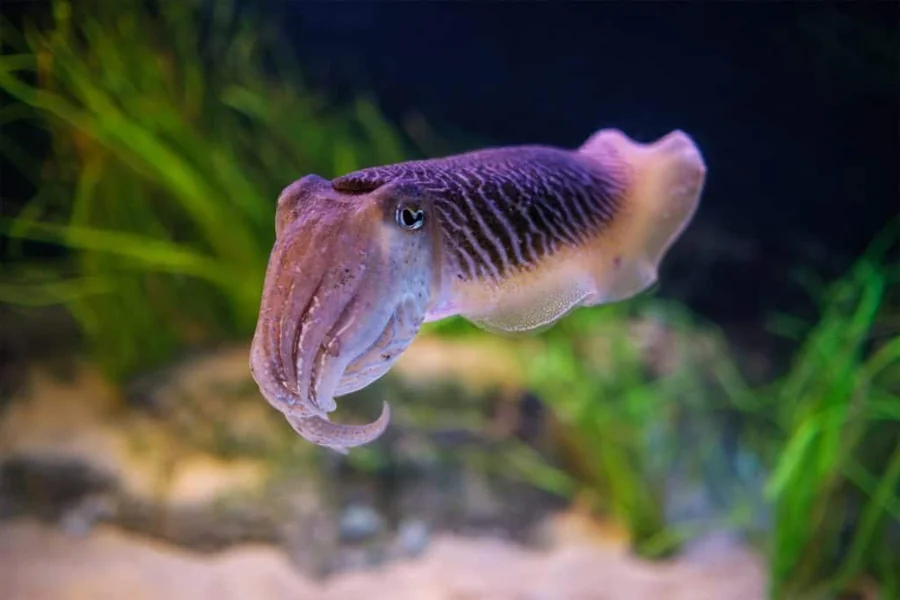
What Are Cuttlefish?
Cuttlefish are fascinating marine animals belonging to the class Cephalopoda, which also includes octopuses, squids, and nautiluses. Despite their name, cuttlefish are not actually fish. They are soft-bodied invertebrates that live mainly in coastal waters and shallow marine environments. One of their most recognizable features is the internal cuttlebone, a lightweight structure that helps control buoyancy and allows the animal to move through the water at different depths. Cuttlefish have eight arms and two longer tentacles that they use to capture prey. Their large eyes provide excellent vision, while their highly developed nervous systems support complex behaviors. Another remarkable characteristic is their ability to rapidly change the color, pattern, and appearance of their skin. This ability can help them camouflage themselves, communicate with other cuttlefish, or confuse potential predators. Different species vary in size, appearance, and habitat, but they share many of the unusual characteristics that make cephalopods so interesting. Their combination of intelligence, visual abilities, movement, and camouflage makes cuttlefish some of the most distinctive animals found in the ocean.
How Cuttlefish Change Color
Cuttlefish are famous for their extraordinary ability to change their skin color and patterns within a very short time. Specialized cells called chromatophores contain pigments that can expand or contract, allowing different colors to become more visible. Other structures in the skin can reflect light and contribute to additional visual effects. By controlling these systems, cuttlefish can create complex patterns across their bodies. Camouflage is one of the most important uses of this ability. A cuttlefish can adjust its appearance to better match the surrounding sand, rocks, vegetation, or other surfaces. This can make it harder for predators to detect the animal and can also help it approach prey without being noticed. Color changes are not limited to hiding. Cuttlefish can use visual displays during interactions with other members of their species, including courtship and territorial encounters. Their skin can therefore act as both camouflage and a communication system. What makes this ability particularly impressive is how quickly and precisely the animal can control its appearance, responding to changes in its environment and behavior.
Cuttlefish Diet and Hunting
Cuttlefish are active predators that feed on a variety of marine organisms. Their diet can include small fish, shrimp, crabs, and other crustaceans or marine animals. They use their excellent eyesight to identify potential prey and carefully position themselves before making an attack. Their two specialized tentacles can shoot outward rapidly and help seize prey, while their arms assist with holding and manipulating it. A sharp beak located inside the mouth helps cut and process food. Cuttlefish often rely on camouflage and controlled movement while hunting. By blending into the environment, they can approach prey without attracting attention. Some can also produce changing patterns that may influence or distract prey before an attack. Their hunting style demonstrates how several specialized features work together. Vision helps locate prey, skin patterns provide concealment, tentacles capture the target, and the beak processes the food. This combination makes cuttlefish effective hunters despite their relatively soft bodies. Their feeding behavior also contributes to marine food webs by connecting smaller organisms with larger predators.
Where Do Cuttlefish Live?
Cuttlefish are found in marine environments across several parts of the world’s oceans, with many species especially associated with coastal waters. They can inhabit sandy bottoms, rocky areas, seagrass beds, coral environments, and other underwater habitats where food and shelter are available. Different species have different habitat preferences, and some are adapted to particular depths or water conditions. Many cuttlefish spend significant amounts of time near the seafloor, where their ability to change appearance is especially useful. Their camouflage can help them blend with sediment, rocks, plants, and other surfaces. Habitat conditions also influence their feeding and breeding behavior. Areas with abundant prey provide better opportunities for survival, while suitable shelter can help protect them from predators. Like many marine animals, cuttlefish are affected by changes in ocean conditions, habitat quality, pollution, and fishing activity. Protecting coastal ecosystems can therefore benefit cuttlefish and many other species that depend on healthy marine environments.
Final Thought
Cuttlefish are remarkable marine animals that combine intelligence, sophisticated vision, powerful hunting abilities, and extraordinary camouflage. Their ability to change colors and patterns allows them to interact with their surroundings in ways that few other animals can match. Their internal cuttlebone, flexible arms, specialized tentacles, and sharp beak further demonstrate how well their bodies are adapted to life underwater. Although they are sometimes confused with fish because of their name, cuttlefish are actually cephalopod invertebrates related to squids and octopuses. Their role as predators also makes them an important part of marine food webs. Learning about cuttlefish provides a glimpse into the incredible diversity of ocean life and shows how evolution can produce highly specialized adaptations for survival in complex underwater environments.
FAQs
Are cuttlefish actually fish?
No, cuttlefish are not fish. They are marine invertebrates belonging to the cephalopod group.
What do cuttlefish eat?
Cuttlefish commonly eat small fish, shrimp, crabs, and other marine animals that they can capture with their tentacles.
How do cuttlefish change color?
Cuttlefish change color using specialized skin structures, including pigment-containing chromatophores and light-reflecting cells.
Why do cuttlefish change their appearance?
They change their appearance mainly for camouflage, communication, courtship, and interactions with other animals.
What is a cuttlebone?
A cuttlebone is an internal, lightweight structure that helps a cuttlefish control its buoyancy in the water.
Where do cuttlefish live?
Cuttlefish mainly live in marine environments, including coastal waters, sandy areas, rocky habitats, and seagrass ecosystems.
Are cuttlefish intelligent animals?
Yes, cuttlefish have well-developed nervous systems and demonstrate complex behaviors involving hunting, camouflage, learning, and communication.

Welcome to natureanimalhub! I’m Anam Sattar, an AI Powered SEO, and Content Writer with 4 years of experirnce.
I help websites rank higher,grow traffic, and look amazing. My goal is to make SEO and web design simple and effective for everyone.
Let’s achieve more together!