

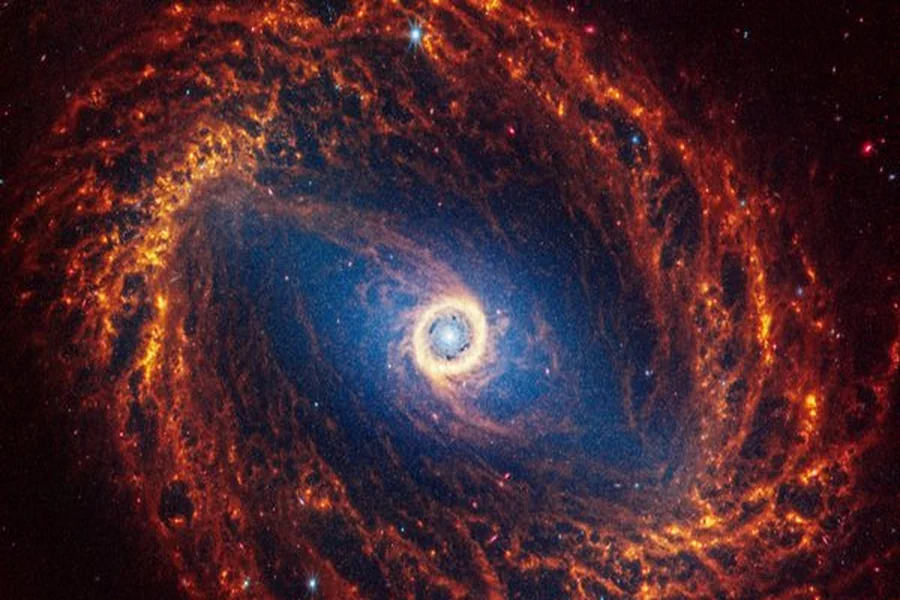
Human fascination with the night sky is as old as our species itself. For millennia, our ancestors relied solely on their naked eyes to trace constellations, track planetary movements, and weave mythologies around the celestial bodies scattered across the dark canvas above. With the invention of the ground-based telescope in the seventeenth century, our perspective expanded exponentially, yet we were continually hindered by a significant optical obstacle: the Earth’s atmosphere. This turbulent layer of gases blurs, absorbs, and distorts incoming cosmic light. The true awakening of our astronomical understanding required us to finally leave the confines of our home planet. At the heart of this modern era of orbital observation is a profound reality: Echoes of the Cosmos: How Deep Space Satellites are Decoding the Universe. By successfully escaping the atmospheric veil, these highly sophisticated instruments act as our cosmic eyes and ears, tuning into the ancient radiation and faint light signals that have traveled through the vacuum of space for billions of years. They capture the chaotic remnants of stellar explosions, the fading whispers of the Big Bang, and the subtle chemical signatures of distant, alien worlds. This comprehensive guide delves deeply into the historical progression, the underlying mechanisms, and the groundbreaking revelations brought to us by these extraordinary orbital observatories, illustrating precisely how they translate the silent, invisible language of the void into concrete scientific knowledge that fundamentally reshapes our comprehension of reality.
The Dawn of Deep Space Observation
The journey to decode the universe truly began when humanity decided to place its analytical tools beyond the reach of atmospheric distortion. Early space exploration was primarily concerned with Earth’s immediate orbital environment and the Moon, but scientists quickly realized the unprecedented potential of looking outward from the pristine vacuum of space. The concept was simple yet revolutionary: if you can position a telescope above the atmosphere, you eliminate the blurring effects of atmospheric turbulence and gain access to wavelengths of light—such as ultraviolet, X-rays, and gamma rays—that are largely absorbed by the Earth’s protective ozone layer and atmospheric gases. The launch of the Hubble Space Telescope in the early 1990s marked a definitive turning point in this ambitious endeavor. Hubble was not merely a camera in orbit; it was a highly sensitive scientific instrument capable of capturing the literal echoes of ancient galaxies. When Hubble focused its lens on a seemingly empty, dark patch of the sky for ten consecutive days, it produced the Hubble Deep Field image. This single photograph revealed thousands of galaxies, some of which existed just a few hundred million years after the universe began. This momentous achievement fundamentally altered our understanding of galactic formation and the sheer scale of the cosmos. It proved that deep space satellites could serve as virtual time machines, allowing us to see the universe not as it is today, but exactly as it appeared billions of years ago when the light first began its long journey toward our solar system. The success of Hubble paved the way for an entire fleet of specialized orbital observatories, each designed to listen to a different kind of cosmic echo.
Technological Marvels Propelling Us Forward
As our astronomical ambitions grew, so did the complexity of the technology required to satisfy them. Decoding the universe is not just about taking clearer pictures; it is about analyzing the fundamental properties of light itself. The James Webb Space Telescope represents the current pinnacle of this technological evolution. Unlike Hubble, which primarily observes visible and ultraviolet light, Webb is optimized for the infrared spectrum. This capability is absolutely crucial for looking deeper into the cosmos because of a phenomenon known as cosmological redshift. As the universe expands, the space between galaxies stretches, and the light traveling through that space is stretched along with it. By the time the light from the earliest galaxies reaches our solar system, its wavelength has shifted out of the visible spectrum and into the infrared. Webb’s massive, gold-coated beryllium mirrors are specifically designed to catch these faint infrared echoes. Furthermore, decoding the universe requires extreme precision and operating conditions. To prevent its own heat from interfering with the delicate infrared sensors, Webb is positioned at the Second Lagrange Point, nearly a million miles away from Earth, and is shielded by a sunshade the size of a tennis court. Through the use of advanced spectrometers, satellites like Webb break down the captured light into a rainbow-like spectrum. The specific dark lines within this spectrum act as a unique barcode, revealing the exact chemical composition, temperature, and velocity of objects situated millions of light-years away. These technological marvels have transformed astronomy from a science of simple observation into a precise discipline of cosmic chemistry and physics, allowing us to read the structural blueprints of the universe.
Unraveling the Mysteries of Exoplanets
One of the most profound questions driving deep space exploration is whether we are alone in the universe. Before the advent of specialized space telescopes, the existence of planets orbiting other stars—known as exoplanets—was merely a widely accepted theory without concrete observational proof. Today, deep space satellites have confirmed the existence of thousands of these distant worlds, fundamentally changing our perspective on the prevalence of planetary systems. The Kepler Space Telescope was a pioneer in this specific field of decoding the cosmos. Kepler did not take direct photographs of planets; instead, it utilized the transit method. It stared unblinkingly at a single patch of the Milky Way, monitoring the brightness of over a hundred thousand stars simultaneously. When a planet crosses in front of its host star from our line of sight, it causes a microscopic dip in the star’s apparent brightness. By carefully decoding the frequency and duration of these light dips, scientists can determine the planet’s size, its orbital period, and its distance from the star. This information is critical for determining whether a planet resides in the habitable zone—the orbital region where conditions might be just right for liquid water to exist on the surface. The Transiting Exoplanet Survey Satellite continues this vital work today, scanning the entire sky for transiting worlds nearer to our own solar system. Beyond merely finding these planets, the next frontier is decoding their atmospheres. During a transit event, starlight passes through the exoplanet’s atmosphere before reaching our satellites. Different molecules in the atmosphere absorb specific wavelengths of light. By analyzing the filtered starlight, scientists can detect the presence of water vapor, carbon dioxide, methane, and potentially even biosignatures—chemical imbalances that strongly suggest the presence of biological life. Thus, satellites are actively searching for the chemical echoes of extraterrestrial life.
Mapping the Cosmic Microwave Background
While telescopes like Hubble and Webb look at distinct objects such as galaxies and stars, other deep space satellites are designed to study the universe on a macroscopic scale by analyzing the background noise of existence itself. If you want to listen to the ultimate echo of the cosmos, you must look at the Cosmic Microwave Background radiation. This is the residual heat left over from the Big Bang, a faint glow of microwave radiation that permeates every inch of the observable universe. Immediately after the universe’s birth, it was an incredibly hot, dense soup of plasma where light could not travel freely. About 380,000 years later, the universe cooled enough for the first atoms to form, allowing light to finally break free and travel across space. That ancient light has been stretching and cooling ever since, reaching us today as a faint microwave signal. Satellites like the Cosmic Background Explorer, the Wilkinson Microwave Anisotropy Probe, and the Planck satellite were specifically launched to decode this ancient radiation. They meticulously mapped the microscopic temperature fluctuations in the cosmic microwave background. These tiny variations in temperature, differing by just fractions of a degree, represent the initial density ripples in the early universe. By decoding these cosmic ripples, astrophysicists have been able to determine the precise age of the universe at 13.8 billion years, map its overall shape, and calculate the exact proportions of ordinary matter, dark matter, and dark energy. The echoes captured by these specialized satellites provide the foundational evidence for the standard model of cosmology, proving that to understand the vastness of the modern universe, we must first decode the subtle radiation emitted during its fiery infancy.
Final Thought
The ongoing endeavor to understand our universe is a testament to human ingenuity and our relentless pursuit of knowledge. Deep space satellites serve as the ultimate translators of the cosmos, transforming invisible radiation, faint light dips, and ancient heat into a coherent narrative of our cosmic origins. From the fiery birth of the universe mapped by microwave observatories to the delicate chemical signatures of alien atmospheres decoded by infrared telescopes, these orbital instruments have fundamentally reshaped our understanding of reality. As technology continues to advance, future missions will undoubtedly listen even closer to the echoes of the cosmos, probing the dark ages of the universe and continuing the search for habitable worlds. We stand on the precipice of a new era of astronomical understanding, guided by the silent, steady gaze of the satellites orbiting in the dark void above.
FAQs
What is the cosmic microwave background? The cosmic microwave background is the residual heat and radiation left over from the initial expansion of the universe, acting as an ancient, detectable echo of creation. How do satellites decode information from distant galaxies? Satellites decode this information by capturing various wavelengths of light and utilizing advanced spectrometers to analyze the chemical composition, temperature, and movement of celestial objects. Why are deep space instruments better than ground-based telescopes? They operate far above the Earth’s atmosphere, which eliminates the distortion of starlight and allows them to detect faint, essential signals that would normally be absorbed by our planet’s gases. Can these observatories detect life on other planets? While they have not found actual life yet, they can detect crucial biosignatures such as water vapor, methane, and oxygen in the atmospheres of exoplanets, which are strong indicators of potential biological activity. What makes infrared observation so important for astronomy? Infrared observation allows satellites to see through dense clouds of cosmic dust and detect the stretched, redshifted light of the universe’s oldest and most distant galaxies.

Welcome to natureanimalhub! I’m Anam Sattar, an AI Powered SEO, and Content Writer with 4 years of experirnce.
I help websites rank higher,grow traffic, and look amazing. My goal is to make SEO and web design simple and effective for everyone.
Let’s achieve more together!