

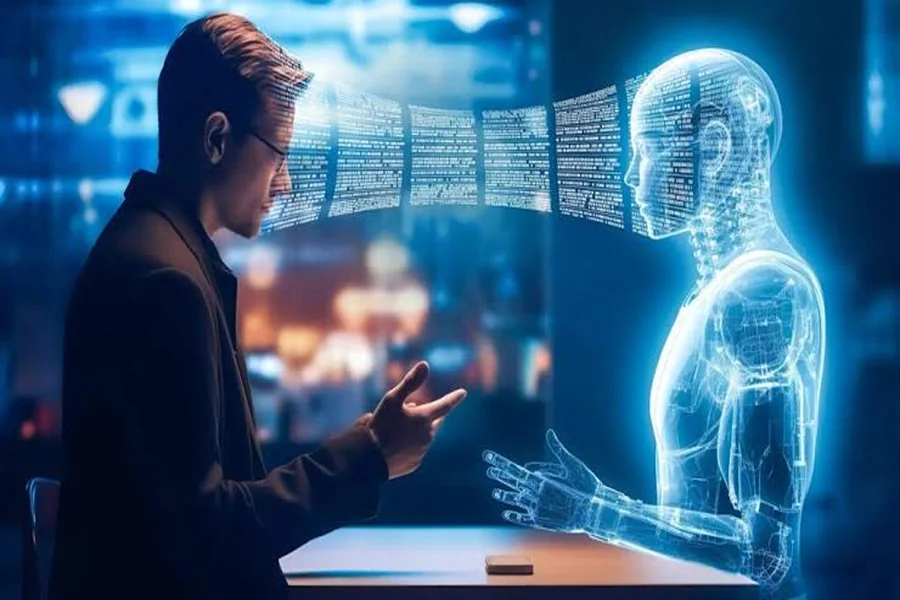
Have you ever paused to think about how much your morning routine has changed over the last decade? It is not just about a new coffee machine or a different commute route. Behind the scenes, a massive technological shift has taken place. We are currently living through The Silent Revolution: How AI is Reshaping Our Daily Lives. Unlike the loud, booming industrial revolutions of the past, this one does not come with smokestacks, heavy machinery, or massive gears. Instead, it operates quietly in the background of our smartphones, laptops, and home appliances. Artificial intelligence is no longer a concept reserved for science fiction movies or futuristic novels; it is a present-day reality that dictates everything from the music we listen to, to the way we navigate through morning traffic. As we interact with these smart systems, they learn, adapt, and evolve to serve us better. This invisible web of algorithms and data processing has seamlessly integrated into our existence, making tasks easier, faster, and surprisingly intuitive. Many of us do not even realize how deeply dependent we have become on these digital assistants and smart predictive models. Yet, if you were to strip away the machine learning processes powering your favorite applications today, the digital world would feel archaic, slow, and incredibly frustrating. The integration of advanced technology into our daily routines is a testament to human ingenuity, creating an era where our tools anticipate what we need before we even ask.
Introduction to a Smarter World
To understand the magnitude of this shift, we must look at how artificial intelligence transitioned from complex academic research to consumer-friendly applications. Just a couple of decades ago, the idea of a machine understanding human speech was considered a monumental challenge. Today, we casually ask our smart speakers to check the weather, set a timer, or play a specific podcast while we cook dinner. This transition happened gradually, conditioning us to accept and rely on machine intelligence without a second thought. The algorithms powering these interactions process massive amounts of conversational data, learning nuances, accents, and contextual clues to provide accurate responses. Beyond voice recognition, smart algorithms govern the flow of information we consume on a daily basis. When you open a search engine, social media feed, or news aggregator, an invisible curator is meticulously sorting through millions of articles to present the ones most likely to capture your attention. This curation is based on your past behavior, search history, and engagement patterns. While this makes finding relevant information incredibly efficient, it also shapes our worldview by prioritizing specific content tailored to our tastes. Navigation applications are another brilliant example of this background intelligence. They do not just show us a static map; they analyze real-time traffic data, historical congestion patterns, and even weather conditions to calculate the absolute fastest route to our destination. If an accident occurs miles ahead, the system instantly recalculates, redirecting you through quieter streets to save time. We have fully embraced this smarter world because it removes friction from our daily endeavors, allowing us to focus our mental energy on more important matters.
Transforming the Modern Workplace
Nowhere is the impact of advanced algorithms more evident than in the professional sphere. The modern workplace is undergoing a radical transformation, moving away from repetitive manual tasks toward strategic, augmented productivity. Email clients now suggest auto-responses and finish our sentences, saving countless hours over a calendar year. Spam filters, which rely on sophisticated pattern recognition, keep our inboxes clean and secure from phishing attempts and malicious software. But the changes go much deeper than mere convenience. In sectors like finance and marketing, predictive analytics are doing the heavy lifting. Machines analyze market trends, consumer behavior, and historical data to forecast future outcomes with astonishing accuracy. This allows businesses to make data-driven decisions rather than relying on gut feeling or guesswork. Human resources departments use automated software to scan thousands of resumes in seconds, identifying the most qualified candidates based on specific keywords and experience markers. Furthermore, the rise of remote work has been heavily supported by intelligent software. Video conferencing tools now use background noise cancellation powered by machine learning, isolating human voices from barking dogs or construction sounds outside. Project management tools automatically assign tasks, track progress, and flag potential bottlenecks before they derail an entire project. Even creative fields are experiencing this shift. Writers, designers, and programmers are utilizing generative tools to brainstorm ideas, draft basic code, or create initial design mockups. Rather than replacing human workers, these systems act as collaborative partners, handling the tedious groundwork so that professionals can dedicate their time to high-level strategy and complex problem-solving.
Enhancing Home and Entertainment
When the workday ends and we retreat to our homes, the invisible hand of technology continues to enhance our environment. The concept of the smart home has evolved from a luxury novelty to an accessible standard for millions of families. Intelligent thermostats monitor our habits, learning when we wake up, when we leave for work, and what temperature we prefer when we go to sleep. They automatically adjust the climate to ensure maximum comfort while simultaneously optimizing energy consumption to lower utility bills. Smart refrigerators can track expiration dates, suggest recipes based on available ingredients, and even add missing items to our digital grocery lists. Security systems now use advanced image recognition to distinguish between a swaying tree branch, a passing car, and a potential intruder, significantly reducing false alarms and sending real-time alerts straight to our phones. In the realm of entertainment, artificial intelligence has completely revolutionized how we consume media. Streaming platforms employ highly sophisticated recommendation engines. By analyzing what you watch, how long you watch it, and what you skip, these platforms create a highly personalized viewing profile. They do not just suggest a broad genre; they identify nuanced patterns to surface hidden gems you would likely never have found on your own. The video game industry has also integrated adaptive intelligence. Non-playable characters now exhibit complex behaviors, reacting to player choices in real-time and altering the storyline dynamically. The difficulty level of certain games can adjust on the fly, becoming harder if the player is breezing through or offering subtle hints if they are stuck.
Redefining Health and Wellness
Perhaps the most profound and life-altering application of everyday technology is happening within the health and wellness sector. We have moved far beyond simple pedometers that merely count our steps. Today’s wearable technology, like smartwatches and fitness rings, acts as miniature, personalized health clinics strapped directly to our bodies. They continuously monitor heart rate variability, blood oxygen levels, sleep stages, and even electrocardiogram data throughout the day and night. These devices use complex algorithms to establish a baseline for your personal health, alerting you the moment a concerning anomaly is detected. There have been countless documented cases where a smartwatch notified a user of an irregular heartbeat, prompting a medical visit that ultimately prevented a severe cardiac event. Beyond reactive alerts, these systems are highly proactive. They analyze your daily activity levels and suggest personalized workout routines, reminding you to stand up or take deep breaths to manage stress effectively. Diet and nutrition applications use image recognition to estimate the caloric and macronutrient content of a meal simply from a quick photograph. On a broader scale, medical professionals are leveraging intelligent software to read X-rays, MRIs, and CT scans. These diagnostic systems are trained on millions of medical images, allowing them to spot microscopic tumors or subtle bone fractures that the human eye might easily overlook. Mental health is also seeing a technological boost, with intelligent chatbots providing constant support for individuals experiencing anxiety or depression. While they do not replace licensed therapists, they offer immediate coping strategies and a non-judgmental space to vent during late-night hours.
Revolutionizing Retail and Personal Finance
The way we shop and manage our money has been entirely reconfigured by intelligent algorithms working behind the scenes. In the retail sector, e-commerce giants use machine learning to predict what you might want to buy before you even search for it. When you log into your favorite online store, the homepage is uniquely tailored to your shopping history and browsing habits. Inventory management systems predict regional demand spikes, ensuring that products are stocked in local warehouses just before a surge in purchases occurs. Virtual try-on features use augmented reality to let you see how a piece of furniture will look in your living room or how a pair of glasses will fit your face, removing the guesswork from online shopping. Customer service has also been transformed by virtual assistants that can handle returns, track packages, and resolve complaints instantly without putting you on hold. In personal finance, banking applications categorize your spending automatically, generating visual budgets that highlight exactly where your money goes each month. Fraud detection algorithms monitor your transactions in real-time, instantly freezing your card if a suspicious purchase is made halfway across the globe. Automated investment platforms, often called robo-advisors, construct and manage diversified portfolios based on your personal risk tolerance and financial goals, making wealth management accessible to the average person.
Final Thought
As we navigate this rapidly changing landscape, it becomes incredibly clear that our reliance on automated systems will only deepen as time goes on. The technology will inevitably become more intuitive, more capable, and even more invisible as it integrates further into the fabric of society. However, embracing this digital evolution requires a balanced approach and a mindful perspective. We must remain vigilant about data privacy, ensuring that the corporations building these algorithms use our personal information responsibly and ethically. There are valid conversations to be had regarding algorithmic bias, screen time, and digital dependency. We must not lose our ability to think critically or perform basic life tasks without digital assistance. Yet, the overwhelming trajectory is one of human progress and empowerment. By taking over mundane chores, complex calculations, and repetitive administrative tasks, this technology gifts us the most valuable resource of all: time. How we choose to spend that reclaimed time—whether connecting with loved ones, pursuing creative passions, or solving global challenges—will ultimately define the success of this technological era.
FAQs
Q: How does artificial intelligence affect everyday life? A: It streamlines daily tasks by powering voice assistants, curating entertainment feeds, optimizing navigation routes, and automating smart home devices.
Q: Will smart algorithms replace human jobs entirely? A: While certain repetitive tasks will be automated, technology is more likely to augment human roles, shifting focus toward strategy, creativity, and complex problem-solving.
Q: Is my personal data safe with virtual assistants and smart home devices? A: Safety depends on the manufacturer’s privacy policies, so it is crucial to use strong passwords, enable two-factor authentication, and regularly review app permissions.
Q: Can machine learning improve healthcare outcomes? A: Yes, it allows for earlier disease detection through advanced imaging analysis, personalizes treatment plans, and enables continuous health tracking via wearable technology.
Q: What is the most common use of automation in modern business? A: Businesses frequently use automated software for data analysis, customer service chatbots, email marketing personalization, and streamlining human resources tasks.

Welcome to natureanimalhub! I’m Anam Sattar, an AI Powered SEO, and Content Writer with 4 years of experirnce.
I help websites rank higher,grow traffic, and look amazing. My goal is to make SEO and web design simple and effective for everyone.
Let’s achieve more together!