

India is home to an incredible variety of wildlife. The country’s diverse geography includes tropical forests, grasslands, deserts, mountains, wetlands, rivers, and long coastal regions. These different habitats support hundreds of animal species, ranging from huge mammals such as Asian elephants and rhinoceroses to small reptiles, birds, and insects.
Animals in India are an important part of the country’s natural heritage and ecosystems. Some species are closely associated with particular regions, while others can survive across several types of habitats. Many Indian animals are also culturally significant, making wildlife protection an important part of preserving both nature and national heritage.
Bengal Tiger
The Bengal tiger is one of the most recognizable animals in India. This powerful big cat has orange fur covered with dark stripes, and every tiger has a unique stripe pattern. It can be found in several types of habitats, including forests, grasslands, and mangrove areas.
Bengal tigers are solitary predators and usually hunt animals such as deer and wild boar. Their strong bodies, sharp claws, and excellent swimming abilities make them highly effective hunters.
India has several protected areas where tigers are conserved. Maintaining large, connected habitats is important because tigers need sufficient space and prey to survive.
Asian Elephant
The Asian elephant is one of the largest land animals found in India. It is smaller than the African elephant and has distinctive physical features, including smaller ears and a rounded back.
Asian elephants live in forests and grasslands and feed on grasses, leaves, bark, roots, fruits, and other vegetation. They are highly social animals, with females commonly living in family groups.
Elephants play an important ecological role by changing vegetation, spreading seeds, and creating pathways through forests. Habitat fragmentation and human-wildlife conflict remain significant challenges for their conservation.
Indian Rhinoceros
The Indian rhinoceros, also known as the greater one-horned rhinoceros, is easily recognized by its thick, folded skin and single horn. It is primarily associated with grasslands, wetlands, and riverine habitats.
These large herbivores spend much of their time feeding on grasses and aquatic vegetation. They are strong swimmers and can move through wet environments with surprising ease.
Kaziranga National Park in Assam is particularly well known for its population of Indian rhinoceroses. Conservation programs have helped protect the species, although habitat management remains important.
Asiatic Lion
The Asiatic lion is a rare big cat found in the wild in India. Its natural population is concentrated in and around Gujarat’s Gir landscape.
Compared with African lions, Asiatic lions generally have a less prominent mane, especially around the ears. They live in groups or smaller social units and hunt animals such as deer, antelope, and wild pigs.
Conservation efforts have played an important role in protecting this population. Maintaining suitable habitat and managing the species’ limited geographic range are important for its future.
Indian Leopard
The Indian leopard is an adaptable big cat that can live in forests, grasslands, scrublands, and areas close to human settlements. Its spotted coat provides camouflage in many different environments.
Leopards are mainly nocturnal and are skilled climbers. They hunt a wide variety of prey, including deer, monkeys, smaller mammals, and birds.
Their adaptability helps them survive in changing landscapes, but habitat loss and conflicts with humans can create serious challenges.
Snow Leopard
The snow leopard lives in the high mountains of northern India. Its thick fur, long tail, and large paws help it survive in cold, rocky environments.
Snow leopards are powerful climbers and can move across steep mountain slopes while hunting wild sheep, goats, and smaller animals. Their thick tail can also help provide warmth in freezing conditions.
Because they live in remote mountain environments, snow leopards are difficult to observe in the wild. Habitat changes, declining prey, and human-related pressures can affect their populations.
Indian Sloth Bear
The sloth bear is a distinctive bear species native to the Indian subcontinent. It has long, shaggy black fur, a pale muzzle, and curved claws designed for digging and feeding.
Unlike some other bears, sloth bears eat large amounts of insects, especially termites and ants. They use their lips and long claws to break into insect nests and extract their food.
They may also eat fruits, honey, and other plant material. Sloth bears are mainly active at night and can be found in several forest and dry woodland habitats.
Indian Wild Dog
The dhole, commonly called the Indian wild dog, is a social carnivore found in parts of India. Dholes usually live and hunt in groups, working together to pursue prey.
Their diet can include deer, wild pigs, and other mammals. Cooperation allows a pack to tackle prey that might be difficult for a single animal to catch.
Dholes are important predators in forest ecosystems, but habitat fragmentation and declining prey populations can threaten local groups.
Nilgai
The nilgai is the largest antelope in Asia and is found in several parts of India. Its name means “blue cow,” referring to the bluish-gray appearance of adult males.
Nilgai mainly eat grasses, leaves, flowers, and other vegetation. They can survive in a range of environments, including open forests, scrublands, and agricultural landscapes.
Their strong bodies and long legs help them move quickly when threatened. They are often seen in open areas where vegetation provides food and cover.
Indian Gaur
The gaur is one of the largest wild cattle species in the world. It has a powerful body, dark coat, strong legs, and a distinctive ridge across its shoulders.
Gaur live mainly in forests and feed on grasses, leaves, shoots, and other vegetation. They usually live in herds, although adult males may sometimes be found alone.
Their large size makes them difficult prey for most predators. Tigers, however, can occasionally hunt young or vulnerable gaur.
Indian Peafowl
The Indian peafowl is one of India’s most recognizable birds. The male, known as a peacock, has a spectacular train of long feathers covered with eye-like patterns.
Peafowl can live in forests, grasslands, farmland, and areas near villages. They eat seeds, fruits, insects, plants, and small animals.
During courtship, males spread their colorful feathers into a large fan. This dramatic display is one of the most famous sights associated with India’s birdlife.
Hanuman Langur
Hanuman langurs are monkeys found across many parts of India. They generally have gray or light-colored bodies with darker faces, hands, and feet.
These monkeys are highly adaptable and can live in forests, grasslands, rocky areas, and even urban environments. They mainly eat leaves, fruits, flowers, and other plant material.
Langurs are social animals and communicate through calls and body movements. Their ability to live near people has made them familiar animals in many Indian communities.
Indian Cobra
The Indian cobra is one of the country’s best-known snakes. It is recognized by its hood, which expands when the snake feels threatened.
Indian cobras can live in forests, farmland, grasslands, and areas near human settlements. They feed mainly on rodents, frogs, lizards, and other small animals.
Although their venom can be dangerous, cobras generally prefer to avoid humans. Like other snakes, they play an important role in ecosystems by helping control populations of small animals.
Indian Star Tortoise
The Indian star tortoise is known for its beautiful shell, which features star-shaped patterns. It is found in parts of India and neighboring regions.
This tortoise is primarily herbivorous and feeds on grasses, leaves, flowers, and other vegetation. It spends much of its time moving slowly through dry habitats.
Its distinctive appearance has unfortunately made it a target for illegal wildlife trade. Protecting wild populations requires effective enforcement and habitat conservation.
Ganges River Dolphin
The Ganges river dolphin is a freshwater mammal found in river systems of the Indian subcontinent. It has a long, narrow snout and relies heavily on echolocation to navigate and locate prey in murky water.
These dolphins feed on fish and other aquatic organisms. Unlike marine dolphins, they are adapted specifically to freshwater environments.
Pollution, reduced water flow, habitat modification, and accidental capture in fishing equipment can threaten river dolphin populations. Protecting healthy river ecosystems is therefore essential.
One-Horned Rhino
The one-horned rhino is another name commonly used for the Indian rhinoceros. Its thick skin creates armor-like folds around its body, giving it an unusual appearance.
These rhinos are powerful herbivores that spend much of their time grazing. They can also swim well and often stay near rivers, marshes, and wetlands.
Successful conservation programs have helped increase their numbers in some areas, demonstrating the value of protected habitats and coordinated wildlife management.
Lion-Tailed Macaque
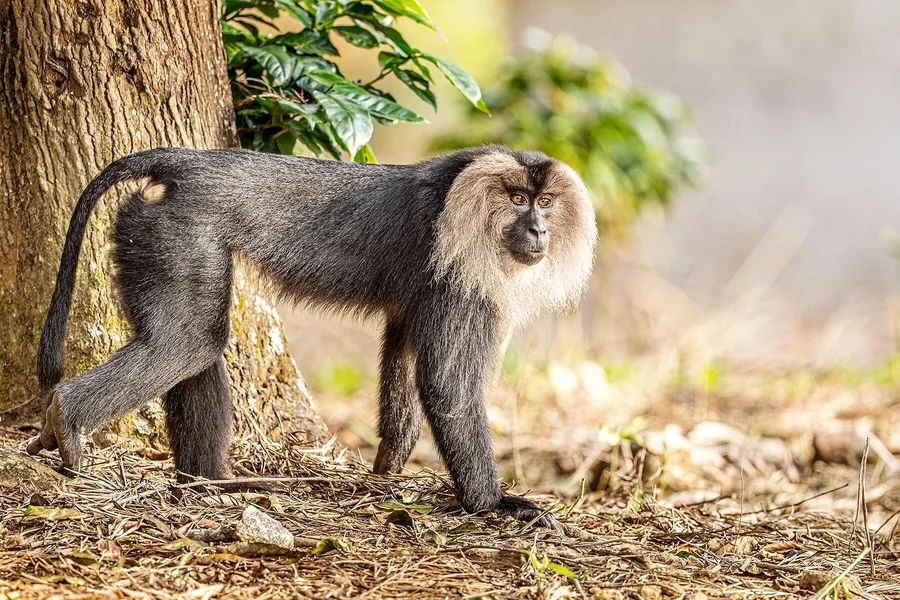
The lion-tailed macaque is a rare monkey found in the Western Ghats of southern India. It has dark fur, a silver-white mane around its face, and a tail ending in a tuft.
These monkeys spend much of their time in forest canopies and eat fruits, seeds, insects, flowers, and other foods.
Because they depend strongly on tropical forest habitat, fragmentation can make it difficult for populations to remain connected. Protecting the forests of the Western Ghats is important for their survival.
Indian Pangolin
The Indian pangolin is a unique mammal covered in protective scales. When threatened, it can curl into a tight ball, using its hard scales as a shield.
Pangolins mainly eat ants and termites. Their long claws help them break open nests, while their long, sticky tongues collect insects.
Pangolins face serious threats from illegal hunting and wildlife trafficking. Protecting them requires both habitat conservation and efforts to reduce illegal trade.
Blackbuck
The blackbuck is a graceful antelope recognized by the curved horns of adult males and their striking dark-and-white coloring. It lives mainly in open grasslands and dry regions.
Blackbucks are fast runners and can reach impressive speeds when escaping predators. They feed mainly on grasses and other vegetation.
Their grassland habitats are increasingly affected by agriculture, development, and other land-use changes. Protected areas provide important refuges for these elegant animals.
Final Thought
India’s wildlife is remarkably diverse, with species adapted to almost every major environment found across the country. Bengal tigers roam forests, snow leopards survive in high mountains, rhinos inhabit wetlands and grasslands, and river dolphins live in freshwater systems.
These animals are more than symbols of India’s natural beauty. They play important roles in maintaining healthy ecosystems. Protecting forests, grasslands, rivers, mountains, and coastal habitats can help ensure that India’s remarkable wildlife continues to thrive for generations to come.
FAQs
What is the most famous animal in India?
The Bengal tiger is one of the most famous animals in India and is widely recognized as an important symbol of the country’s wildlife.
How many types of animals are found in India?
India has a very high level of biodiversity, with thousands of animal species across mammals, birds, reptiles, amphibians, fish, and invertebrates.
Which big cats are found in India?
India is home to Bengal tigers, Asiatic lions, Indian leopards, snow leopards, and clouded leopards.
What is the national animal of India?
The Bengal tiger is the national animal of India.
Which rare animals live in India?
Rare species found in India include the snow leopard, Asiatic lion, Indian pangolin, lion-tailed macaque, Ganges river dolphin, and Indian rhinoceros.
What are some famous Indian birds?
The Indian peafowl, hornbills, kingfishers, eagles, vultures, and many other bird species are found across India’s diverse habitats.
Why is wildlife conservation important in India?
Wildlife conservation helps protect biodiversity, maintain healthy ecosystems, preserve natural habitats, and support the survival of threatened species.

Welcome to natureanimalhub! I’m Anam Sattar, an AI Powered SEO, and Content Writer with 4 years of experirnce.
I help websites rank higher,grow traffic, and look amazing. My goal is to make SEO and web design simple and effective for everyone.
Let’s achieve more together!
1 thought on “Animals in India: 20 Fascinating Species to Know”