
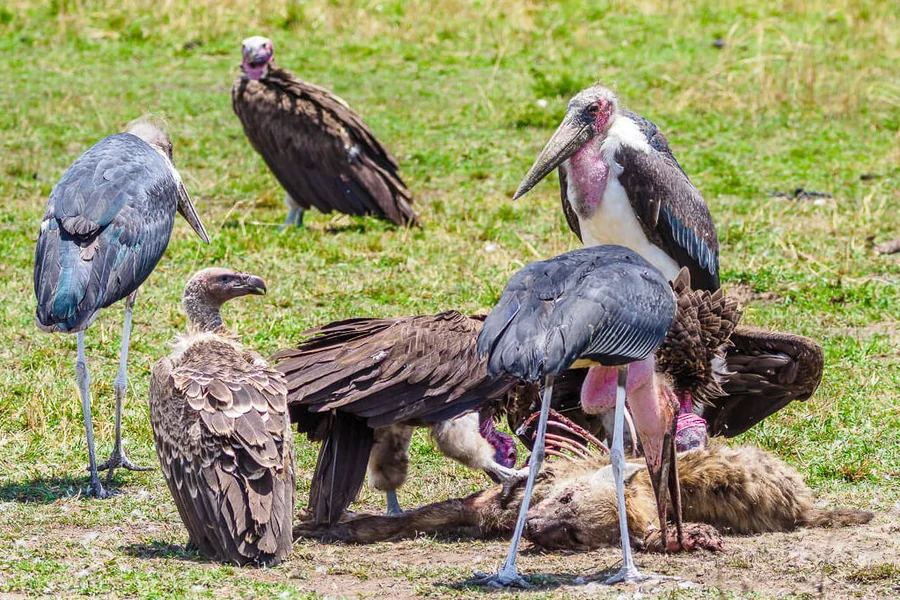
Scavenger animals play an important role in nature by feeding on food sources that other animals may leave behind. Many scavengers consume carrion, which refers to the remains of animals that have died naturally or been killed by predators. Others may feed on discarded food, decaying plant material, or other organic matter. Although scavengers are sometimes associated with unpleasant or dirty environments, they are essential members of healthy ecosystems.
Animals such as vultures, hyenas, jackals, crows, ravens, and some insects are well-known examples. Their feeding habits help remove dead material from the environment and make nutrients available for other organisms. Scavenging can also provide animals with an important food source when hunting is difficult. In this way, scavenger animals contribute to food webs, nutrient cycling, and the overall balance of natural habitats.
What Are Scavenger Animals?
Scavenger animals are animals that feed on dead or decaying organic material. The term is commonly associated with animals that eat carrion, but scavenging can also include feeding on discarded food, dead plants, and other organic remains. According to the Wikipedia page on scavengers, scavengers can be divided into animals that rely heavily on carrion and those that use scavenging as one of several feeding strategies. This distinction is important because many scavengers are not dependent on dead animals alone.
Some scavengers are known as obligate scavengers because they depend primarily on dead material for food. Vultures are among the clearest examples. Other animals are facultative scavengers, meaning they can hunt, forage, or eat other foods but will consume carrion when an opportunity appears. Hyenas, jackals, wolves, crows, and many other animals can behave this way. Their flexible diets allow them to survive in environments where food availability changes throughout the year.
Scavenging is not limited to large animals. Numerous insects and aquatic organisms also consume dead material. Burying beetles, blowflies, crabs, and certain marine animals can help break down remains. Together, these organisms form an important part of the natural recycling process.
Common Examples of Scavenger Animals
Vultures are perhaps the most recognizable scavenger animals. They have excellent eyesight and, in some species, a highly developed sense of smell that helps them locate carcasses over large areas. Their bare or sparsely feathered heads and strong digestive systems are adaptations associated with their feeding habits. Different vulture species have different diets, and some specialize in particular parts of carcasses.
Hyenas are another well-known example. Although they are capable hunters, they also consume carrion and can take advantage of kills made by other predators. Their powerful jaws and strong teeth allow them to process tough parts of carcasses, including bones. This makes them useful consumers of animal remains in many African ecosystems.
Crows and ravens are highly adaptable scavengers. They can eat carrion, insects, food scraps, eggs, fruits, and other available foods. Their intelligence and ability to live in different environments allow them to take advantage of many food sources. They are found in forests, grasslands, agricultural areas, and cities.
Jackals and foxes also frequently scavenge. They may hunt smaller prey but will eat carrion when available. Their ability to switch between hunting and scavenging gives them flexibility when environmental conditions change.
Insects are equally important. Blowflies can locate dead animals and lay eggs on carcasses, while their larvae consume decaying tissue. Burying beetles also use animal remains as a food resource and play an important role in breaking down carrion. These smaller scavengers may be less noticeable than vultures or hyenas, but their ecological contribution is significant.
How Scavenger Animals Help Ecosystems
One of the most important functions of scavenger animals is removing dead organic material. Without scavengers, animal remains could remain in the environment for much longer before being fully processed by insects, fungi, bacteria, and other decomposers. Scavengers speed up this process by consuming portions of carcasses and reducing large remains into smaller pieces.
Scavengers also help move nutrients through food webs. When a scavenger consumes a dead animal, nutrients stored in that body become part of the scavenger’s biological system. Those nutrients can later return to the environment through waste and eventually become available to plants and other organisms.
Another important benefit is that scavenging can reduce the amount of decaying material in an area. In natural ecosystems, decomposition is unavoidable, but scavengers help manage the early stages of this process. Their activity works together with microorganisms and decomposers to return organic material to the ecosystem.
Scavenging can also connect different parts of a food web. A carcass may attract several species with different feeding strategies. One animal may consume soft tissue, another may break apart bones, and insects may use what remains. This sequence allows many organisms to benefit from a single food resource.
Adaptations That Help Scavengers Find Food
Finding dead animals is not always easy, so scavenger animals have developed different adaptations. Vultures, for example, can travel long distances while searching for food. Some species use their exceptional vision to detect carcasses from the air. Certain scavengers also respond to the behavior of other animals. When several predators or scavengers gather in one location, additional animals may investigate because the activity can indicate the presence of food.
A strong sense of smell is another valuable adaptation. Some scavengers can detect gases associated with decomposition from considerable distances. This ability helps them locate food that may be hidden by vegetation or difficult terrain.
Strong digestive systems are also useful. Carrion can contain microorganisms and substances that would be dangerous to many animals. Scavengers that regularly consume decaying food have physiological adaptations that allow them to process such meals more effectively.
Many scavengers also have physical adaptations for tearing or processing food. Vultures have specialized beaks, while hyenas have powerful jaws. Insects such as burying beetles have different body structures that allow them to handle and consume decaying material.
Scavengers in Different Habitats
Scavenger animals can be found in almost every major type of habitat. In grasslands and savannas, vultures, hyenas, jackals, and other animals may gather around carcasses. These environments often have large herbivores, creating substantial food resources when animals die.
Forests support many smaller scavengers, including crows, ravens, foxes, insects, and various mammals. Dense vegetation can make carcasses difficult to locate, so smell, sound, and interactions with other animals may help scavengers find food.
Marine environments also contain scavengers. Fish and other aquatic organisms can feed on dead animals that sink through the water column. Some deep-sea ecosystems depend heavily on organic material that reaches the seafloor. Scavenging organisms can rapidly take advantage of these temporary food sources.
Urban environments create another opportunity for scavenging. Crows, gulls, raccoons, rats, and other adaptable animals may consume discarded food. Human waste can provide an easily accessible source of calories, although relying on garbage can expose wildlife to harmful substances and dangerous materials.
Final Thought
Scavenger animals are an essential part of the natural world. From soaring vultures and opportunistic foxes to tiny beetles and flies, these animals help process dead organic material and keep nutrients moving through ecosystems. Their role may seem unpleasant at first, but scavenging is a natural and necessary part of life.
Many scavengers are also highly adaptable. They can switch between different food sources, survive changing conditions, and take advantage of resources that other animals cannot or will not use. By removing remains and helping begin the decomposition process, scavenger animals support healthier and more balanced ecosystems.
Understanding these animals also shows why every part of a food web matters. Predators, herbivores, scavengers, insects, fungi, and microorganisms all perform different functions. Together, they transform organic material and keep natural systems functioning.
FAQs
What are scavenger animals?
Scavenger animals are animals that feed on dead or decaying organic material, including animal carcasses, discarded food, and sometimes dead plant matter.
What is the most well-known scavenger animal?
Vultures are among the most well-known scavenger animals because many species rely heavily on carrion as a food source.
Are hyenas scavengers?
Yes. Hyenas can hunt their own prey, but they also regularly consume carrion and may take advantage of animals killed by other predators.
Do scavenger animals only eat dead animals?
No. Many scavengers have flexible diets and may also hunt live prey, eat fruits, insects, plants, or discarded food depending on the species and available resources.
Why are scavenger animals important?
Scavengers help remove dead organic material, transfer nutrients through food webs, and support the decomposition and recycling processes within ecosystems.
Are insects considered scavengers?
Yes. Several insects, including burying beetles and blowflies, consume carrion or decaying organic material and contribute to the breakdown of dead matter.
Can scavenger animals live in cities?
Yes. Some species, including crows, gulls, raccoons, and rats, can adapt to urban environments and may feed on discarded food or other accessible organic material.

Welcome to natureanimalhub! I’m Anam Sattar, an AI Powered SEO, and Content Writer with 4 years of experirnce.
I help websites rank higher,grow traffic, and look amazing. My goal is to make SEO and web design simple and effective for everyone.
Let’s achieve more together!